50+ icebreaker games for work & meetings
A free collection of icebreaker games for team meetings, work, and remote video calls: quick, no-prep, and large-group activities you can run in minutes.
Free to host. Your team joins from a link.
Looking for the full experience? Explore TeamRetro
Icebreaker games are short, playful activities you run at the start of a meeting, workshop, or class to help a group relax, connect, and start talking. They work best at the very beginning: when a new team is meeting, when energy is low, or when you want quiet people to speak up early. Pick a game below to match your group size and setting. Every one of them is free to run, and the ones your team can play together in the browser are gathered further down the page. TeamRetro is an online retrospective, team health check, estimation, and standup tool built for Scrum Masters, agile coaches, and team leads running remote, hybrid, or in-person agile teams.
Quick games (under 5 minutes)
Fast wins for the first few minutes of a standup, retrospective, or team meeting. No materials, no setup: just one round and you are done.
- Two Truths and a Lie: each person shares three statements about themselves; one is false. The group guesses which one is the lie.
- Would You Rather: pose a fun either/or question (beach or mountains, morning or night) and have everyone answer in one word.
- One Word Check-in: each person describes how they feel today in a single word, then optionally says why.
- Rose, Thorn, Bud: everyone names one good thing (rose), one challenge (thorn), and one thing they look forward to (bud).
- Emoji Mood: each person picks an emoji that matches their mood and shares it in chat or out loud.
- Highlight of the Week: go around the group; everyone shares one small high point from the past week.
- Finish the Sentence: start a prompt like "This week I am excited about…" and let each person complete it.
No-prep games
Run these on the spot with nothing prepared, perfect when a meeting starts and you have not planned anything.
- Desert Island: everyone names the one item, book, or song they would bring to a desert island, and why.
- This or That: fire off quick pairs (coffee or tea, cats or dogs) and have people pick a side fast.
- Show and Tell: each person grabs the nearest object on their desk and tells the group the story behind it.
- Never Have I Ever (work-safe): share a harmless "never have I ever" (e.g. replied-all by mistake); anyone who has done it raises a hand.
- Three in Common: pair people up and give them two minutes to find three things they share.
- Word Association: say a starting word; each person adds the first related word that comes to mind, around the circle.
- If You Were…: ask a light hypothetical ("if you were a kitchen appliance, which one?") and let each person answer.
Virtual / video-call games
Built for remote teams on a video call; they work over screens, use chat or reactions, and do not need anyone in the same room.
- Background Story: each person explains the real or virtual background behind them on the call.
- Photo Scavenger Hunt: name an item (something blue, a favorite mug); everyone races to grab it and show it on camera.
- Guess the Desk: each person describes one item on their desk; the group guesses whose desk it is.
- Emoji Reactions Poll: ask a question and have everyone answer with a video-call reaction or emoji instead of speaking.
- Two Truths and a Lie (chat edition): people type three statements in chat; others vote on the lie with reactions.
- Virtual Bingo: share a bingo card of common traits ("has a pet," "works from a café"); people mark squares that match colleagues.
- Window or Screen: each person shows the view from their window or one thing on their screen and says one line about it.
- Mute Charades: one person acts out a word or phrase on mute while the rest guess in chat.
Games for large groups
Designed to keep big groups engaged; they scale past a dozen people without anyone waiting too long for a turn.
- Rock-Paper-Scissors Tournament: everyone pairs off; losers cheer for the winner, who advances, until one champion remains.
- Human Bingo: give everyone a grid of "find someone who…" prompts and have them mingle to fill it in.
- Stand Up If…: call out statements ("stand up if you have traveled abroad this year"); people stand if it applies to them.
- Group Lineup: without talking, the group lines up by a trait such as birthday month or distance traveled to work.
- Speed Networking: set a timer and have people meet in fast one-minute pairs, rotating each round.
- Common Ground: split into small teams and challenge each team to find five things every member shares.
- Snowball Toss: everyone writes a fun fact on paper, crumples it, and tosses it; people read out a random one and guess the author.
Get-to-know-you games
Best for new teams or onboarding; they help people learn names, backgrounds, and a little personality without feeling forced.
- Name and Claim: each person says their name plus one thing they are good at or proud of.
- My First Job: everyone shares the very first job they ever had and one thing it taught them.
- Bucket List: each person names one thing on their bucket list and why it matters to them.
- Hidden Talent: everyone reveals a skill or hobby their teammates probably do not know about.
- Map It: each person shares where they grew up and one thing that place is known for.
- The Story of My Name: everyone tells the group the meaning or story behind their name.
- Five Favorites: quick round where each person names a favorite food, song, place, book, and way to relax.
Small-group games
Best for three to eight people, where everyone gets real airtime; these go a little deeper than a one-line round without dragging on.
- Story Chain: one person opens a made-up story with a single sentence, and each person adds a sentence until it comes back around the group.
- Two-Minute Interview: pair up and interview each other for two minutes, then introduce your partner and one thing you learned to the group.
- Best Advice: each person shares the best piece of advice they have ever been given and who it came from.
- Would-You-Rather Chain: one person poses a would-you-rather; whoever answers poses the next one, keeping it moving around the group.
- Fortunately, Unfortunately: build one story together where each person in turn starts their sentence with either "fortunately" or "unfortunately".
- Common Thread: the group hunts for one experience or opinion that every single member shares, however small.
- Pitch It: hand the group a random everyday object and two minutes to invent and pitch a brand-new use for it.
Creative / team games
A bit more hands-on: light making, drawing, or building that gets a team collaborating before the real work starts. Great for workshops and offsites.
- Draw Your Weekend: everyone sketches their weekend in about 30 seconds, then holds it up for the group to guess what it shows.
- Team Timeline: build a shared timeline together, with each person adding one memorable moment from the team's or project's history.
- Marshmallow Challenge: small teams race to build the tallest freestanding tower from dry spaghetti, tape, and a single marshmallow on top.
- Caption This: show one neutral image and have everyone write a one-line caption, then read them out and vote on a favorite.
- One-Word Story: the group tells a single story where each person, in turn, may add only one word.
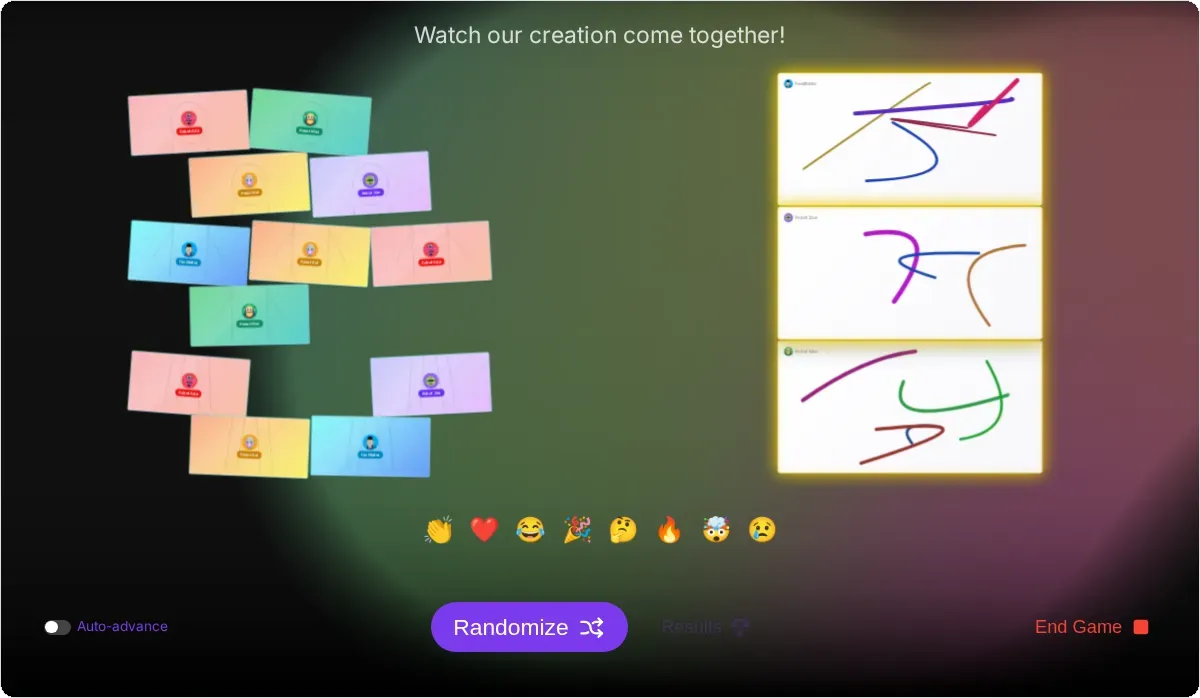
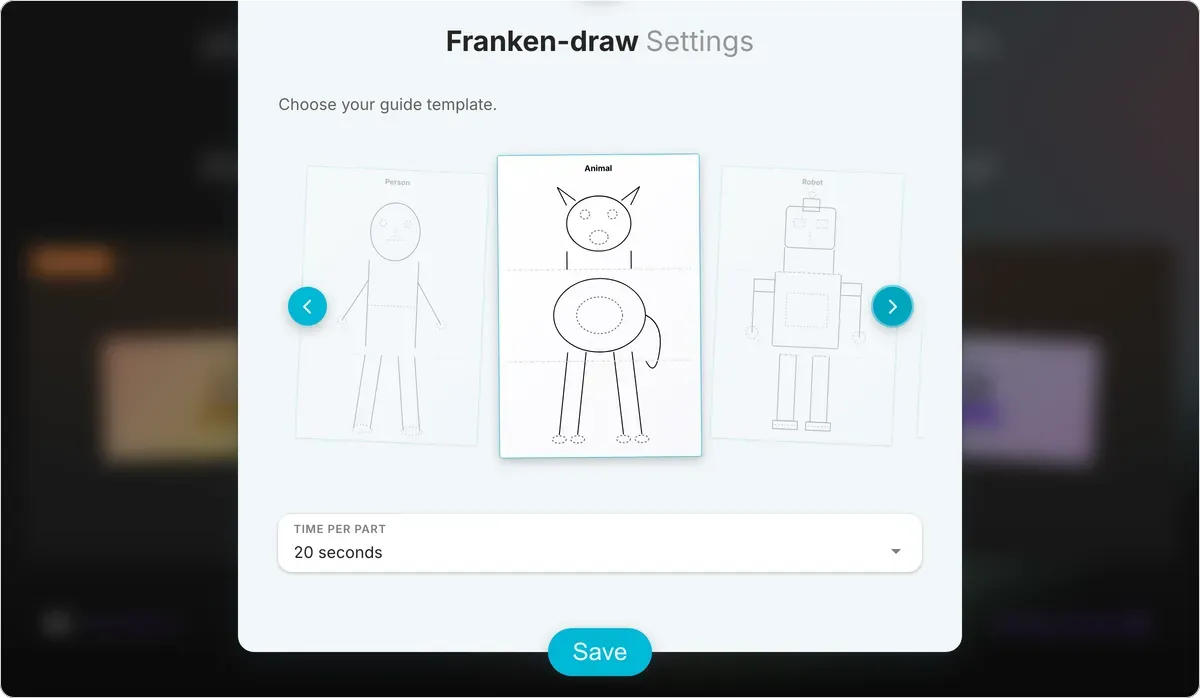
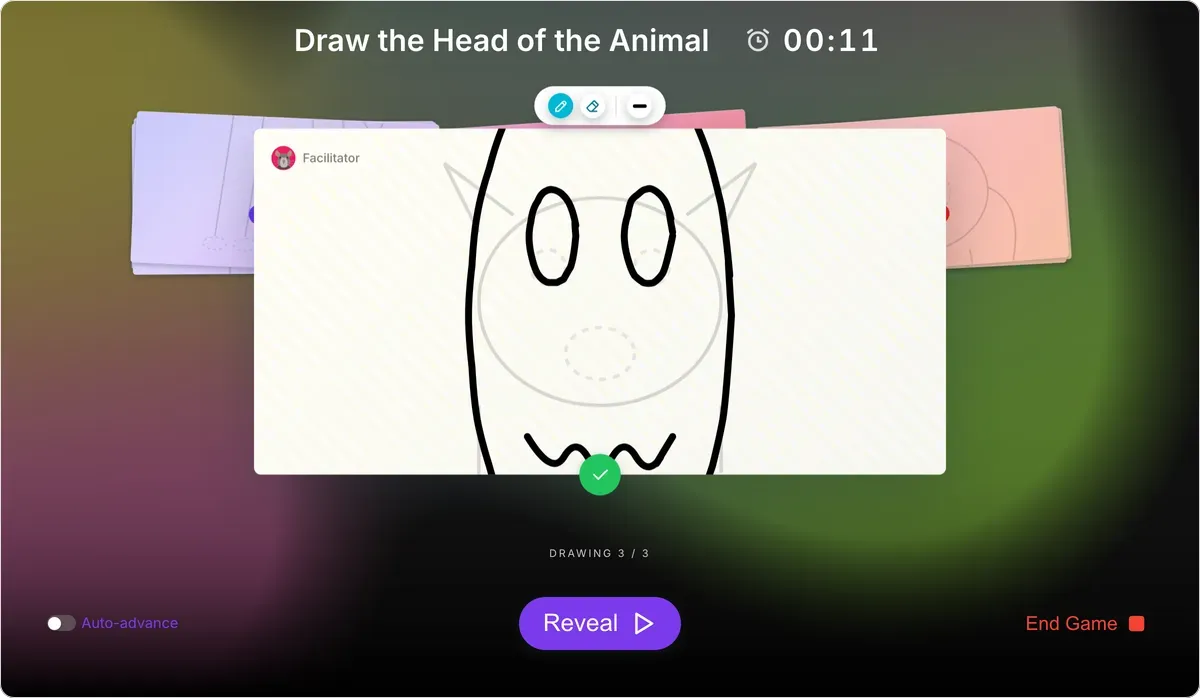
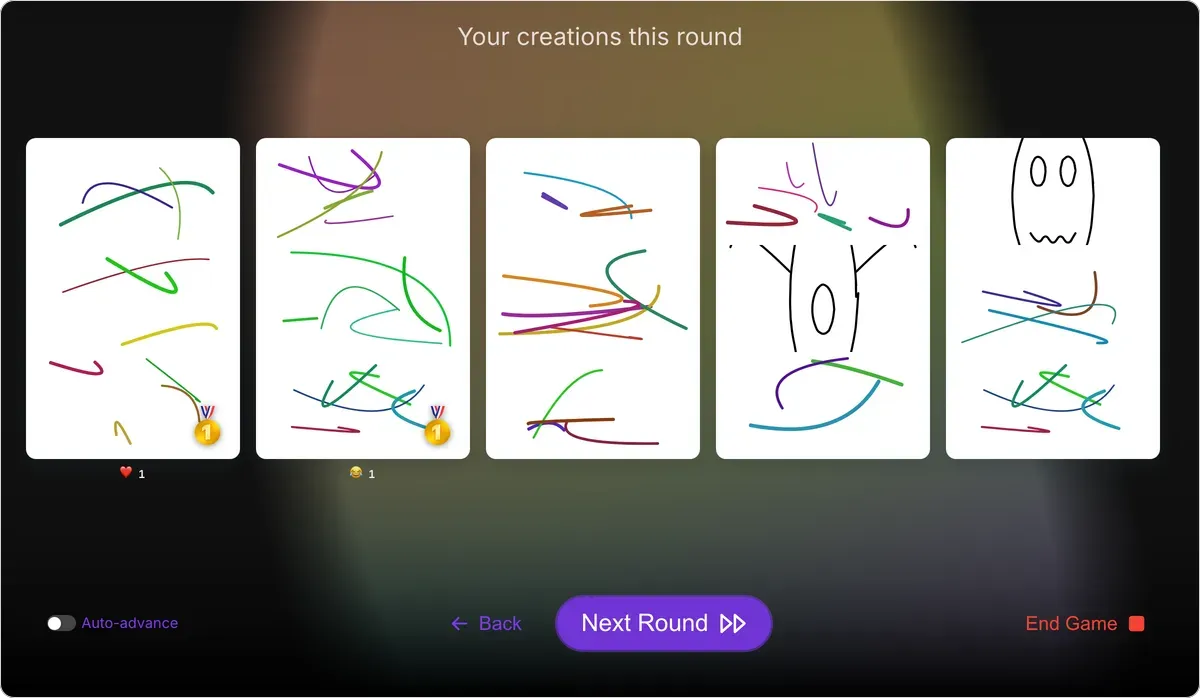
- Doodle Relay: one person draws for ten seconds and passes it on; each teammate adds to the picture before the finished doodle is revealed.
- Team Crest: small teams design a simple crest or motto for the team and explain in a line what it stands for.
Icebreaker games turn a cold start into a warm one. A good game takes only a minute or two, gets everyone talking before the agenda begins, and helps quieter people join in early, which sets the tone for the rest of the meeting. The games above are grouped by what you need: quick rounds for a standup, no-prep options for an unplanned meeting, video-call games for virtual icebreakers, activities that scale to large groups, and get-to-know-you games for new teams. If you’re facilitating a workshop or training day rather than opening a team meeting, GroupMap’s facilitator guide to icebreakers for large groups covers that side: group-size bands, timing math, and openers that hold at 300 people.
Want to run one with your team now? The catalog below gathers every game your team can play together in the browser. It’s free to host with a Google sign-in, and everyone else joins from one shared link with no account. These same games also run right inside a TeamRetro retrospective: pick one from the icebreaker step and the whole team plays together before the retro starts — see the retrospective features. For longer, more structured sessions, see the best agile games for building teams (the Ball Point Game, Paper Airplane Game, Chocolate Bar Game and Coin Game each have full rules and debrief questions), or learn how to play Team Spectrum, and browse the full library of icebreaker questions for more ways to open your next meeting.
Already have a favorite party game in mind? A few of the classics don’t quite fit a work setting, so we built browser-based versions that do: a Gartic Phone alternative for drawing-telephone laughs, a no-install Jackbox alternative the whole team can join from a video call, and a work-safe Cards Against Humanity alternative that keeps the humor inclusive. If your team likes the spectrum-dial guessing of Wavelength, the Wavelength alternative reworks it into a round about how well you know your teammates.
Icebreaker games your team can play online
The games below run in the browser beside your video call, with nothing to install. You sign in with Google to host, send the link, and your team joins with no account.
Share two truths and one lie, then spot the fib.
Play with your teamPractice with robotsPlace yourself between two answers; reveal all at once.
Play with your teamPractice with robotsTurn individual goals into one shared mission.
Play with your teamPractice with robotsFrequently asked questions
What are some good icebreaker games for work?
What is a quick icebreaker game?
What are good virtual icebreaker games?
How do you run an icebreaker game with a large group?
What are good team building games for a small team?
Pick the right icebreaker for your next meeting
A free list of 100+ agree-or-disagree questions and statements: workplace, funny, food, tech, remote-work, and deeper debate prompts for team warm-ups, with facilitator tips and how to run one.

A free list of question-of-the-day ideas for work: fun, daily check-in, and get-to-know-you questions to open a standup, meeting, or remote team chat in seconds.
A free bank of 100+ Two Truths and a Lie ideas and examples: work-appropriate, funny, travel, food, and remote-team statements, plus how to play, believable lies, and facilitator tips.
A free list of 100+ would-you-rather, this-or-that, and either/or questions: quick binary-choice icebreakers for work, adults, and remote teams. Funny, deep, and work-safe.

Free Christmas icebreakers for work, including would-you-rather, this-or-that, trivia and games for meetings, virtual parties and end-of-year retros.
Over 200 icebreaker questions for work, grouped by what you want to happen next: a new team, a remote call, a quick opener, or a real conversation.
Virtual icebreakers and remote team-building games that work on video calls and in chat: quick questions, Zoom-friendly games, and async prompts you can run free in seconds.
A free list of 90+ check-in questions for meetings and teams: quick opening, closing, mood, fun, remote, and end-of-sprint prompts to read the room, build psychological safety, and get every voice heard.
A free list of funny, silly, and weird icebreaker questions for work and team meetings: work-safe prompts that get people laughing and talking in seconds.
Icebreaker questions and quick exercises for every meeting type: team meetings, staff meetings, standups, one-on-ones, kickoffs, and tense-topic meetings.
25 team building games for work, grouped by what you want out of them: bonding, learning, or energy. Each one has a time, a group size, and how to run it.