For engineering managers
Cut repeat incidents, rework and onboarding drag
Post-mortems, technical-debt reviews and delivery health checks that turn repeat incidents, rework and slow onboarding into fixes with an owner and a date.

TeamRetro is our preferred tool. Its organized UI reduces facilitator workload, allows us to share outcomes of our retros with the teams easily and helps us maintain fast feedback cycles.





























Tailored templates for teams
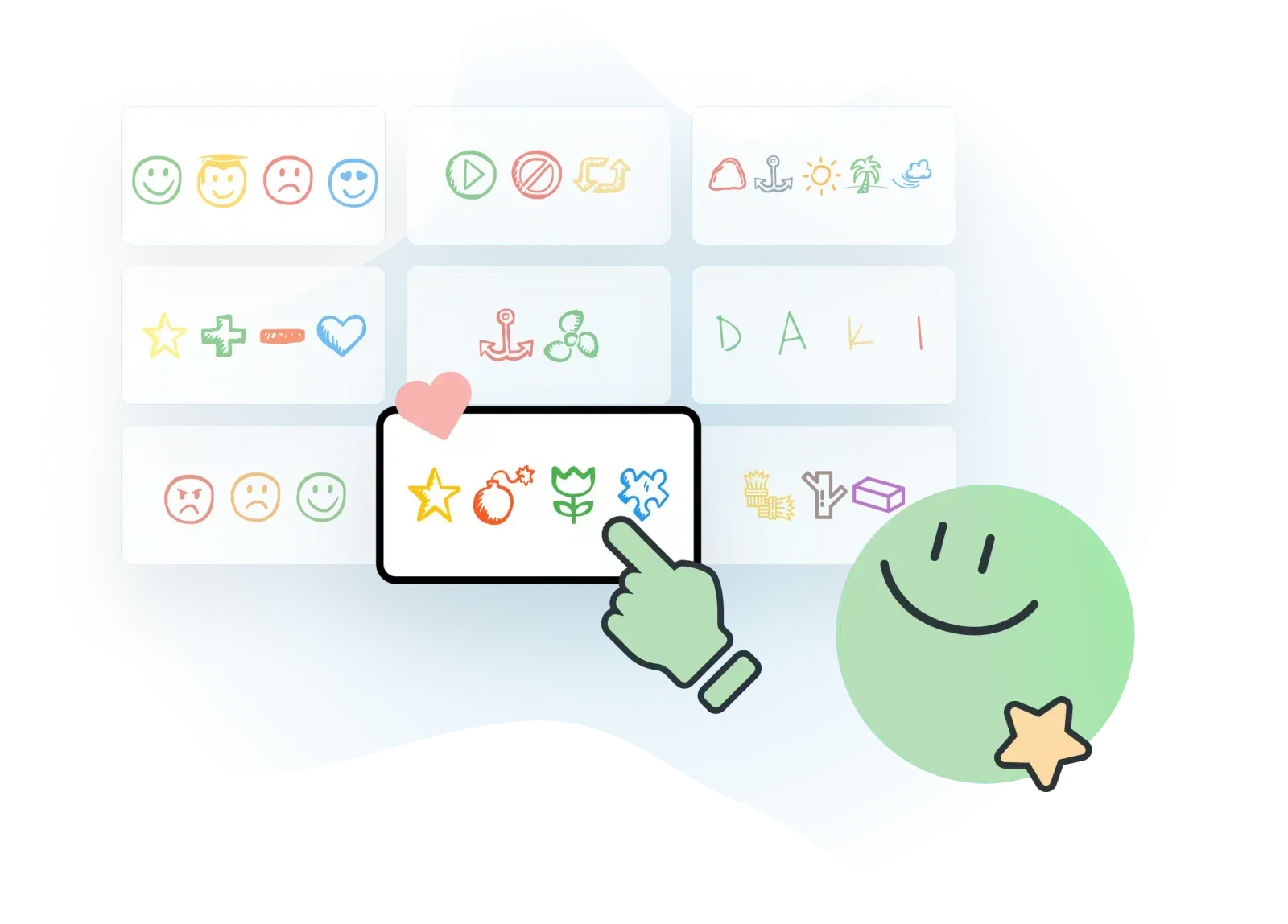
TeamRetro offers a wide range of retrospective templates tailored to engineering teams. Customize topics, design and workflow to fit your teams.
Whether focusing on code quality, sprint reviews, or process improvements, you can select or create templates that fit your team’s specific needs, helping identify technical debt, bottlenecks, and areas for improvement.

Cross-team collaboration
Engineering teams often need to collaborate across multiple functions or departments. TeamRetro makes it easy to coordinate retrospectives across different teams, fostering knowledge sharing, improving workflows, and ensuring alignment with larger engineering goals.
With engaging interfaces, open team transparency and the ability to create programs with multiple teams, you’ll enable easy cross-team collaboration.

Create actionable outcomes
Turn discussions into results with action items that are tracked and prioritized within TeamRetro. Assign tasks directly from the retrospective and set clear due dates, ensuring accountability and follow-through on key improvements that will drive your team forward.
Whether you are integrating actions with your engineering tools like Jira or Github, or reviewing open actions from meeting to meeting, you will be giving people the chance to make real changes.
Data-driven insights
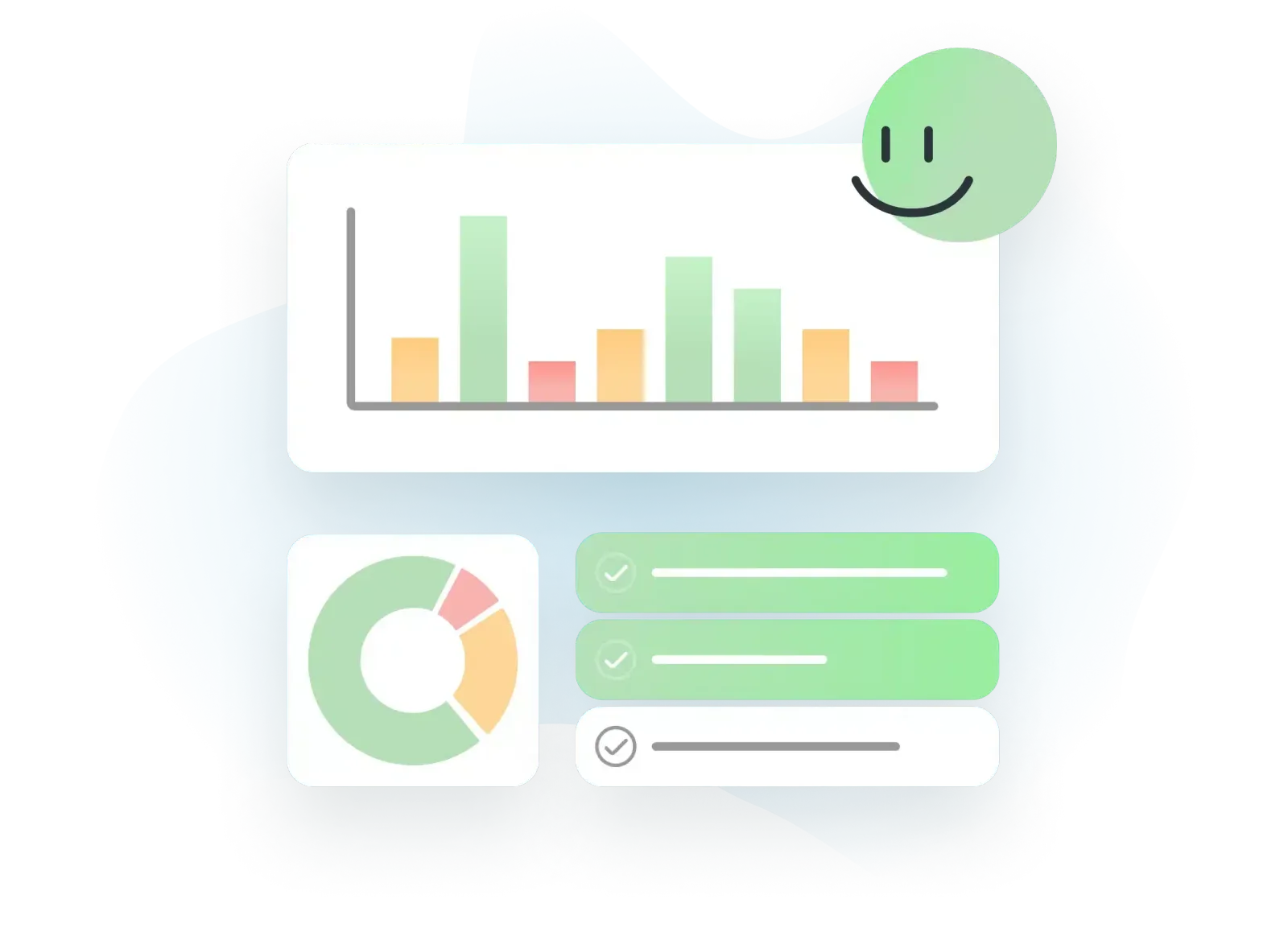
From tracking action item completion rates to visualizing recurring issues, TeamRetro helps you turn qualitative feedback into actionable data, the why behind your DORA metrics.
View trends across multiple retrospectives, compare team progress, and align outcomes with project objectives. By using this data and your wider agile metrics to inform decisions, you can continuously fine-tune your processes and ensure your teams are always improving.
Amazing features designed for Engineering Managers
Go beyond online whiteboards and physical sticky notes to real time collaborative retrospectives that will level up your team meetings.
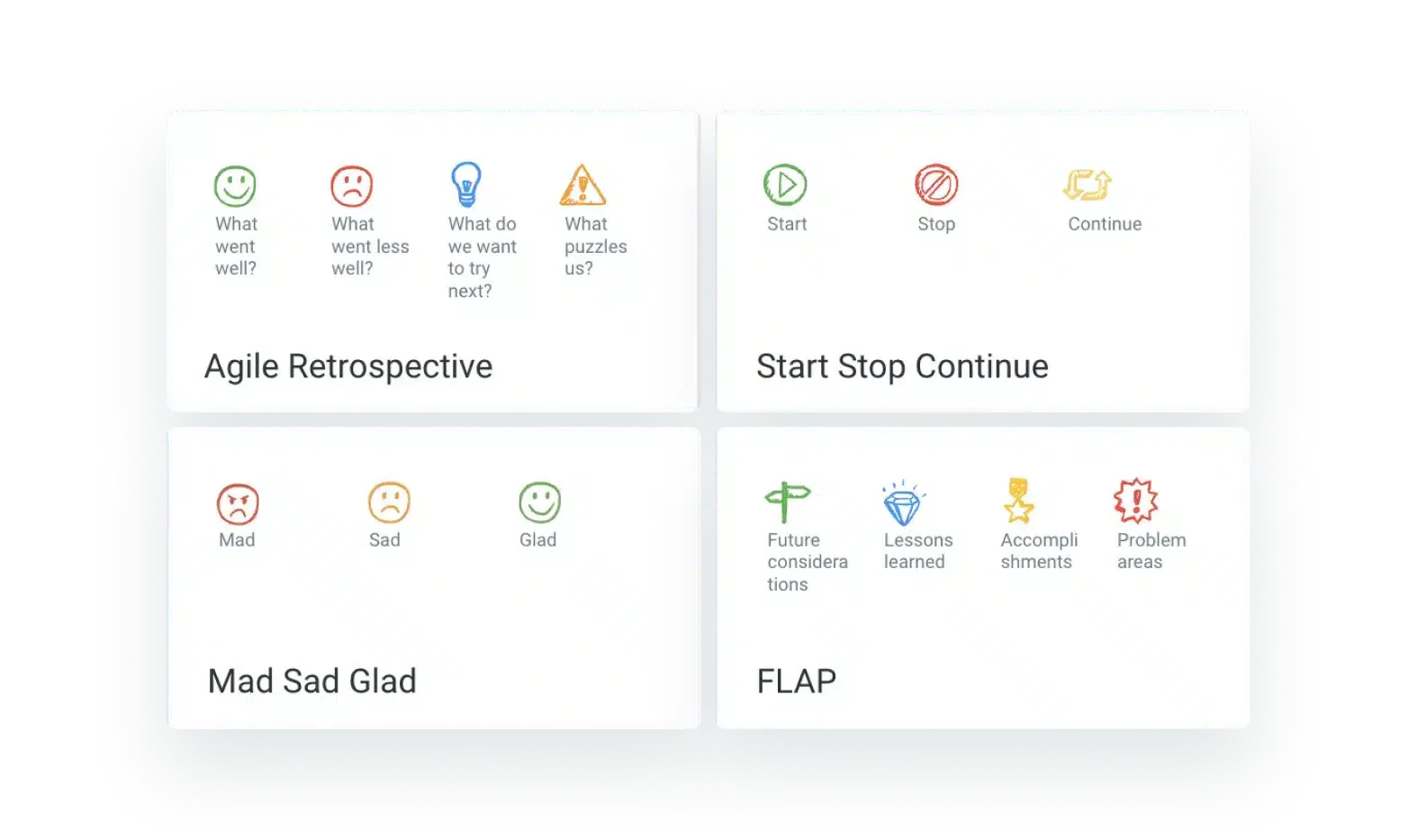
Organization-wide templates
Standardize templates across all teams for consistency.
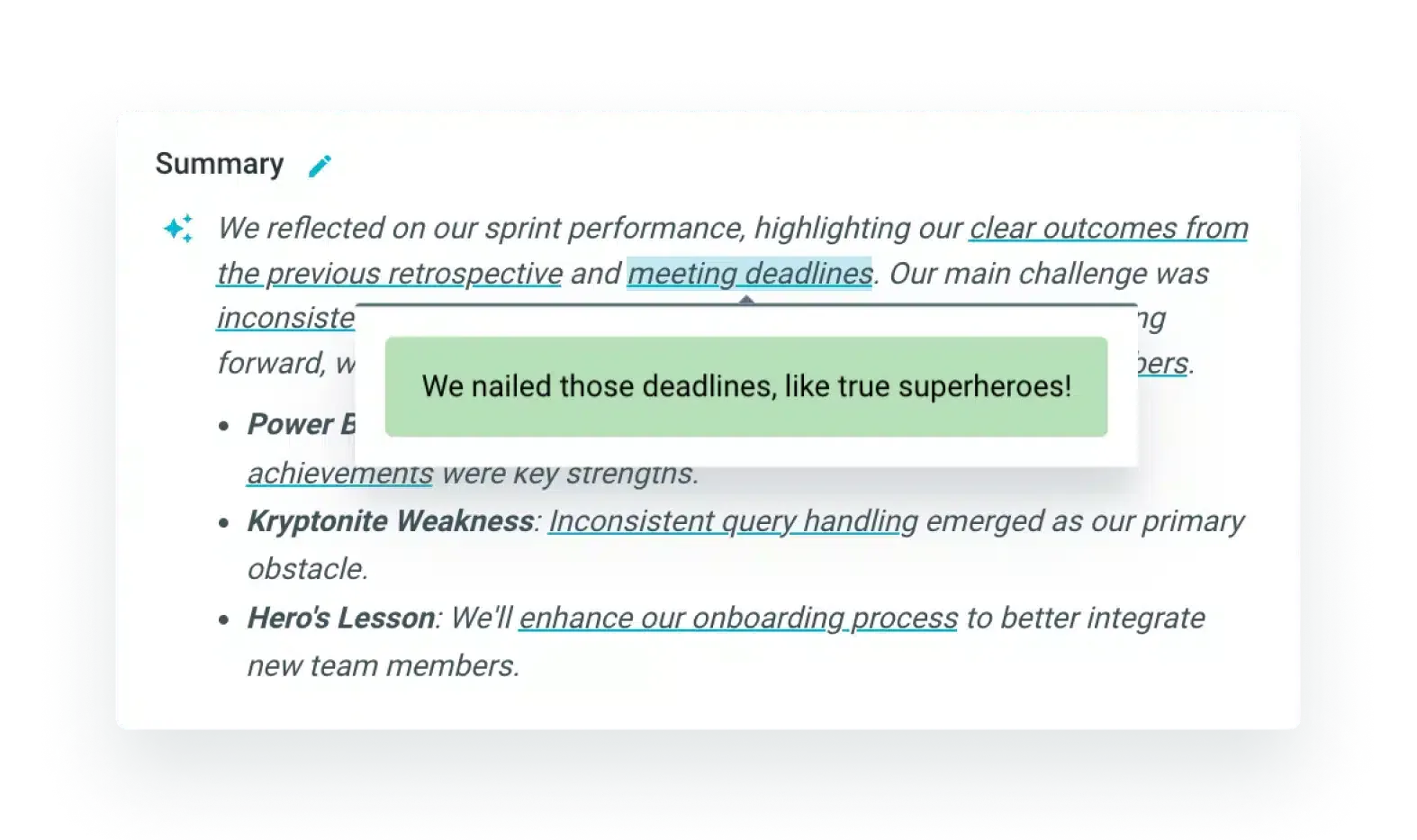
Power up with AI
Boost efficiency with suggested actions and instant meeting summaries.
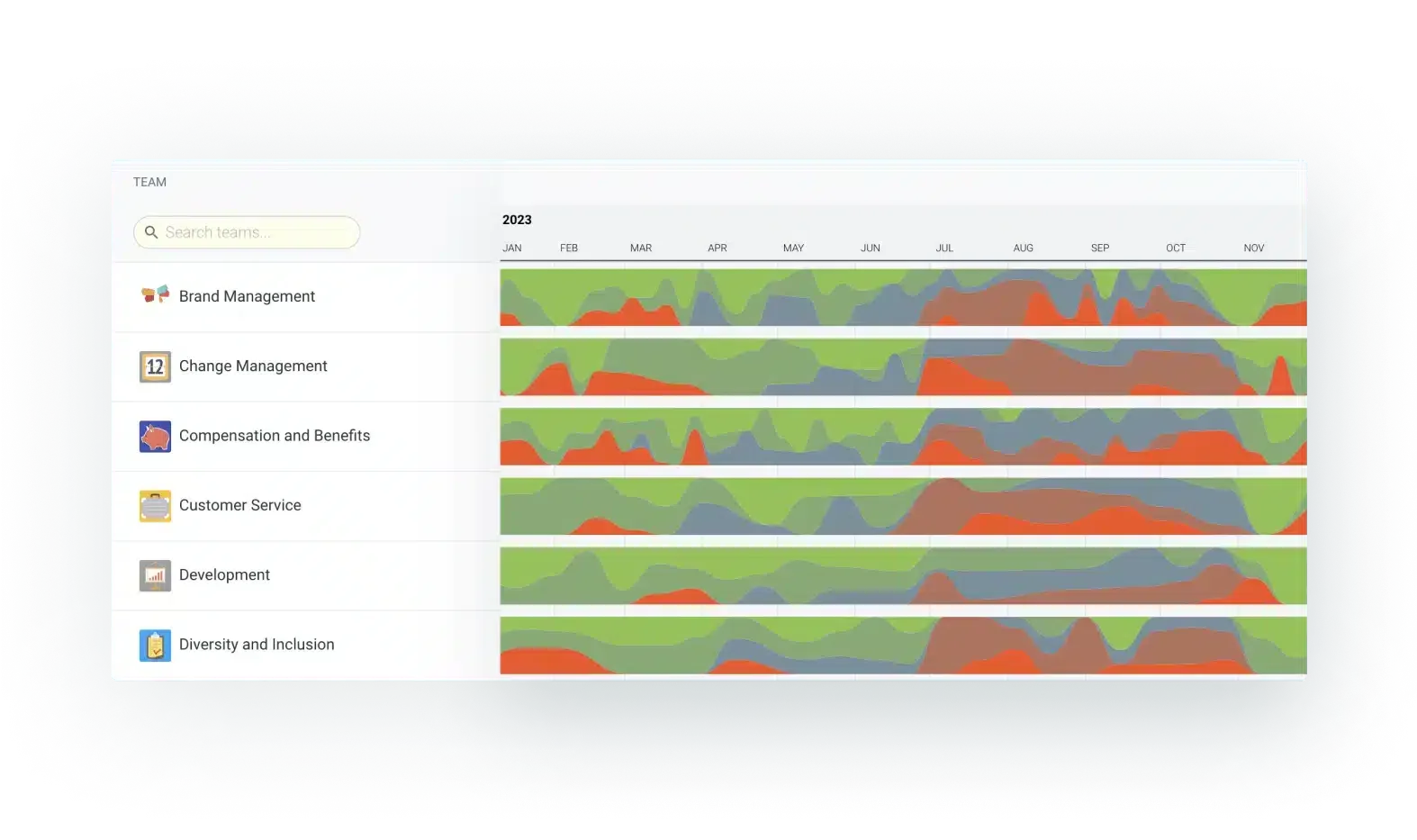
Team health and sentiment
Measure and track team health and sentiment trends over time.
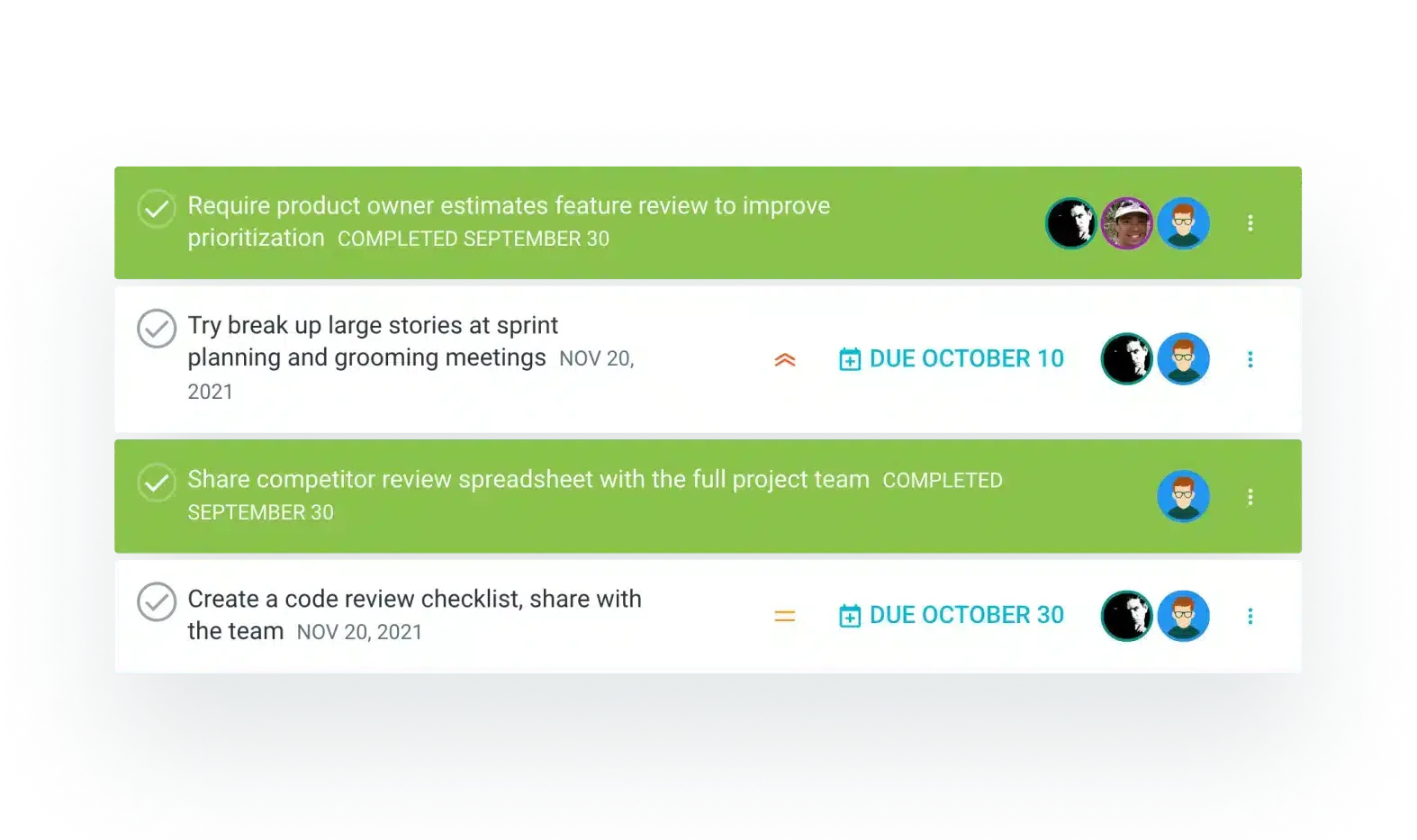
Track actions and agreements
Unite the team around shared goals, with retro and daily standup actions on one list. Visualize progress over time.
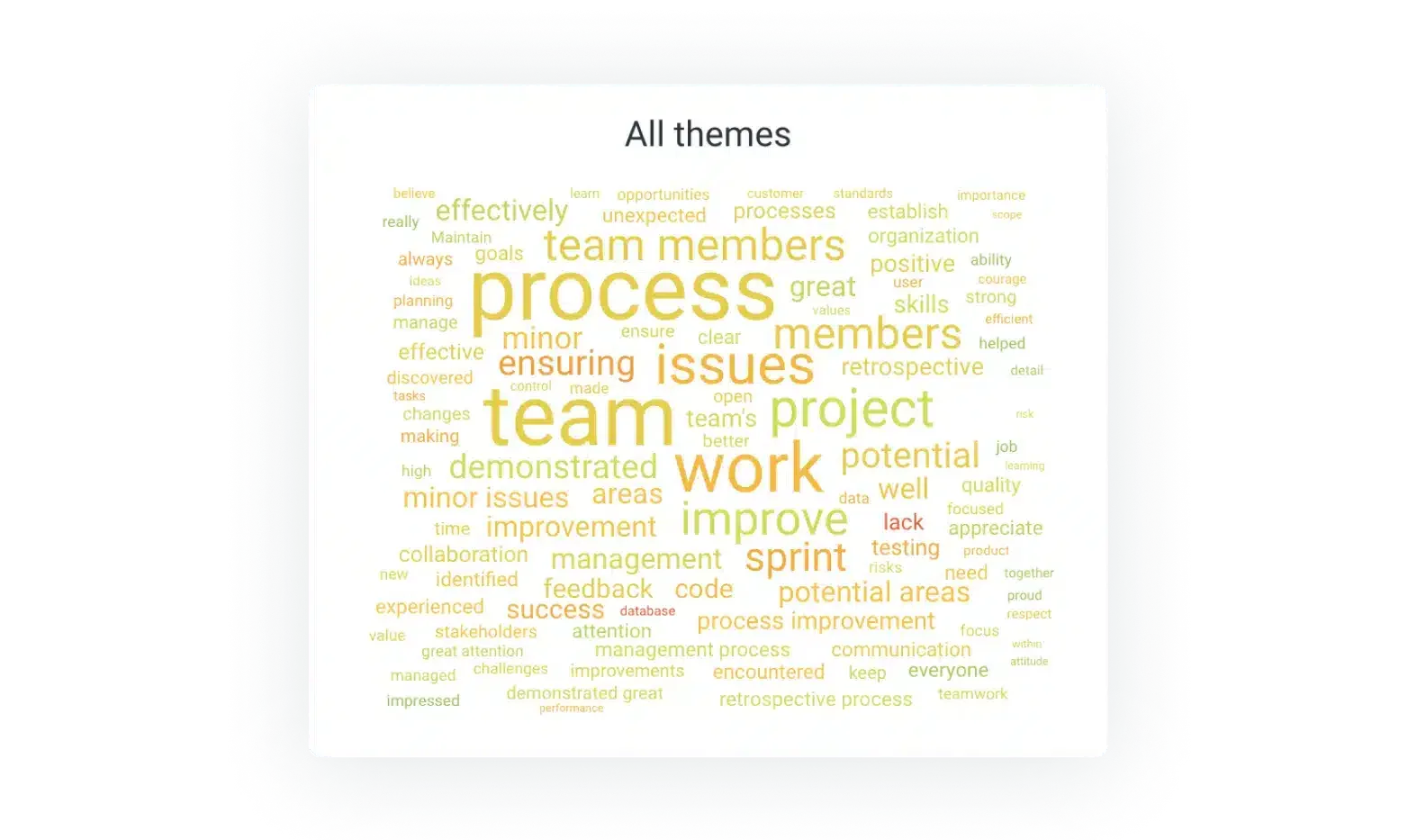
Explore word clouds
Discover common themes or recurring points of discussion across your teams meetings.
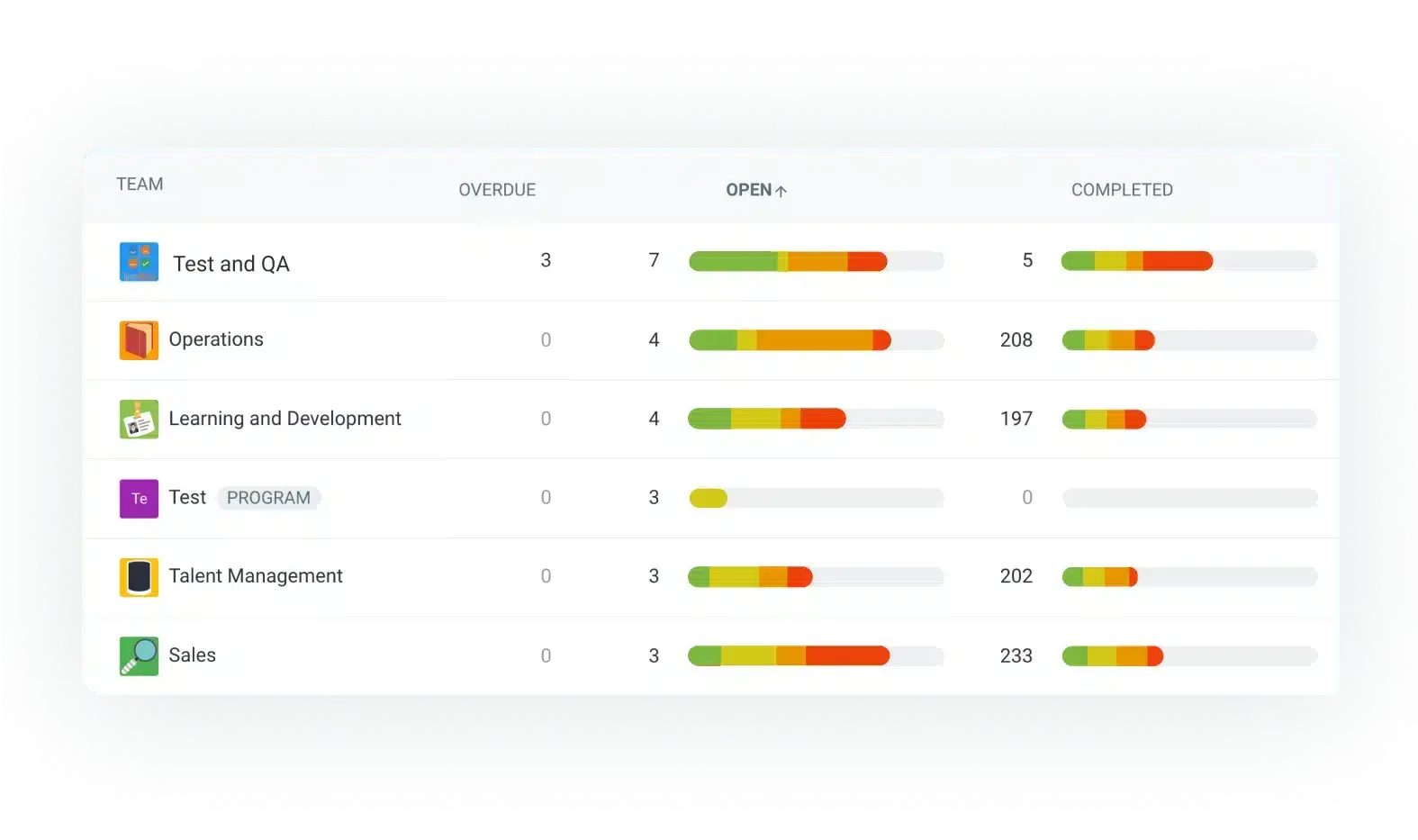
Data driven insights
Identify patterns for continuous improvement and use metrics to optimize team effectiveness.
Templates for the meetings engineering teams actually run


Reconstruct what happened, separate cause from blame, and leave with owned fixes so the same failure does not return next quarter.
Incident Response Retrospective


Review how the response itself went: detection, escalation, comms and handover, so the next page costs the team less.
Technical Debt Retrospective


Get the debt out of people's heads and onto a board, then rank it by what it is actually costing delivery.
Fishbone (Ishikawa) Retrospective


Trace a recurring problem back through cause and effect until the room agrees on the root, not the symptom.
DevOps Retrospective


Look at pipeline, deployment and on-call together, and pick the one change that shortens the path to production.
Code Review Retrospective


Fix the review loop: turnaround, depth, and the disagreements that stall a pull request for three days.
Frequently asked questions
Will my team actually say anything useful with their manager in the room?
How do I stop the same incident happening a third time?
How do I make technical debt visible to people outside engineering?
Can I find the delivery bottleneck without standing over the team?
How do I shorten the time it takes a new engineer to be useful?
How do I keep several squads consistent without adding process?
Learn more from the field
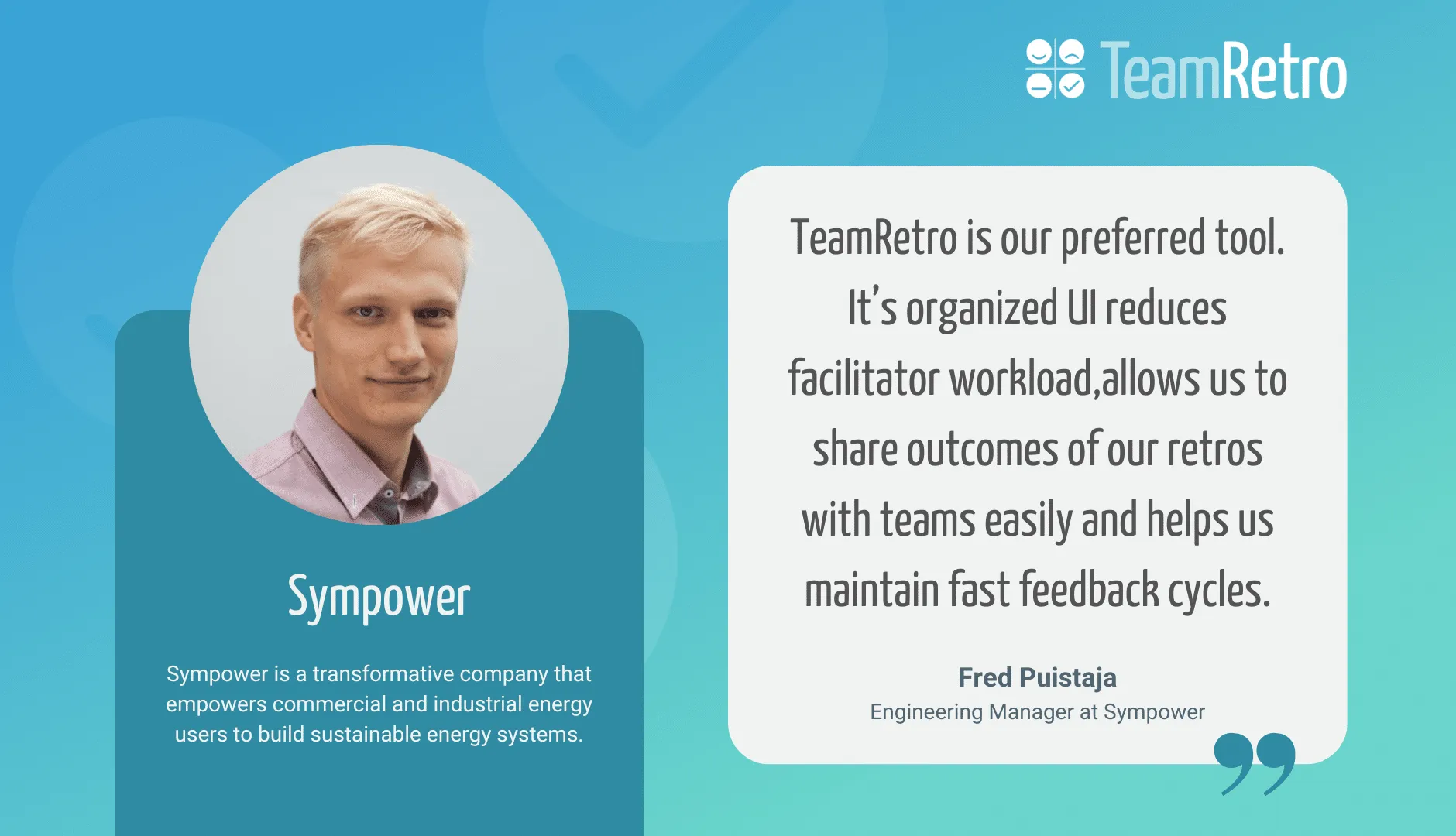 Case studyHow Sympower charged ahead with TeamRetro as their preferred retro tool
How Sympower streamlined its retrospectives with TeamRetro to drive improvement and keep collaboration moving as it scaled.
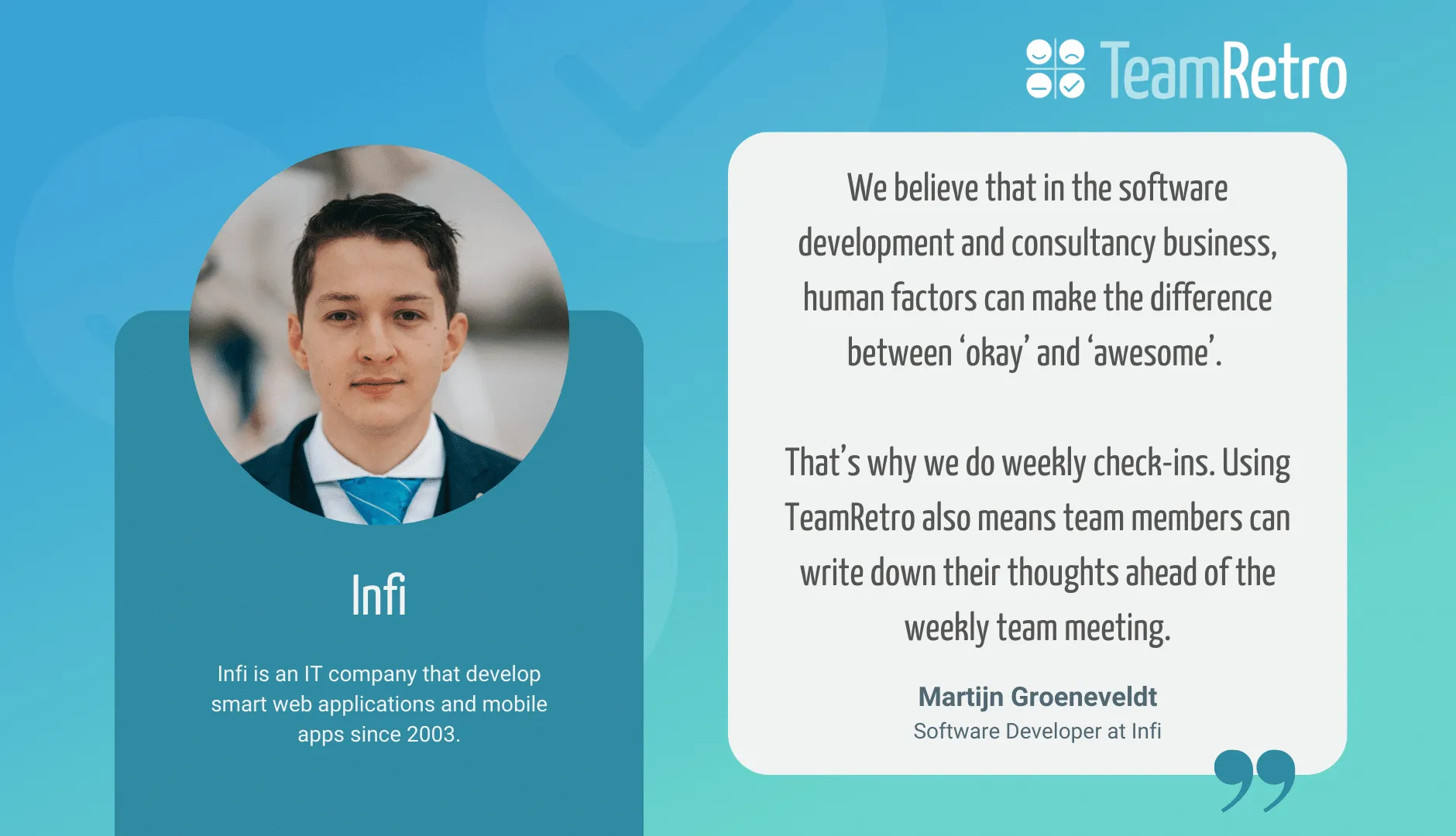 ArticleMaking team health visible to create transparency in agile teams
How Infi made its team health metrics visible to build transparency, trust and a stronger engineering culture.
 ArticleThe power of regular retrospective meetings in agile teams
Why a regular retrospective cadence, not the occasional one-off, is what compounds into real improvement for development teams.