100 retrospective questions that actually improve your team (2026)
Discover 100 retrospective questions for every sprint, format, and team mood, plus tips on when to use them. Level up your skills as a scrum master.
Tired of asking the same retrospective questions sprint after sprint? Every retro guide tells you to ask “What went well? What didn’t? What should we change?” And if you’ve been running retrospectives for more than a few sprints, you already know the problem: the same questions get the same answers. People go through the motions, the energy drops, and nothing new surfaces.
The questions you ask determine the insights you get. In this guide, you’ll find 100 retrospective questions organized by category: opening questions, sprint questions, team health questions, icebreakers, and more. Whether you’re running a standard sprint retro, a mid-project pulse check, or a quarterly retrospective, there’s something here for every format and team mood. And if you want to shake things up beyond questions alone, TeamRetro’s retrospective template library gives you 100+ formats to choose from.
In this guide:
- What makes a great retrospective question?
- Opening and icebreaker retrospective questions
- Classic sprint retrospective questions
- Start, Stop, Continue retrospective questions
- Agile retrospective questions for Scrum teams
- Team health retrospective questions
- Retrospective questions for remote and hybrid teams
- Closing retrospective questions
- How to choose the right questions for your retro
- Run better retros with TeamRetro
What makes a great retrospective question?
The questions you ask shape the conversation you get. And the conversation you get shapes whether anything actually changes. The best retrospective questions share a few things in common:
- They’re open-ended: “How did we handle scope changes?” beats “Did scope creep affect us?”
- They invite honesty without creating blame, so psychological safety comes first
- They’re specific enough to generate action, not just conversation
- They rotate, because using the same questions every sprint breeds autopilot thinking
A quick rule of thumb: if the question can be answered with a yes, a no, or a shrug, rephrase it.
Opening and icebreaker retrospective questions
The first few minutes of a retro set the tone for everything that follows. These warm-up questions lower defenses, invite participation, and signal that this is a safe space, not a blame session. Use one or two at the start. For more ideas on starting your session well, check out TeamRetro’s guide to retrospective icebreakers.
Check-in questions
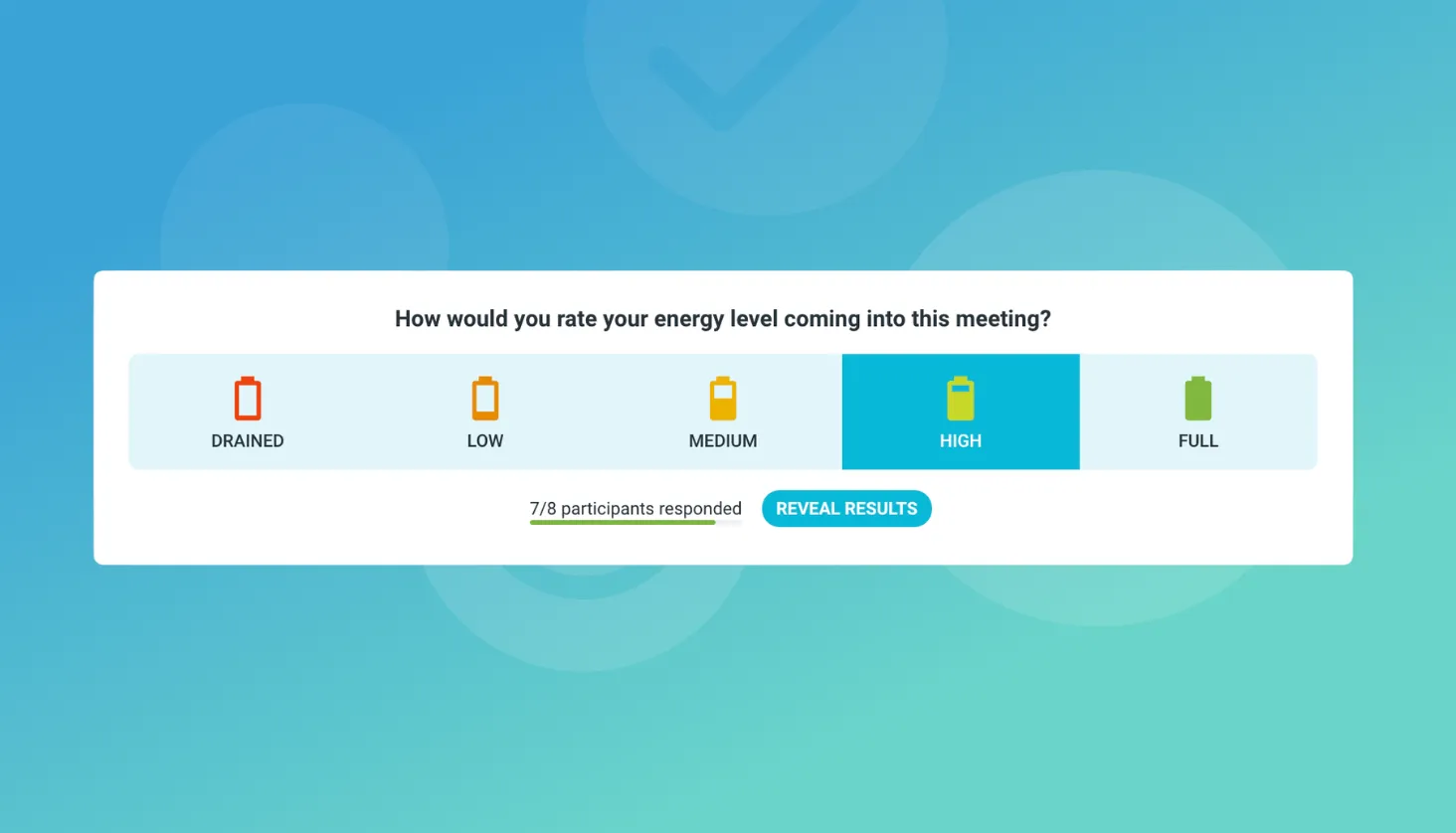
- On a scale of 1–10, how are you arriving at this retro? What’s your number?
- What’s one word that describes how this sprint felt?
- If this sprint were a weather forecast, what would it be?
- What emoji best describes your week?
- What’s one thing outside work you’re looking forward to this week?
- If you had to give this sprint a movie title, what would it be?
- What’s something small that went better than expected this sprint?
- How full is your tank right now, and what’s draining it?
Icebreaker questions
- What’s a superpower you wish your team had right now?
- If our team were a sports team, what sport would we be playing?
- What’s one thing a teammate did this sprint that you didn’t get to thank them for?
- If you could fix one thing about our process overnight, what would it be?
- What’s the biggest assumption we made this sprint?

Classic sprint retrospective questions
These cover the essentials without being prescriptive, leaving room for the team to surface what actually matters. If you want a structured starting point for your session, TeamRetro’s sprint retrospective template has you covered.
What went well?
- What’s one thing you’re genuinely proud of from this sprint?
- Where did the team perform above expectations?
- What made collaboration easier than usual?
- Was there a moment in this sprint where things just clicked?
- What process or tool saved us time or prevented a problem?
What didn’t go well?
- Where did we feel most blocked or frustrated?
- What slowed us down that we could have anticipated?
- Were there any surprises that derailed our plans? How did we handle them?
- Where did our estimates fall short, and why?
- What’s a recurring problem we keep talking about but haven’t fixed?
What should we do differently?
- If we ran this sprint again with the same team, what’s the first thing we’d change?
- What experiment could we run next sprint that’s low risk but high potential?
- What’s one concrete thing we could do to improve team communication?
- Is there a meeting, ceremony, or process we could cut or simplify?
- Who do we need to involve earlier in our work?
Start, Stop, Continue retrospective questions
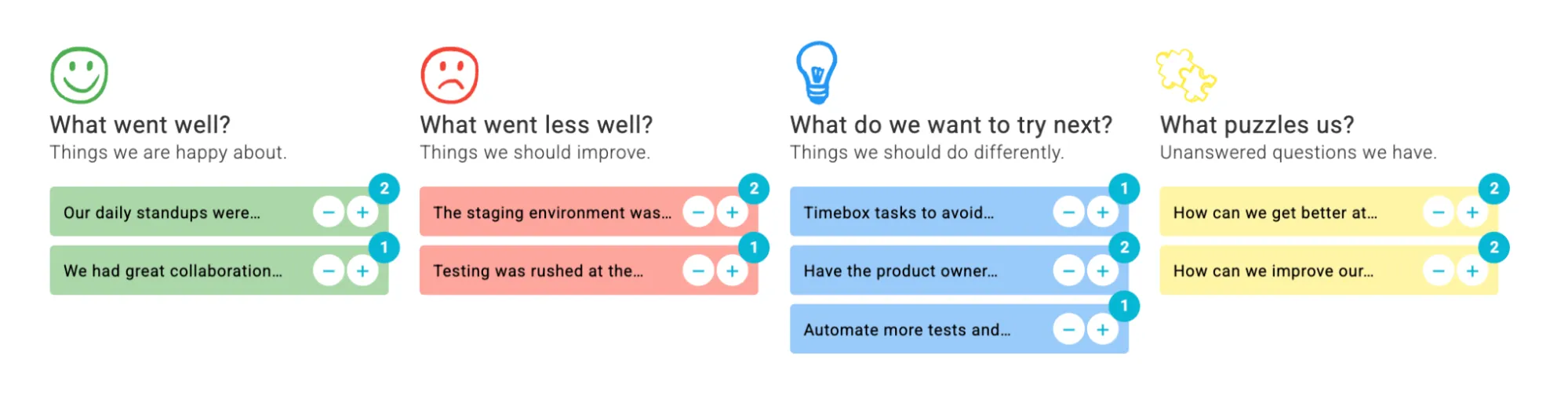
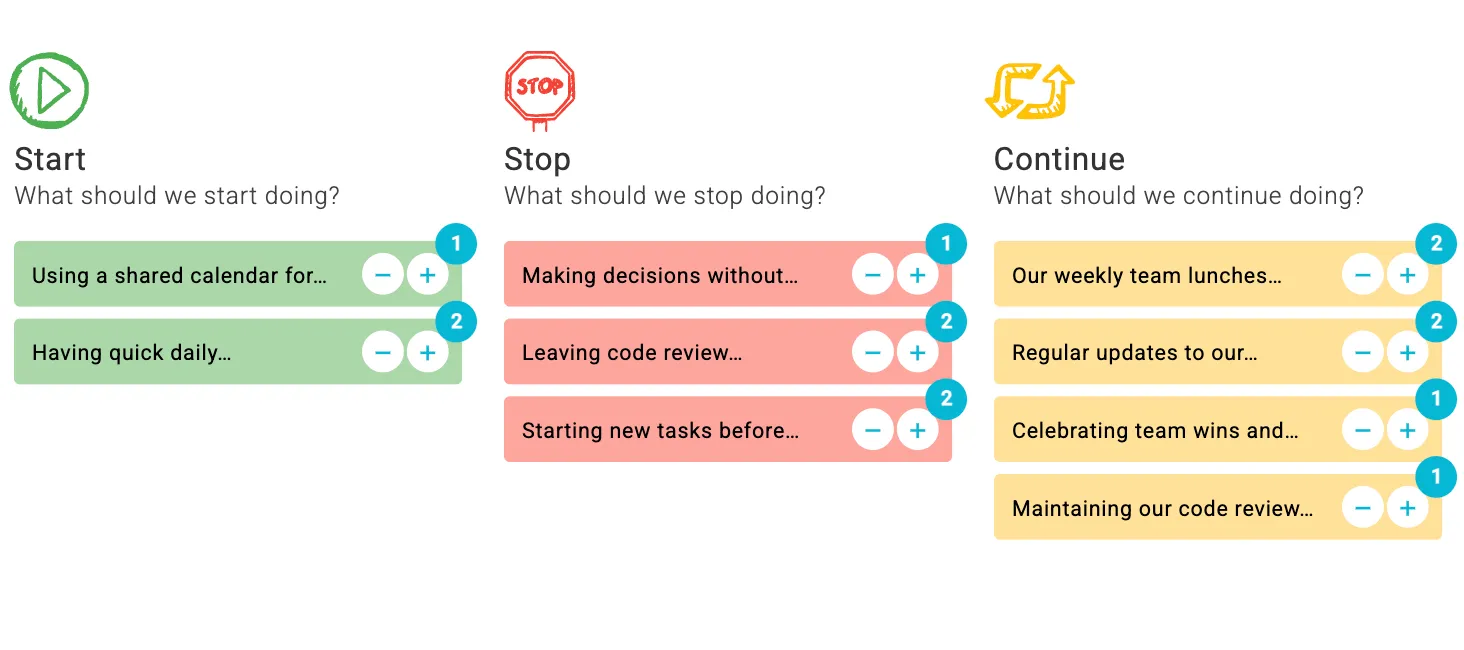
The Start-Stop-Continue format is action-oriented by design. Here are questions that work well within each column.
Start questions
- What’s something we’ve been avoiding that we know would help?
- Is there a practice from another team we’ve seen work that we haven’t tried?
- What one habit, if adopted next sprint, would make the biggest difference?
- What feedback are we not collecting that we should be?
- Are there conversations we keep postponing that we need to have?
Stop questions
- What’s something we’re doing out of habit that no longer adds value?
- Where are we creating unnecessary work for ourselves or each other?
- Is there a meeting we could make shorter, less frequent, or cancel entirely?
- What are we tolerating that we shouldn’t be?
- Where are we over-engineering or over-documenting?
Continue questions
- What’s working so well that we need to protect it from change?
- What practice from this sprint deserves to become a permanent team norm?
- Which team behaviors have made the biggest difference to delivery?
- What’s something a teammate does that you’d like the whole team to adopt?
- Where have we made a recent improvement that’s starting to pay off?
Tip: Anchoring bias is real. The first voice in the room shapes everyone else’s thinking. TeamRetro lets you control this directly: choose Anonymous mode to hide all names even from the facilitator, Aliases to give each participant a unique avatar and name, or Named if full visibility suits your team. You can also keep ideas hidden during brainstorming and only reveal them in the next step, so everyone contributes independently before the group discusses. It’s one of the simplest ways to get more honest, diverse responses from your Start, Stop, Continue retro.
Agile retrospective questions for scrum teams
These questions are designed to bridge reflection and action within a Scrum framework, useful for Scrum Masters, agile coaches, and self-organizing teams alike. For a deeper look at where retrospectives sit within the Scrum process, the official Scrum Guide is worth bookmarking. TeamRetro also has a dedicated Scrum retrospective template built around the sprint ceremonies.
For Scrum Masters and facilitators
- Were our sprint goals clear and achievable at the start of the sprint?
- How well did we protect the sprint from scope changes?
- Did our Definition of Done serve us well this sprint, or does it need updating?
- Were blockers surfaced early enough in daily standups to resolve quickly?
- How effective was our sprint planning, and were estimates realistic?
For agile teams
- Where did we honor our agile values this sprint? Where did we slip?
- Did we involve the product owner at the right moments?
- How well did we balance technical debt against new feature work?
- What would make our next sprint planning session more efficient?
- Did we demo work we’re genuinely proud of in the sprint review?
Team health retrospective questions
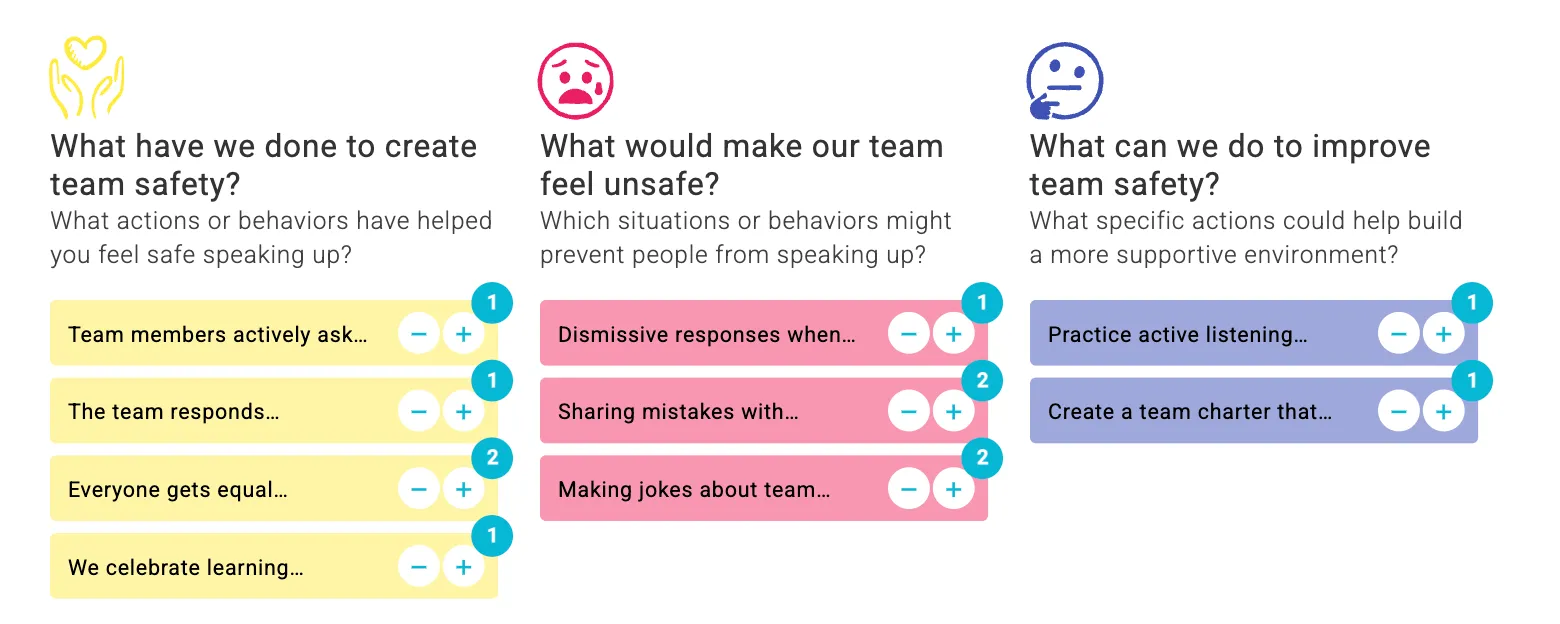
Sprint velocity matters. But so does the health of the people delivering it. These questions surface the human side of your team’s performance: psychological safety, workload balance, trust, and morale. Good to use quarterly, or whenever team energy feels off.
Psychological safety
- Do you feel comfortable raising concerns without fear of how they’ll land?
- When was the last time someone on the team changed their mind based on feedback?
- Is there anything you’ve been wanting to raise in retros but haven’t? What’s stopping you?
- Do we disagree well? Can we challenge ideas without it becoming personal?
Workload and wellbeing
- Is anyone feeling close to burnout right now? What would help?
- Do you feel your workload is sustainable? If not, what would need to change?
- Are we saying yes to too many things? What should we push back on?
- Is your work energizing you or draining you right now?
Trust and collaboration
- Do you feel you can rely on your teammates to deliver what they commit to?
- Is there anyone on the team you haven’t connected with enough this sprint?
- Where do we collaborate well, and where do we work in silos?
- Are there unresolved tensions on the team that are affecting our work?

Retrospective questions for remote and hybrid teams
The energy and spontaneity of an in-person retro doesn’t transfer automatically to video. You have to design for it. These questions work well for distributed teams because they invite openness without relying on body language or room dynamics. If you’re looking for a tool built for this, TeamRetro is an online retrospective tool designed specifically for remote and hybrid teams.
- What’s something that’s harder working remotely right now, and what would make it easier?
- Are we over-relying on async communication where a quick call would work better?
- Does anyone feel like they’re losing visibility or recognition working remotely?
- What’s the best virtual collaboration moment we had this sprint?
- Are our meetings well-facilitated for people in different time zones?
- What tools or processes have improved our remote collaboration lately?
- Do you feel connected to the rest of the team? If not, what would help?
- What’s something you miss about in-person work, and can we recreate any of it?
Closing retrospective questions
How you close a retro shapes whether people actually follow through on commitments. These questions help the team leave with clarity, not just conversation.
Commitment and accountability
- What’s the one thing you personally commit to doing differently next sprint?
- Who’s owning each action item, and do they have enough context to make progress?
- Is there anything from our action list last retro that we should carry forward?
- What would “done” look like for each action item we’ve agreed on?
Retro health check
- How useful was this retrospective, and what would make the next one better?
- Did we spend time on the right things today?
- Was everyone’s voice heard? If not, who do we want to hear more from next time?
- How confident are you that we’ll actually act on what we discussed?
- What format or structure should we try next time?
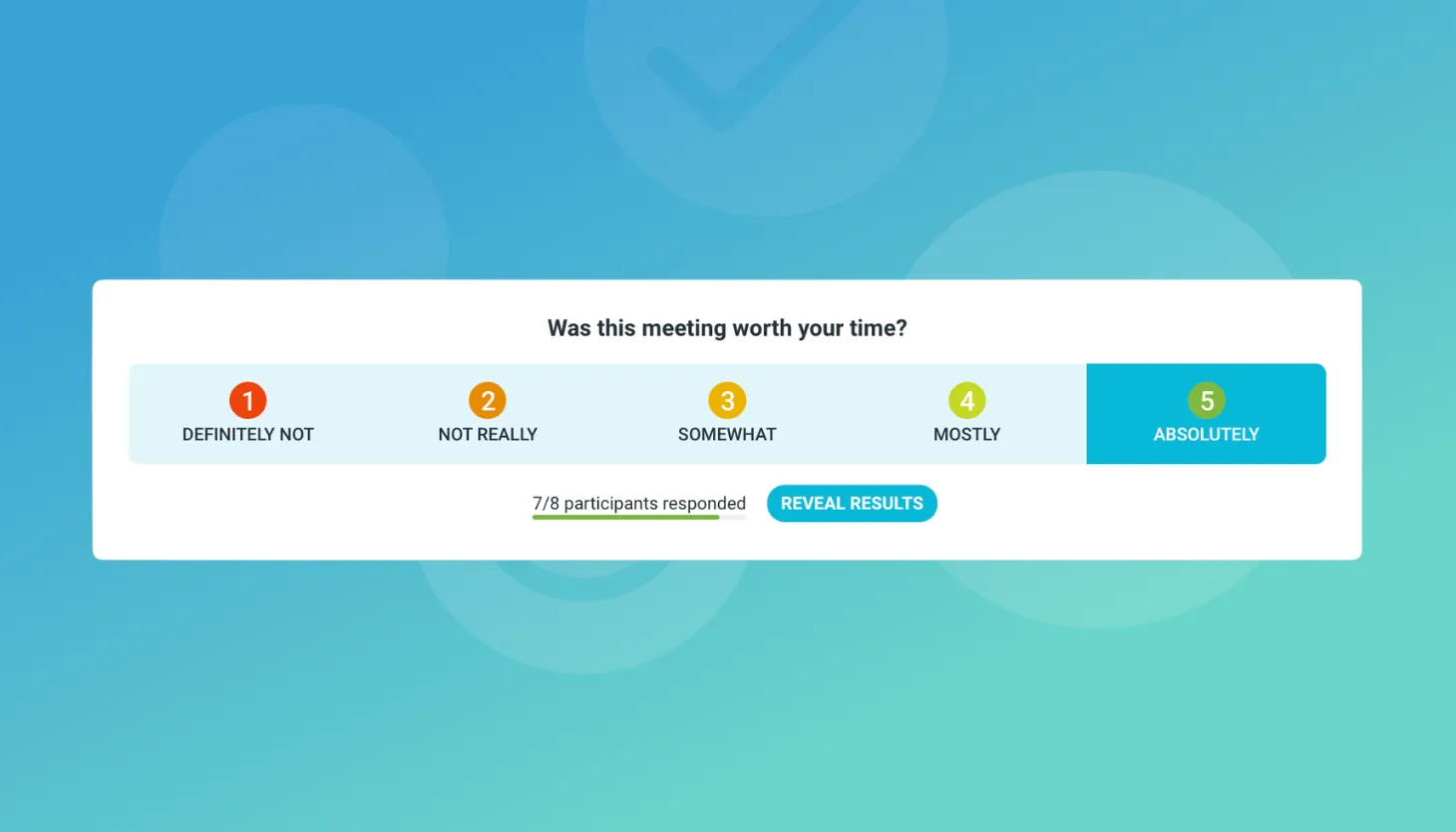
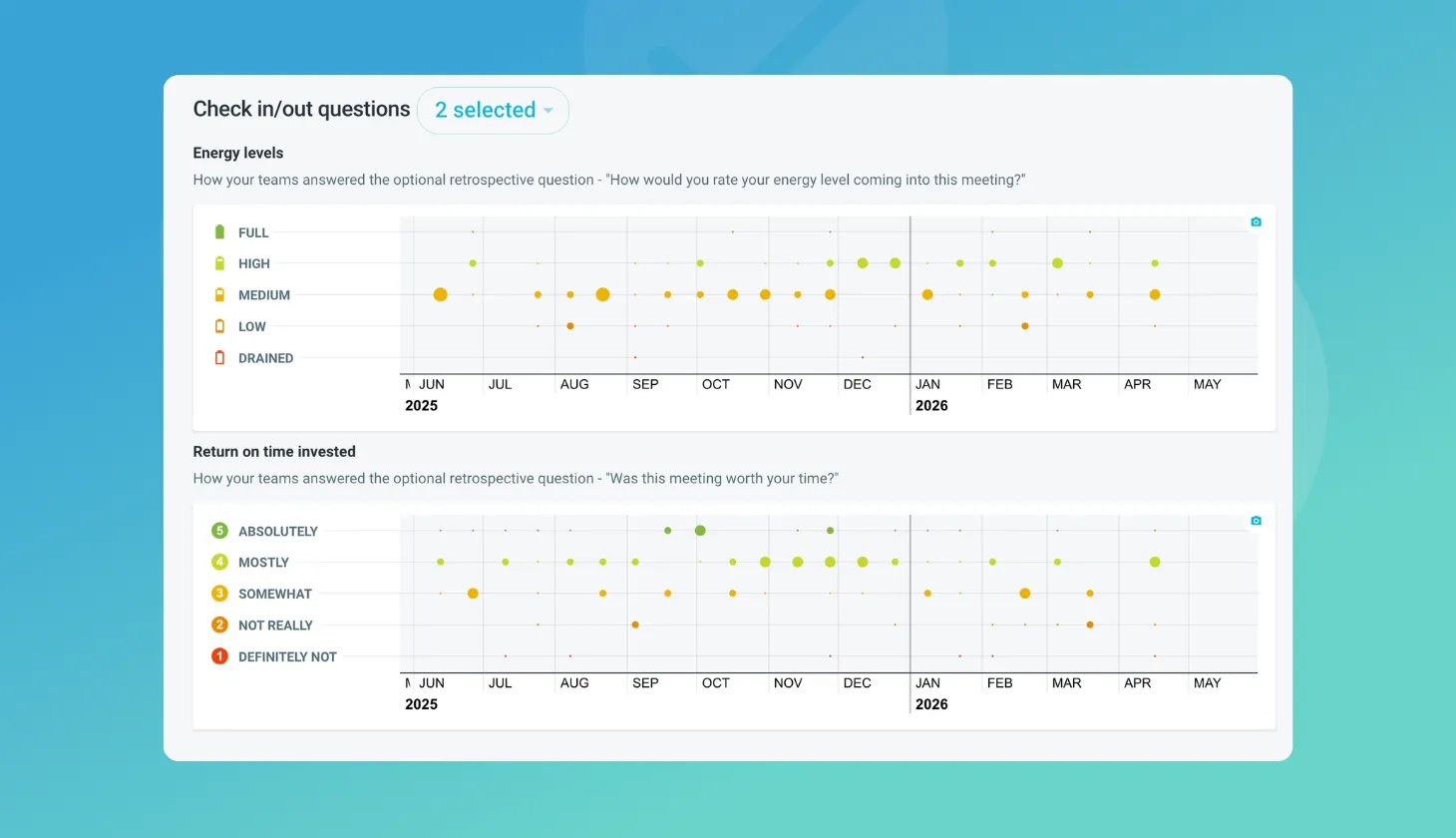
Tip: Check-in and check-out questions aren’t just conversation starters. They’re data. TeamRetro tracks how your team answers questions like “How would you rate your energy level coming into this meeting?” and “Was this meeting worth your time?” across every sprint, giving you a visual timeline of team mood and retro effectiveness over months. Spot when energy consistently dips before a retro, or whether your team finds retrospectives genuinely worthwhile, and act on it before it becomes a problem. It’s the kind of longitudinal insight most teams never get because they treat check-ins as throwaway warmups rather than signals worth measuring.
How to choose the right retrospective questions
Match questions to where the team is at
A team coming off a bruising sprint needs different questions than one that’s been coasting. If energy is low, start with lighter icebreakers and move toward actionable themes. If trust is fraying, lean on the psychological safety questions before jumping to process.
Rotate formats, not just questions
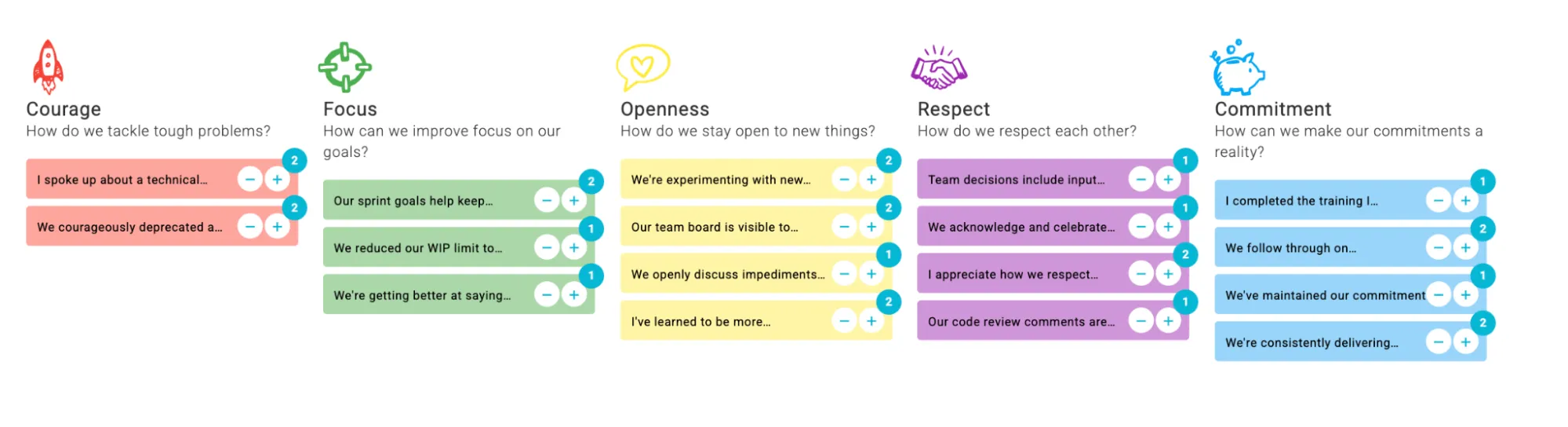
Changing your retrospective format, not just swapping out a few questions, is the most effective way to keep retros fresh. Team Radar, 4Ls, Sailboat, Mad-Sad-Glad: each format surfaces different things. Use our retrospective template library to find one that fits your team’s current focus.
Don’t ask more than you can act on
A focused retro with five great questions and three strong action items beats a sprawling one with fifteen questions and no follow-through. Pick what’s most relevant to this sprint and leave the rest for next time.
Use anonymous input for sensitive topics
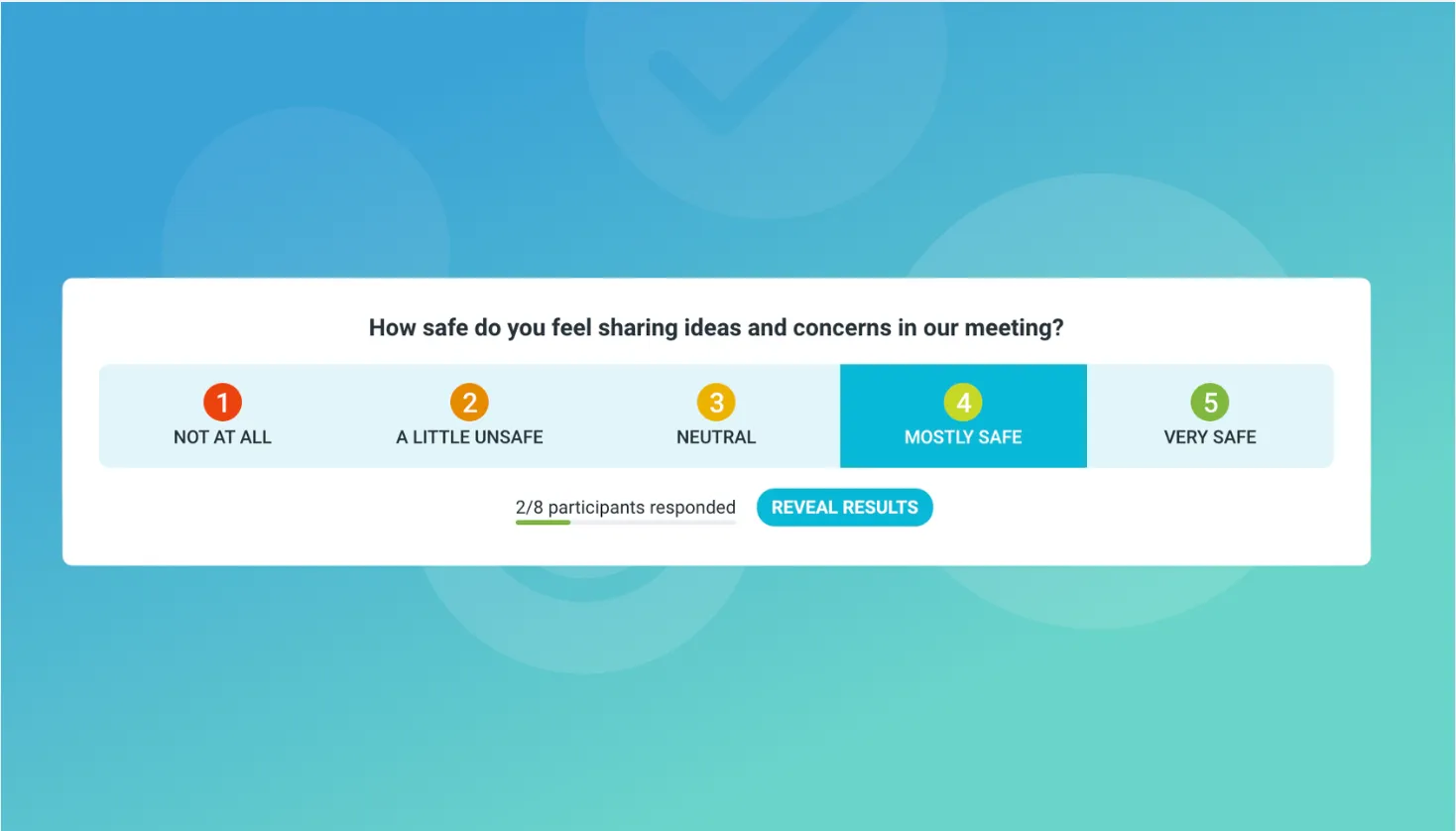
For questions touching on burnout, team dynamics, or trust, anonymity unlocks honesty. When people can respond without fear of attribution, you get the real picture.
How to use retrospective questions effectively
Having a strong list of retrospective questions is useful, but knowing when and how to use them matters even more. The best Scrum Masters don’t simply ask more questions. They choose the right questions for the team’s current context, create the conditions for honest answers, and turn the discussion into meaningful action.
Know when not to ask certain questions
Some retrospective questions are powerful, but only when the team feels safe enough to answer honestly. For example, a question like “Do you feel comfortable raising concerns without fear of how they’ll land?” can surface important issues around psychological safety. But if the team does not trust the facilitator, each other, or the wider organization, people may give safe answers instead of honest ones.
For sensitive topics (burnout, conflict, team trust, leadership concerns, workload pressure), consider using anonymous input, private brainstorming, or a lighter question first. The goal is not to force vulnerability. It’s to create enough safety that useful truth can emerge.
A good rule of thumb: if the question could make someone feel exposed, make sure anonymity, facilitation boundaries, and follow-up safety are clear before asking it.
Turn answers into experiments, not just discussion
Better questions only improve the team if the answers lead somewhere. A retrospective should not end with a long list of observations and no clear next step. As Atlassian notes in their retrospective guide, the value of a retro comes from insights that actually get implemented. Once the team has identified an issue, turn it into a small experiment, assign an owner, and agree how you’ll check whether it helped.
Instead of ending with “We need better communication,” turn it into something testable:
- “For the next sprint, we’ll add a five-minute dependency check after daily standup.”
- “The Scrum Master will review whether blockers are being raised earlier.”
- “We’ll revisit this in the next retro and decide whether to keep, change, or stop it.”
Once the team agrees on an improvement, capture it as a visible action item with an owner and revisit it in the next retrospective. TeamRetro makes it easy to track retrospective action items so nothing slips through the cracks between sprints.
Use question combinations to avoid overwhelm
With 100 questions to choose from, newer facilitators may wonder where to start. You do not need to use many questions in a single retro. In most cases, five well-chosen questions are better than fifteen loosely connected ones.
To avoid anchoring bias (where the first voice in the room shapes everyone else’s thinking), consider structuring your retro so participants submit answers independently before group discussion. The 1-2-4-All method from Liberating Structures is a great technique for this: individuals reflect first, then pairs, then groups of four, before the whole team discusses.
Here are a few simple combinations:
Low-energy sprint
- 1 check-in question
- 2 workload or wellbeing questions
- 1 improvement question
- 1 closing commitment question
High-performing sprint
- 1 celebration question
- 2 questions about what worked well
- 1 question about what to protect or continue
- 1 action question to reinforce the behavior
Tense or difficult sprint
- 1 neutral check-in question
- 1 question about blockers or friction
- 1 anonymous psychological safety question
- 1 question about what support the team needs
- 1 small next-step commitment
Remote or hybrid team retro
- 1 connection question
- 2 remote collaboration questions
- 1 visibility or communication question
- 1 action question for improving team rhythm
The best retrospective questions are not the most clever ones. They are the ones your team is ready to answer and act on.
Run better retros with TeamRetro
The right questions are only as good as the space you create to answer them. TeamRetro is an agile retrospective tool built for agile teams, with 100+ templates, anonymous idea submission, real-time voting, and built-in action tracking so every retro leads somewhere.
Ready to run a retro your team will actually look forward to? Try TeamRetro free. No credit card required.
Related posts
- July 18, 2026The best team health check tools in 2026
- July 18, 2026Our AI teammates joined our retro

- July 16, 2026AI in Agile Project Management: What Teams Need to Know

- July 13, 2026Context engineering needs a feedback loop

- July 13, 2026How to gather feedback from your AI agents

- June 25, 2026Online whiteboards for retrospectives: templates and techniques that work
- June 19, 2026The best collaboration tools for remote teams in 2026 (and the layer most stacks miss)

- June 18, 202612 new retrospective ideas to break the rinse and repeat cycle