The Retrospective Prime Directive
The Retrospective Prime Directive is a statement that assumes everyone did their best. See what it says, why it matters, and how it sets a blameless tone.
The Retrospective Prime Directive is a short statement, written by Norm Kerth, that asks everyone to assume their teammates did the best job they could with what they knew at the time. It sets a blameless tone so the team can focus on improving the way they work rather than finding fault.
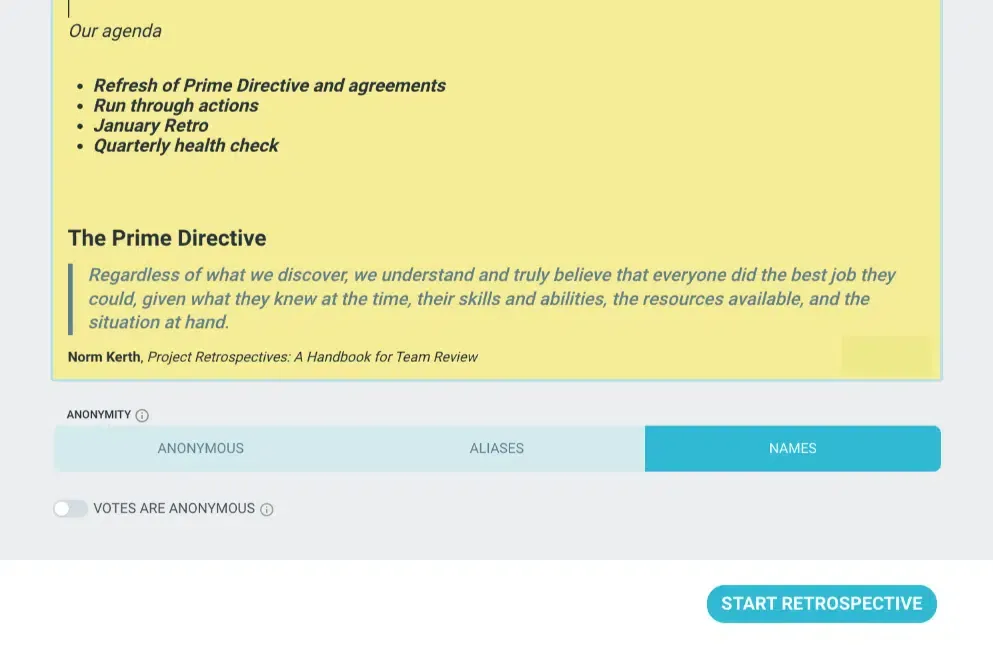
“Regardless of what we discover, we understand and truly believe that everyone did the best job they could, given what they knew at the time, their skills and abilities, the resources available, and the situation at hand.” — Norm Kerth, Project Retrospectives: A Handbook for Team Review
This mindset aims to create a culture and communication style at the retro. Rather than judgment, blame, and shaming, the retrospective prime directive seeks to create a collaborative way of thinking. Each person in the team shows respect, understanding, and curiosity in order to learn and grow together. The Prime Directive forms the basis of the way a retrospective itself should be run.
There are a few key notable points about this prime directive. It assumes that people are genuine and have the best interests of the team and product in mind. It encourages a safer space for people to understand that there is not just one perfect or ideal solution and that experimenting, growth, and adaptation are more important. The information a person has at any given point has informed and guided them to a decision, and the way to improve and learn is through collaboration and information sharing.
This ensures that the framing of what happens in the retrospective is not aimed at a particular person or area, but about how the team overall can improve their overall outcomes.
This is just one of the reasons we have this as the default text in the Context and Agenda of your retrospective meetings. As a new team, it’s important to run through this as a starting point, or to tailor it based on your team dynamics.
This helps everyone behave and act in an agreed and productive way at your meeting.