Scrum Master's retrospective guide
A complete Scrum Master's guide to retrospectives: purpose, the five stages, templates, games, psychological safety and why retros fail.
This is the long version. If you facilitate retrospectives for a Scrum team and want the whole subject in order (what the event is for, how to run it, and what to do when it stops working), the chapters below cover it end to end. Read them in sequence, or drop into the one you need.
Start with the shorter guide to running effective retrospectives if you want the practical version on one page: what a retrospective is, the five phases, a 60-minute agenda you can copy, and how to pick a format. This guide is what comes after that.
Who it’s for. A Scrum Master, team lead or delivery manager who runs these regularly. It assumes you know what a sprint is. It does not assume you have facilitated much.
How the 16 chapters are organized. Four groups, roughly in reading order:
- What a retrospective is, and why it earns its hour: the Sprint Retrospective itself, why retros matter, and the Prime Directive that sets the tone.
- Running one: online versus in person, why remote retros carry more weight, how to run a good online session, and a before, during and after checklist.
- Formats, games and safety: choosing a template, agile games for team building, and how to build a room where people say the real thing.
- The Scrum context, and what goes wrong: the four Scrum ceremonies, Sprint Review versus Sprint Retrospective, the Scrum values, roles and artifacts, burndown charts, and finally why retrospectives fail.
How to work through it. Nobody needs all of it at once. If you are running your first retrospective this week, read the Sprint Retrospective chapter, the Prime Directive, and the checklist, then come back for formats once the habit holds. If your retros run but nothing changes afterwards, skip straight to why retrospectives fail. If you need numbers rather than method, our compilation of agile and retrospective statistics gives each figure with its study, its year and a link to the primary source. For the rest of the library, browse all TeamRetro guides.

A sprint retrospective is the Scrum meeting where a team reflects on the last sprint and agrees improvements. Learn the 5 stages, who attends, and how to make action items stick.

Retrospectives drive continuous improvement: see the purpose, the cost of skipping them, and what a well-run retro delivers for your agile team.

The Retrospective Prime Directive is a statement that assumes everyone did their best. See what it says, why it matters, and how it sets a blameless tone.

Online and in-person retrospectives share the same agile goals but differ in logistics. Compare the pros, the cons, and what stays the same for both.
When your team is distributed, the remote retrospective becomes an even more vital agile ceremony. See how it rebuilds connection, accountability and trust.

Run a great online retrospective with remote teams: allow time to connect, set clear etiquette, use real-time feedback, check the tech, and keep the basics.

Use this practical before, during, and after checklist to make sure your agile retrospective runs smoothly and ends with clear, tracked action items.

See 15 free retrospective templates for first-timers, people, process, product, bad sprints, and fun, plus how to choose the right one for your team.

Agile games build high-performing teams. See what they are, why they work, the research behind them, and a categorized list of games to play with examples.

Help your team give honest feedback. Learn the signs your team lacks psychological safety and the steps a Scrum Master can take to build it in retros.

Scrum has four ceremonies (now called events): Sprint Planning, the Daily Scrum, the Sprint Review, and the Sprint Retrospective. Learn the purpose, timebox, and attendees of each.
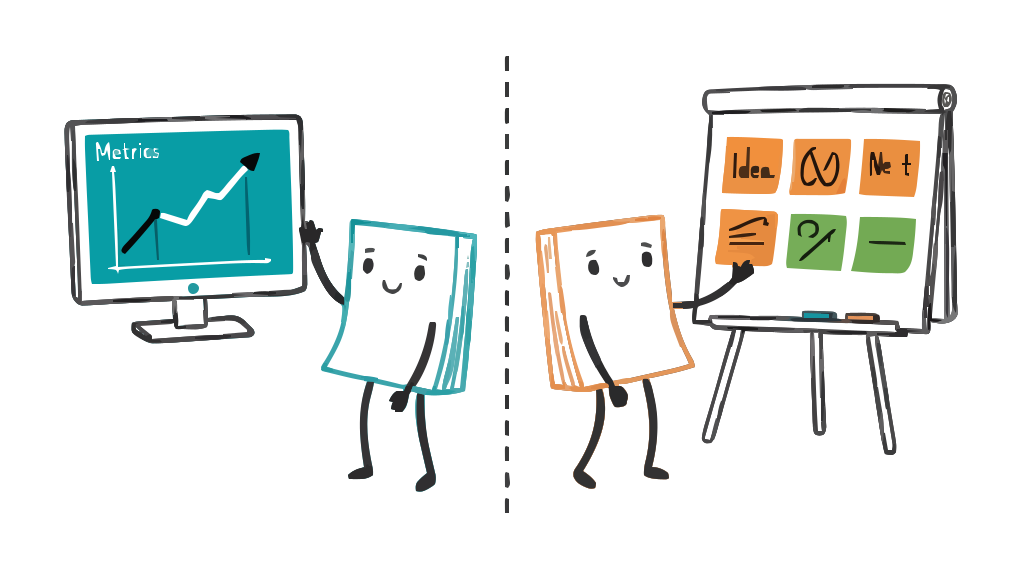
The Sprint Review inspects the product with stakeholders; the Sprint Retrospective improves how the team works. Learn the difference, who attends, and why you need both.

Scrum has five values: Commitment, Focus, Openness, Respect, and Courage. Learn what each one means in practice and how a retrospective brings them to life.

Scrum has three roles: the Product Owner, the Scrum Master, and the Developers. Learn what each is accountable for and how they work together as one Scrum Team.
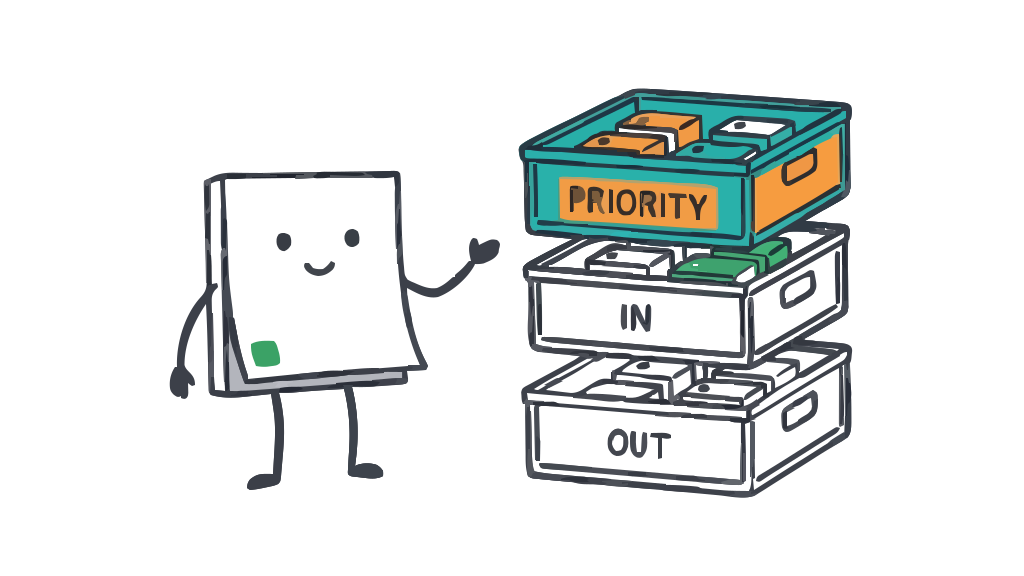
Scrum has three artifacts: the Product Backlog, the Sprint Backlog, and the Increment. Learn what each one is, its commitment, and how they create transparency.

Most retrospectives fail for reasons no icebreaker fixes: powerlessness, weaponized feedback, and broken follow-through. Here's how to make yours matter.