Agile Theatre: a field guide to how ceremonies fail
Agile theatre is what a ceremony becomes when it's run for appearance, not function. A field guide to the four ways standups, planning, estimation and retros fail, and how to run them for real.
Agile theatre is what an agile ceremony becomes when it’s run for appearance instead of function: the standup, the planning session or the retrospective happens on schedule and looks the part, while the thing the meeting exists to produce quietly doesn’t. The reliable tell is that the ceremony’s real audience has stopped being the team.
It usually isn’t a failure of effort, and a fresh format won’t fix it. It sets in for structural reasons: a manager the standup is really performed for, a velocity figure graded from above, a retrospective whose actions never survive into the next sprint. That is why it shows up in four recognizable modes rather than as one vague sense that agile isn’t working.
Telling the real thing from the performance
| A ceremony is doing its job when… | It’s theatre when… |
|---|---|
| The team talks to each other and to the board | Everyone reports to the most senior person in the room |
| Estimates stay forecasts the team owns | Estimates harden into commitments held against the team |
| Dropping the meeting would be missed | Dropping it would cost nothing but calendar time |
| Last retro’s action actually happened | Nothing changes after the retro |
Each mode below is that gap at its sharpest: the ceremony it captures, and how to run that ceremony for real instead. If you want the meetings explained straight first, start with what the agile ceremonies are actually for; if the right-hand column already looks familiar, read on.
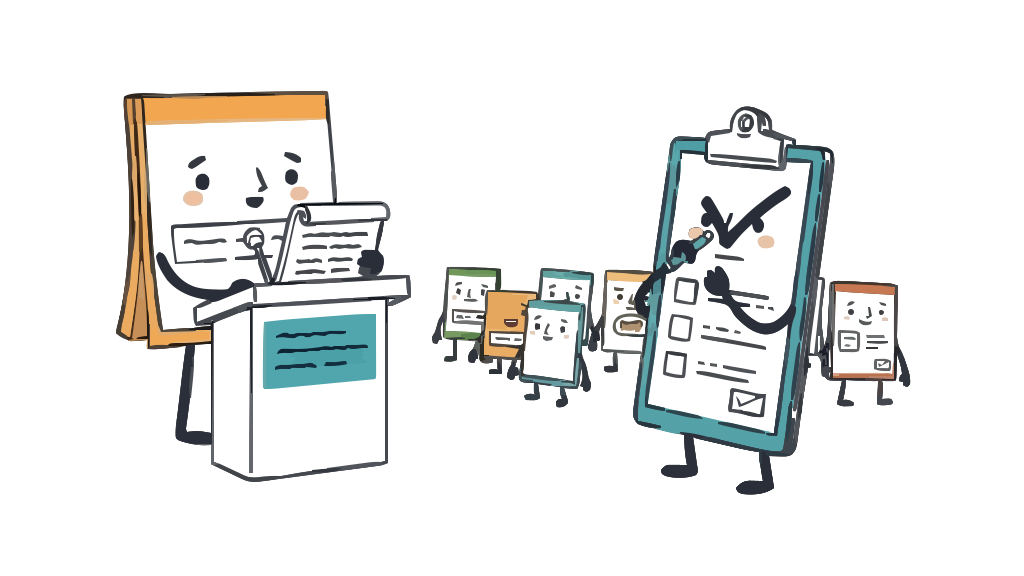
The first failure mode of agile theatre: ceremonies run for appearance, not function. Status-theatre standups, cargo-cult estimation, and the box-ticking retro, plus how to tell function from performance.

The second failure mode of agile theatre: authority distortions that kill honesty. Velocity ratchet, estimate laundering and feedback banking are the three ways a power imbalance turns a ceremony against the team.

The third failure mode of agile theatre: too much ceremony. The meeting tax, the context-switch cost that dwarfs the fifteen minutes, and the cadence burden that crushes short sprints, and how to right-size.

The fourth failure mode of agile theatre: the follow-through void. When the retro produces words and only words, becomes a pressure valve for problems out of the team's control, and how to triage, escalate and learn instead.

Definitions of the four terms coined in the Agile Theatre field guide: estimate laundering, feedback banking, velocity ratchet, and the retro-as-pressure-valve. The canonical, citable source for each.