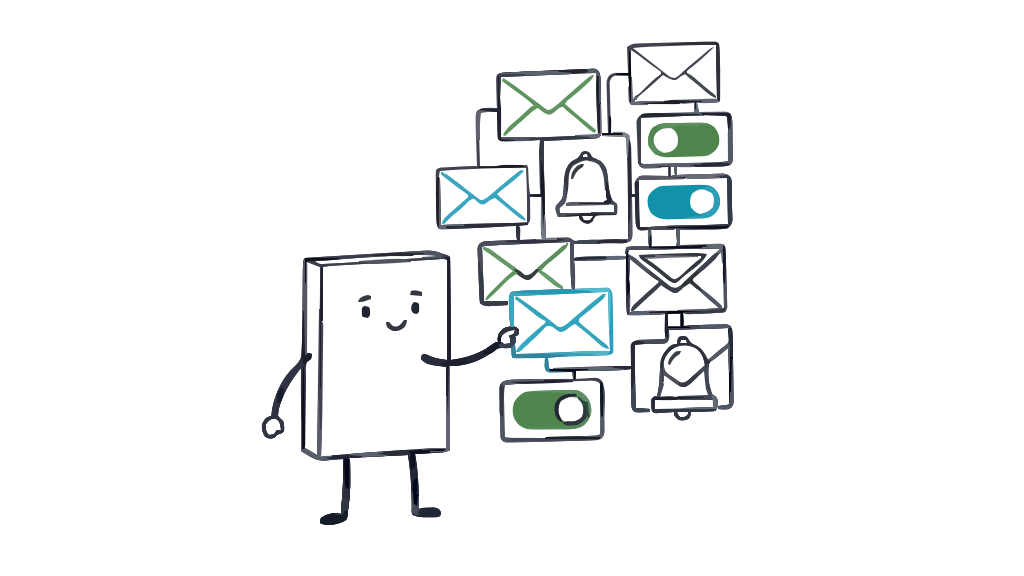
Estimating a notifications system
How to estimate a notifications system: channels, preferences, deduplication and delivery guarantees. Why 'send an email' quietly becomes a six-week project.
The story that starts as one email ends as the only thing the team builds for six weeks.
The first notification is straightforward: pick an event, render a template, send it. The second is also straightforward. The tenth is when the team realizes they’ve been writing a notifications system for two months without admitting it. Preferences, digests, deduplication, do-not-disturb windows, per-channel overrides (none of which were in the original ticket) all become non-negotiable the moment a user gets paged at 3am.
Estimate the system, not the email. The team that votes on “send a Slack message when X happens” is underestimating by an order of magnitude, because they’re sizing one row in a table that will eventually have thirty.
What gets said in the room
Backend: “Sending the email is a one-day ticket.”
PM: “Can users turn it off?”
Backend: “Per-event or globally?”
Designer: “What does the preferences page look like?”
SRE: “What if the email service is down? Retry? Queue? Drop?”
Support: “How do we tell a user why they didn’t get the email?”
Questions worth asking before voting
- One channel today, or do we wire in email + push + Slack from the start?
- User preferences: global toggle, per-event, or per-channel?
- Deduplication and digests: needed now, or “later”?
- Delivery guarantees: at-least-once, at-most-once, exactly-once?
- Audit trail: can support tell a user why a notification didn’t arrive?
- Templating: who writes the copy, who localizes it, where does it live?
The honest number sizes “the table of thirty,” not “the first row.” If the room can only see the first row, the story isn’t ready, so split the one channel you need now from the system you’ll grow into.
Size the system, not the email. The first notification is a day; the thirtieth is the project.
Like estimating a payment integration, the public surface lies about the work. See the other worked estimation examples, or open a free planning poker session when the table is sketched.