

Step inside the haunted house of team reflection — where every room reveals a secret about your sprint!
Welcome to the Haunted House, where the echoes of past sprints linger in the halls. In this retrospective, your team explores each eerie room to uncover lessons, celebrate wins, and chase out the ghosts of old habits.
It’s a frightfully fun way to reflect — less about finger-pointing, more about ghost-busting and growth.
Perfect for teams looking to break away from routine retrospectives, this format uses the metaphor of a haunted house to create psychological safety and encourage creative thinking. The Hall of Mirrors reflects distorted perceptions and communication challenges, the Cobwebbed Corridor reveals neglected issues, the Dungeon uncovers what's holding the team back, the Secret Lab celebrates hidden experiments and innovations, and the Graveyard Garden honors what should be laid to rest. This approach helps teams address difficult topics with a lighter touch while maintaining meaningful dialogue.
What is The Haunted House Halloween Retrospective
Hall of Mirrors
What reflections do we see about ourselves and our teamwork?
The Hall of Mirrors represents situations where reality became distorted through miscommunication, assumptions, or differing perspectives. This topic helps teams identify where messages were misinterpreted, expectations weren't aligned, or perceptions didn't match reality. Encourage the team to explore both how they may have misunderstood others and how they may have been misunderstood themselves. This creates empathy and helps prevent future communication breakdowns.
Cobwebbed Corridor
Which tasks or processes have gathered dust and need clearing out?
The Cobwebbed Corridor symbolizes the things that have been ignored, postponed, or allowed to accumulate over time - like cobwebs gathering in forgotten corners. This includes technical debt, postponed conversations, unresolved conflicts, or maintenance tasks that keep getting pushed to the backlog. Help the team identify what's been neglected and why, then prioritize what needs attention. This is about bringing hidden issues into the light before they become bigger problems.
The Dungeon
What’s been dragging us down or haunting our progress?
The Dungeon represents the constraints, obstacles, and limitations that are trapping the team or preventing progress. These might be organizational barriers, resource constraints, outdated processes, or external dependencies that feel like chains. This topic encourages honest discussion about what's genuinely blocking the team versus what might be perceived barriers. Focus on identifying both the 'chains' and potential 'keys' to unlock progress, even if the team can't immediately remove all constraints.
The Secret Lab
What weird and wonderful experiments should we try next?
The Secret Lab is where mad scientists conduct experiments and make breakthrough discoveries. This topic celebrates the team's innovations, creative solutions, learning experiments, and 'aha!' moments - especially those that happened quietly or might otherwise go unrecognized. Encourage team members to share both successful experiments and valuable learning from failed attempts. This reinforces a culture of innovation and psychological safety where experimentation is valued regardless of outcome.
Graveyard Garden
What old habits, tools, or rituals should we finally bury?
The Graveyard Garden is where the team can respectfully bury practices, processes, tools, or approaches that are no longer serving them well. This isn't about blame or failure - it's about acknowledging that what worked in the past may not work now, and it's healthy to let go. Encourage the team to think about what they should stop doing, what's outlived its usefulness, or what's consuming energy without providing value. Frame this as making room for new growth, just as a garden needs clearing.
Suggested icebreaker questions
- What's your favorite Halloween candy, and does your preference reveal anything about your personality?
- If you had to spend a night in one room of a real haunted house, which would you choose and why?
Ideas and tips for your retrospective meeting
- Set the spooky atmosphere by encouraging team members to use Halloween-themed virtual backgrounds, play eerie background music, or even dress up if they're comfortable - the more immersive the experience, the more engaged participants will be.
- Start by 'touring' each room briefly, explaining the metaphor before diving into reflection. This helps everyone understand the theme and gets them thinking creatively about how to frame their contributions.
- Balance the fun Halloween theme with serious reflection - while the format is playful, remind the team that the insights shared are valuable and should be treated with respect, especially in the Dungeon and Cobwebbed Corridor.
- Watch for teams that might overload the Dungeon with complaints. If this happens, redirect energy toward the Secret Lab and encourage solution-focused thinking about what experiments might help escape the dungeon.
- When discussing the Graveyard Garden, frame it positively as making space for new growth rather than dwelling on failures. Celebrate the courage it takes to let go of familiar practices.
- Don't skip the Cobwebbed Corridor even if it feels uncomfortable - neglected issues rarely resolve themselves. Create safety by acknowledging that accumulation is normal and the goal is progress, not blame.
.
How to run effective meetings with TeamRetro
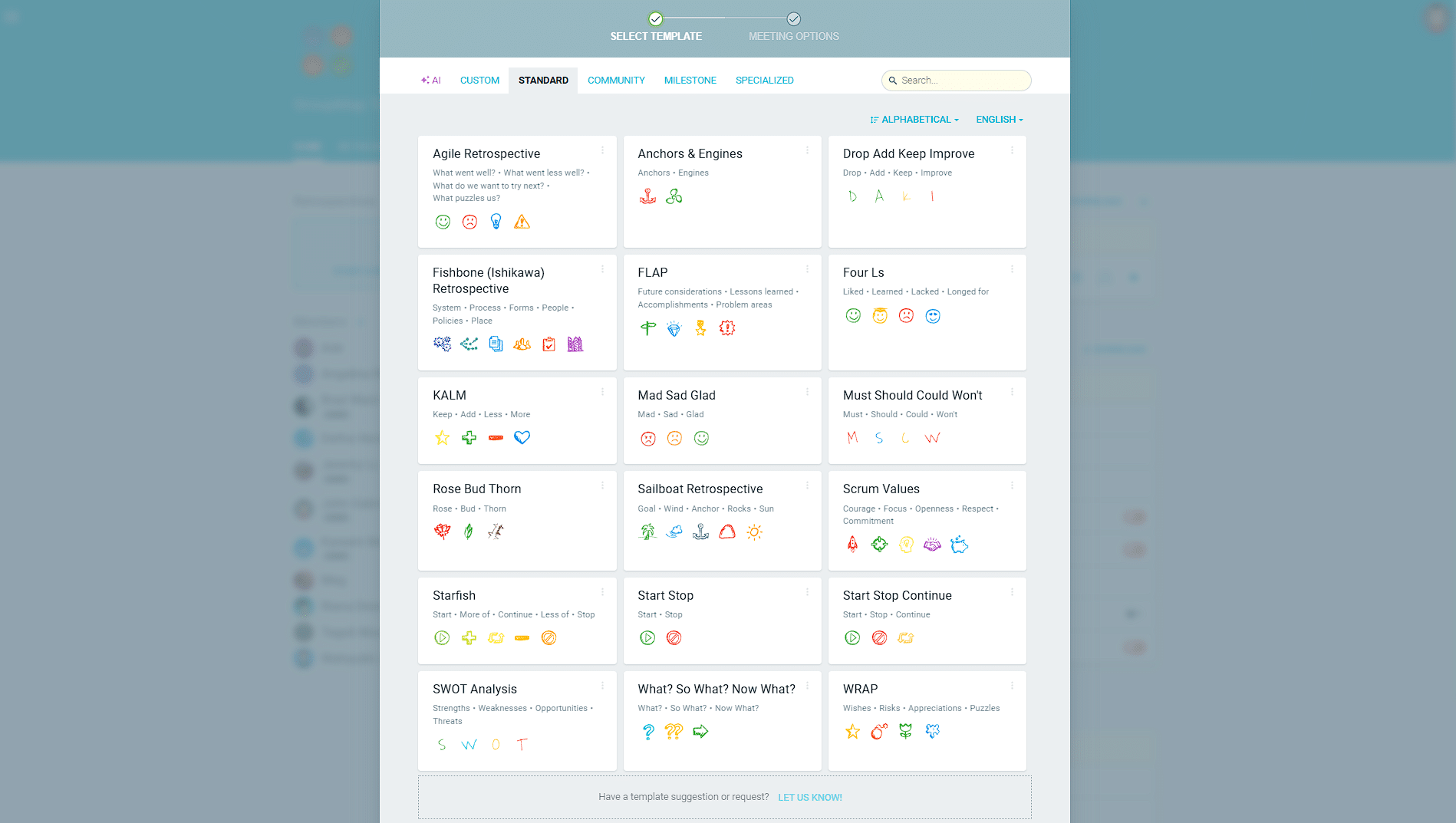
Start Your Session in a Click
Log into TeamRetro and choose your template. Customise questions and the workflow to create your perfect retro for your team.
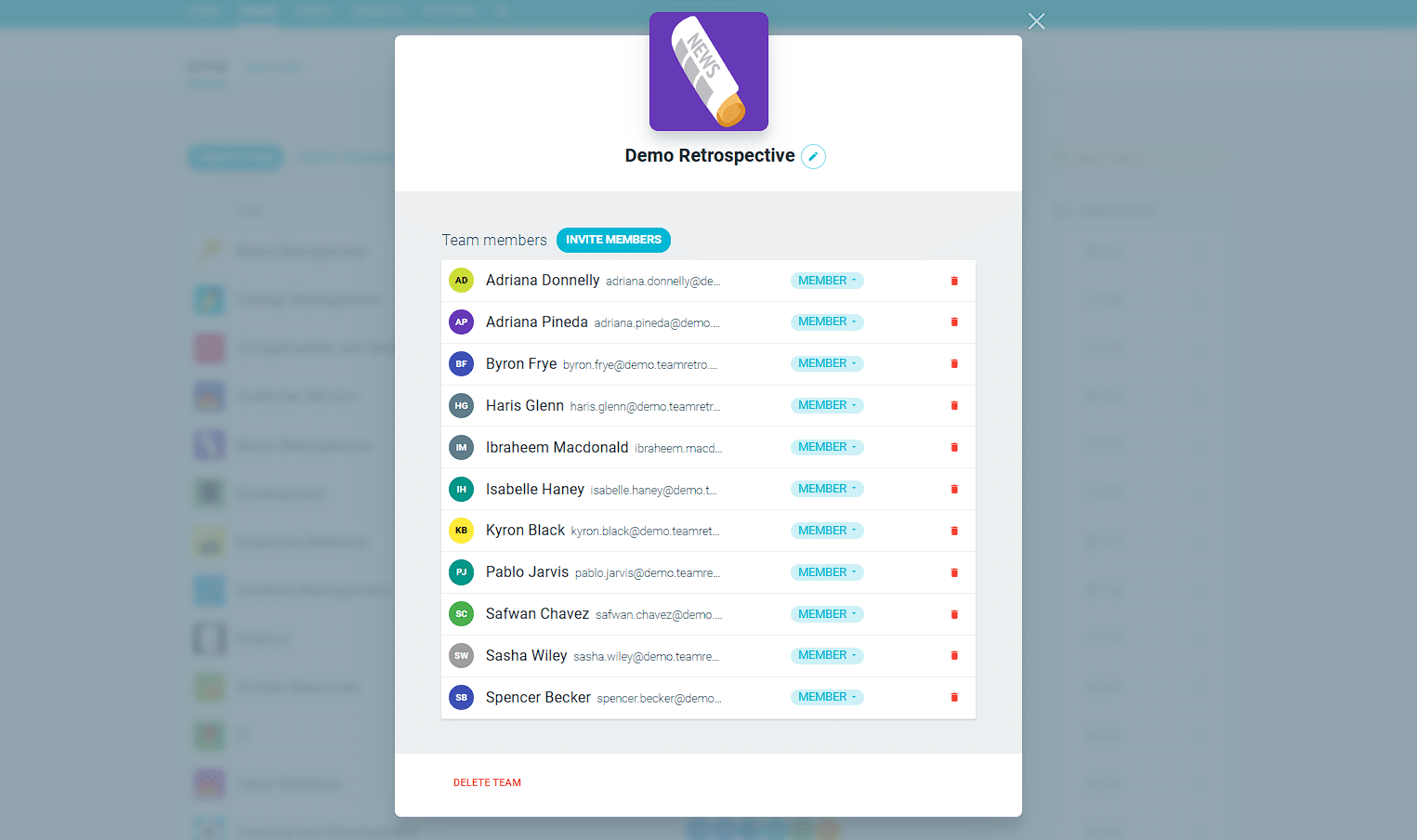
Create Your Team Easily – No Separate Accounts Needed
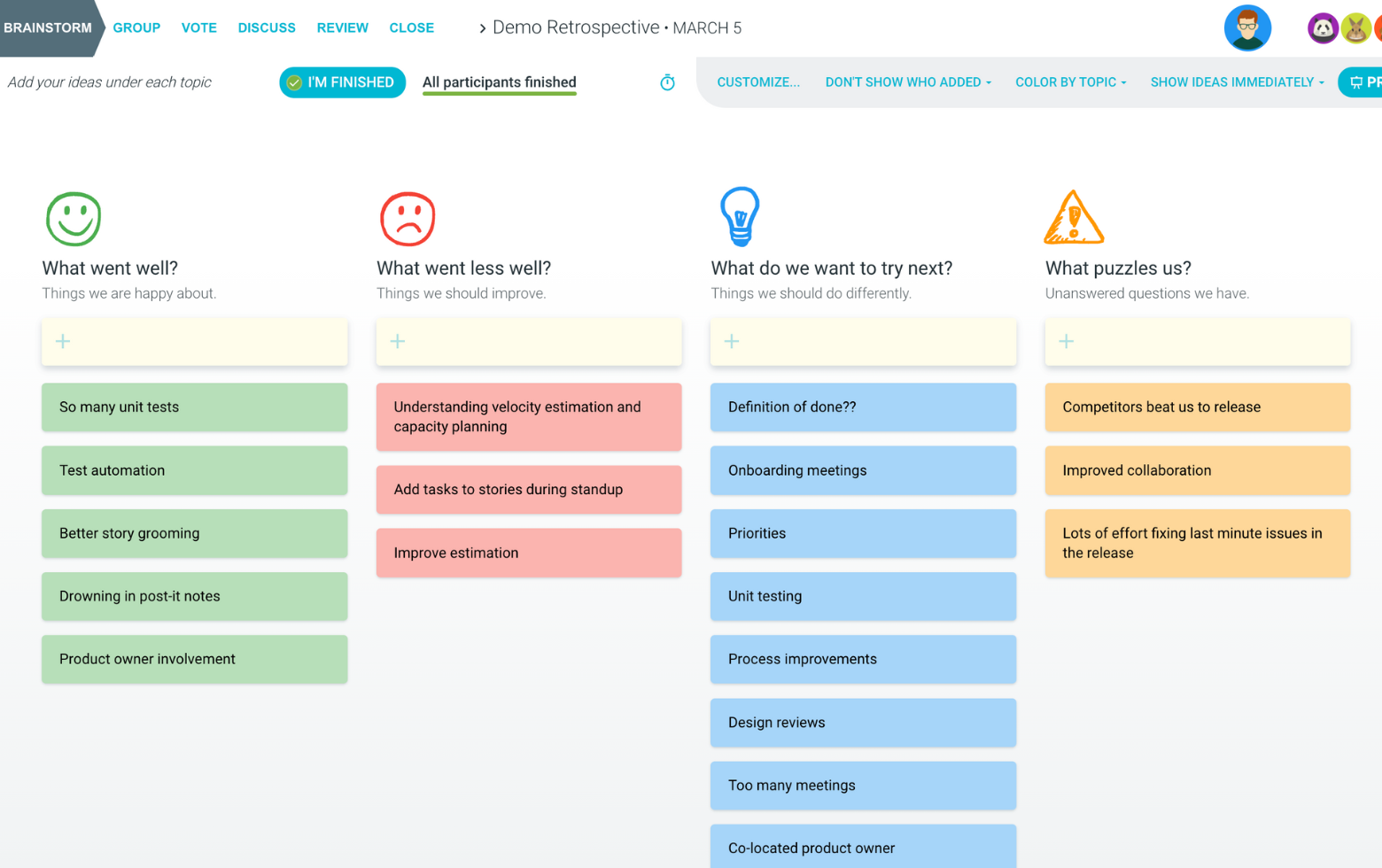
Brainstorm Individually – Free From Bias
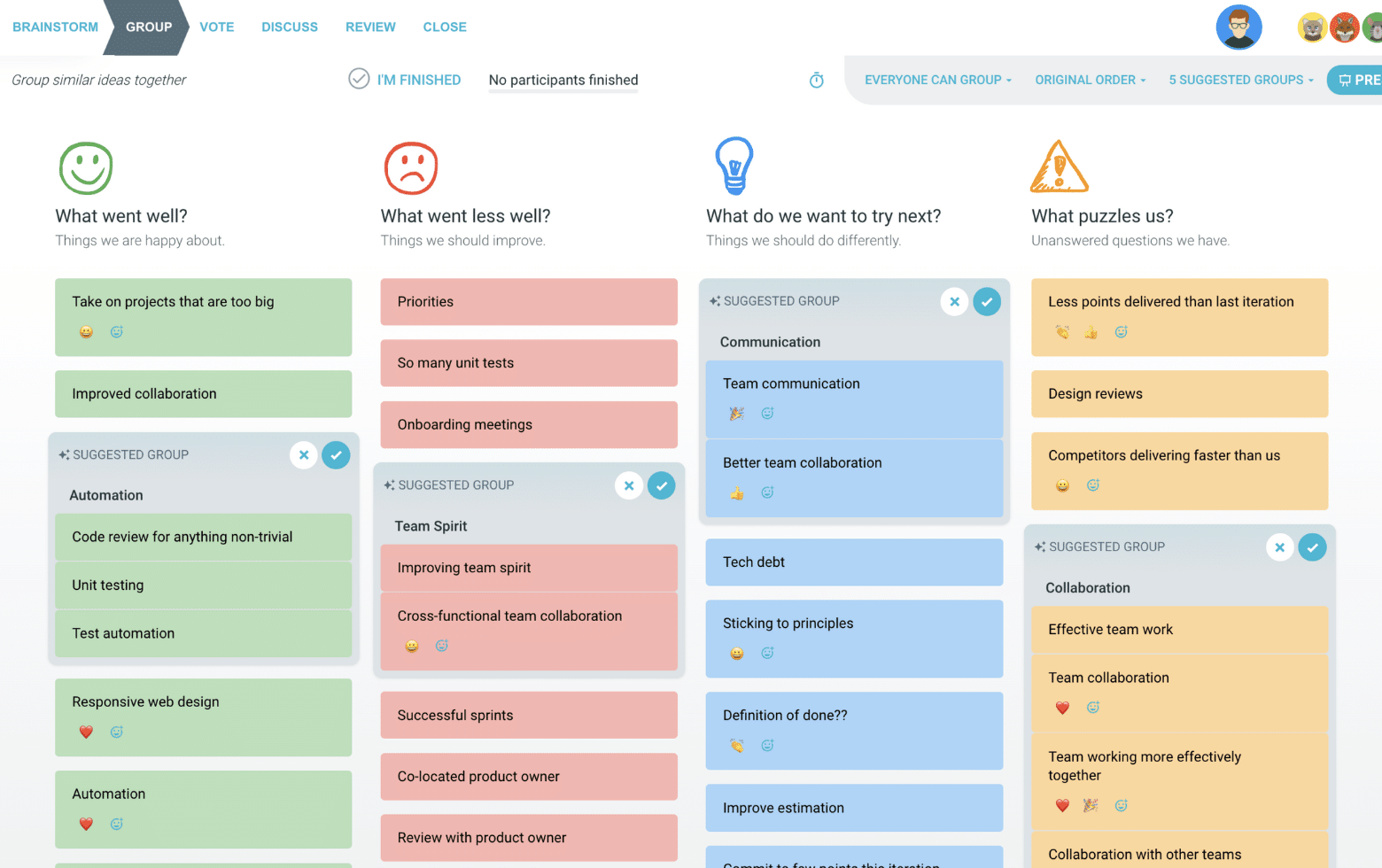
Smart Grouping for Faster Insights
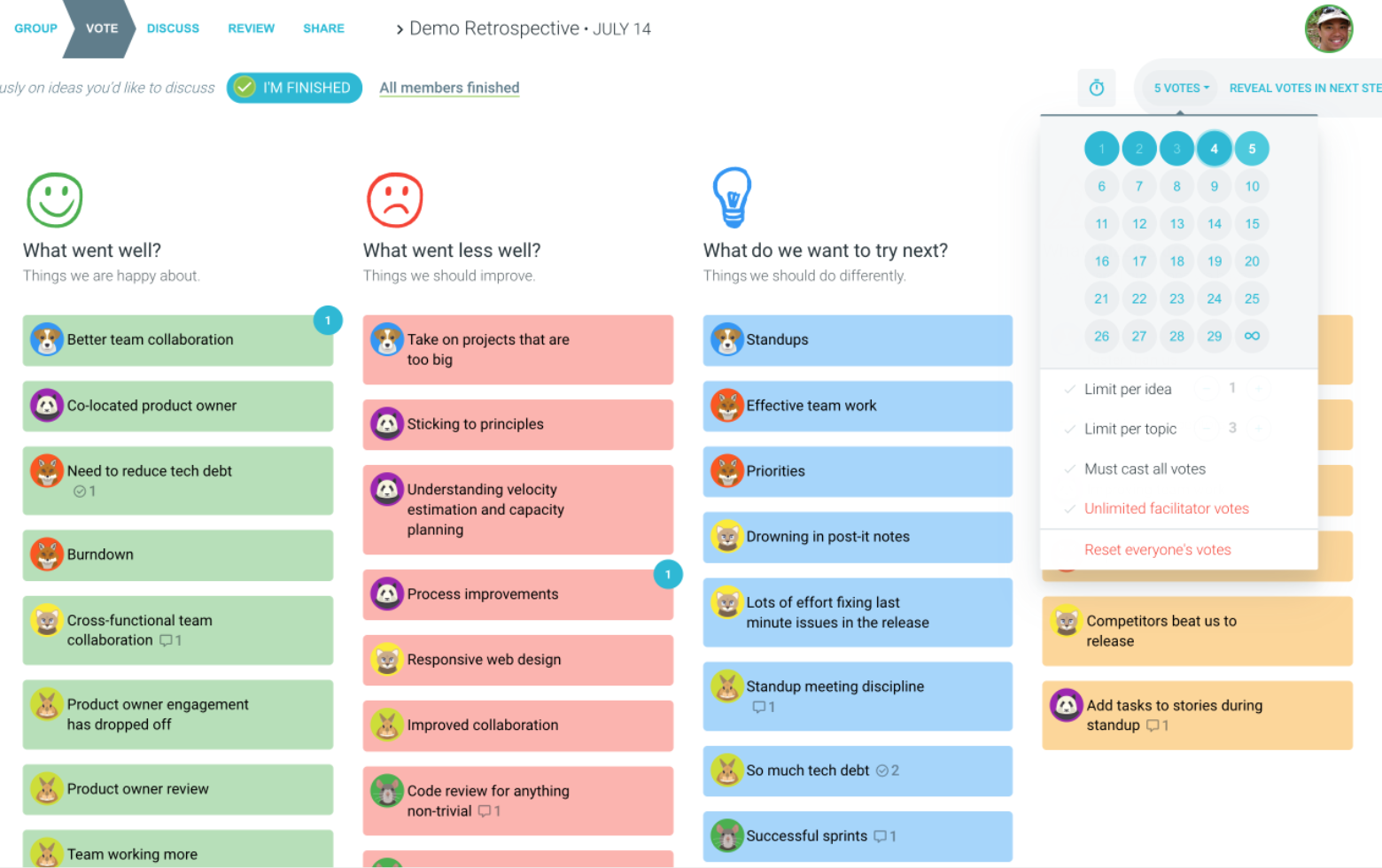
Fair, Flexible, and Fast Voting
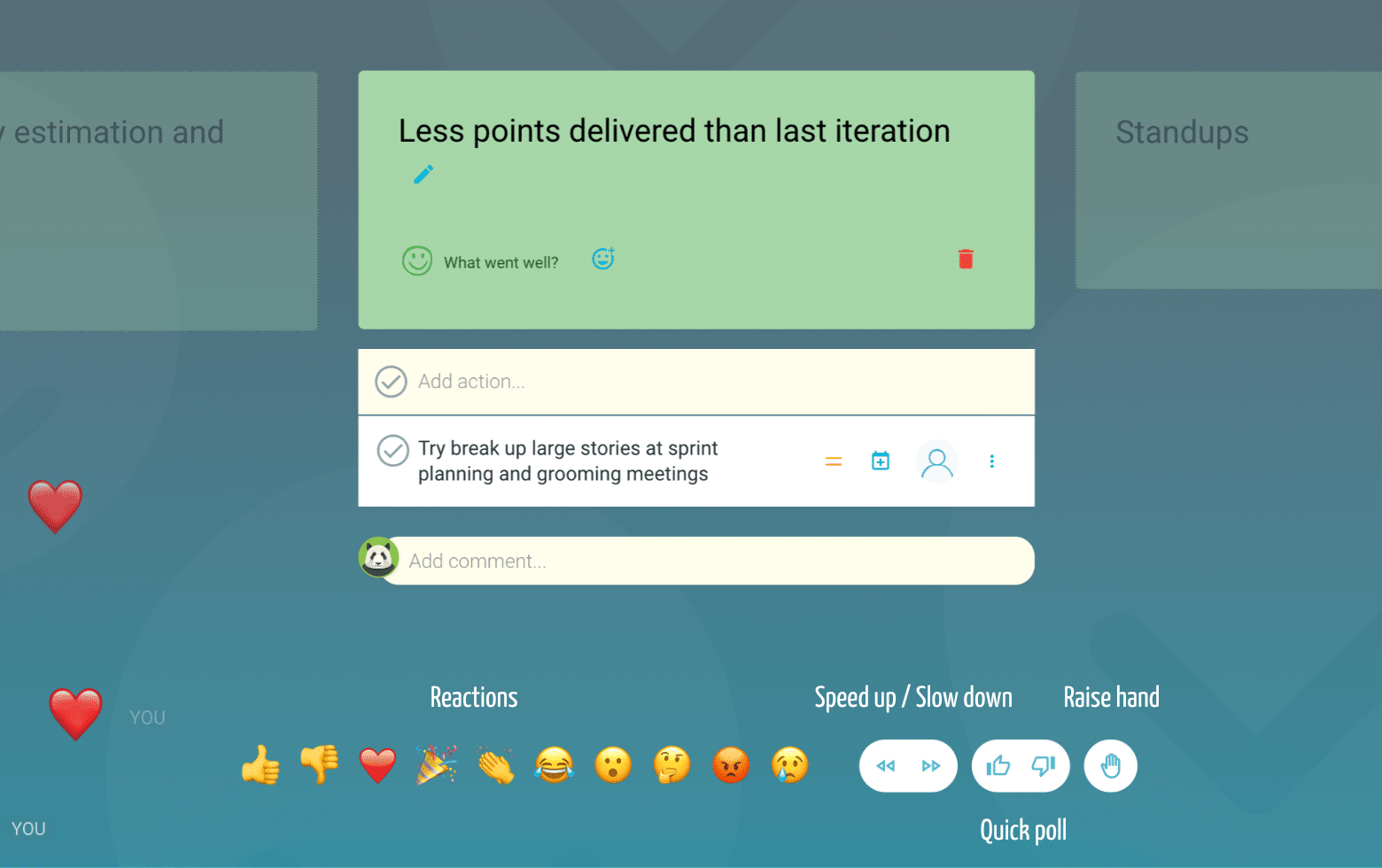
Engage, React, and Capture Key Insights
Walk your team through ideas one by one with Presentation Mode. Stay in sync, spark real-time discussions, and capture feedback with comments, live reactions, and polls—all in one place.
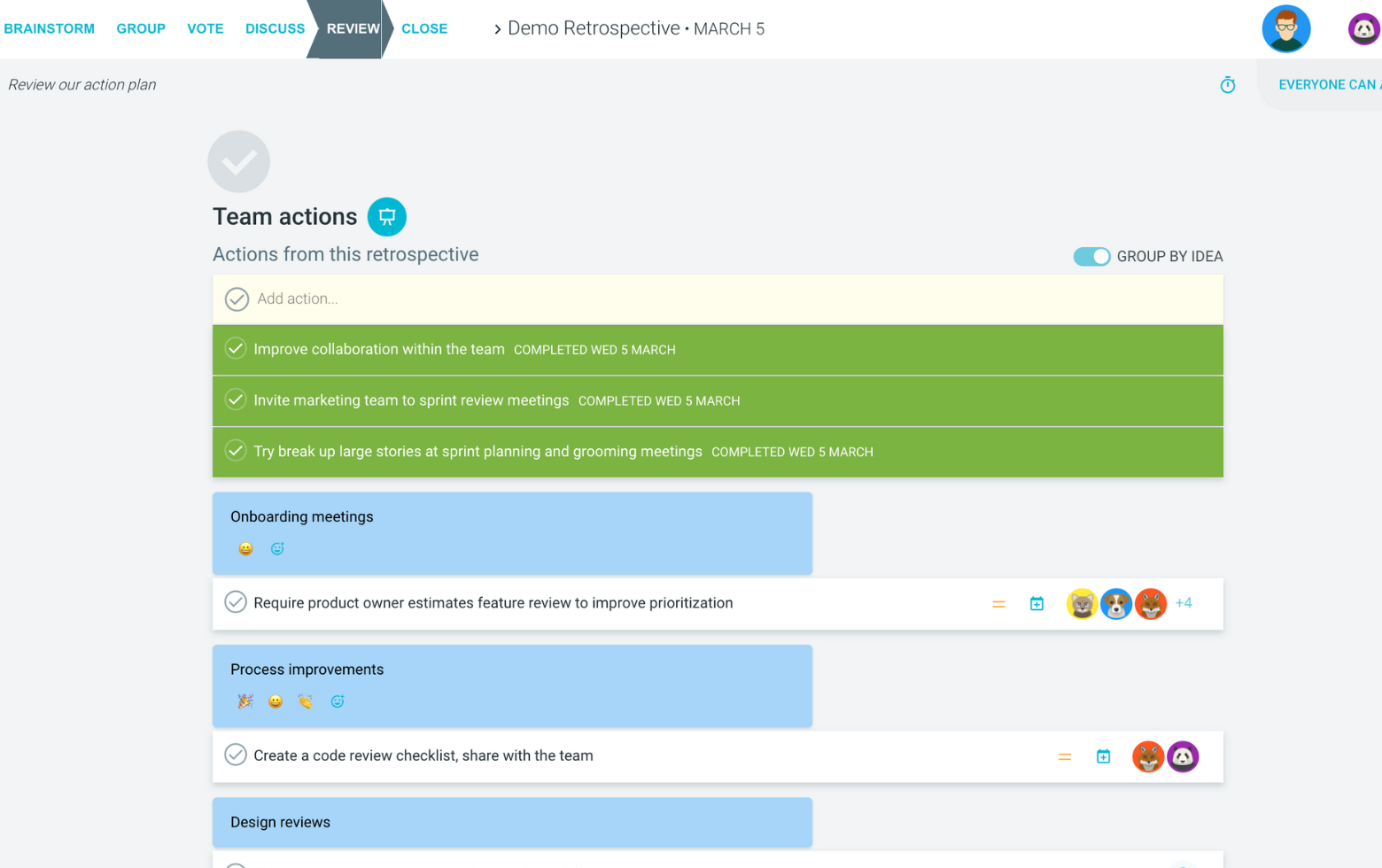
Turn Ideas Into Action
Propose next steps with team buy-in, get AI-powered action suggestions, and keep everything in one place. Committed actions sync to your personal dashboard and integrate with your workflow tools—keeping you on track.
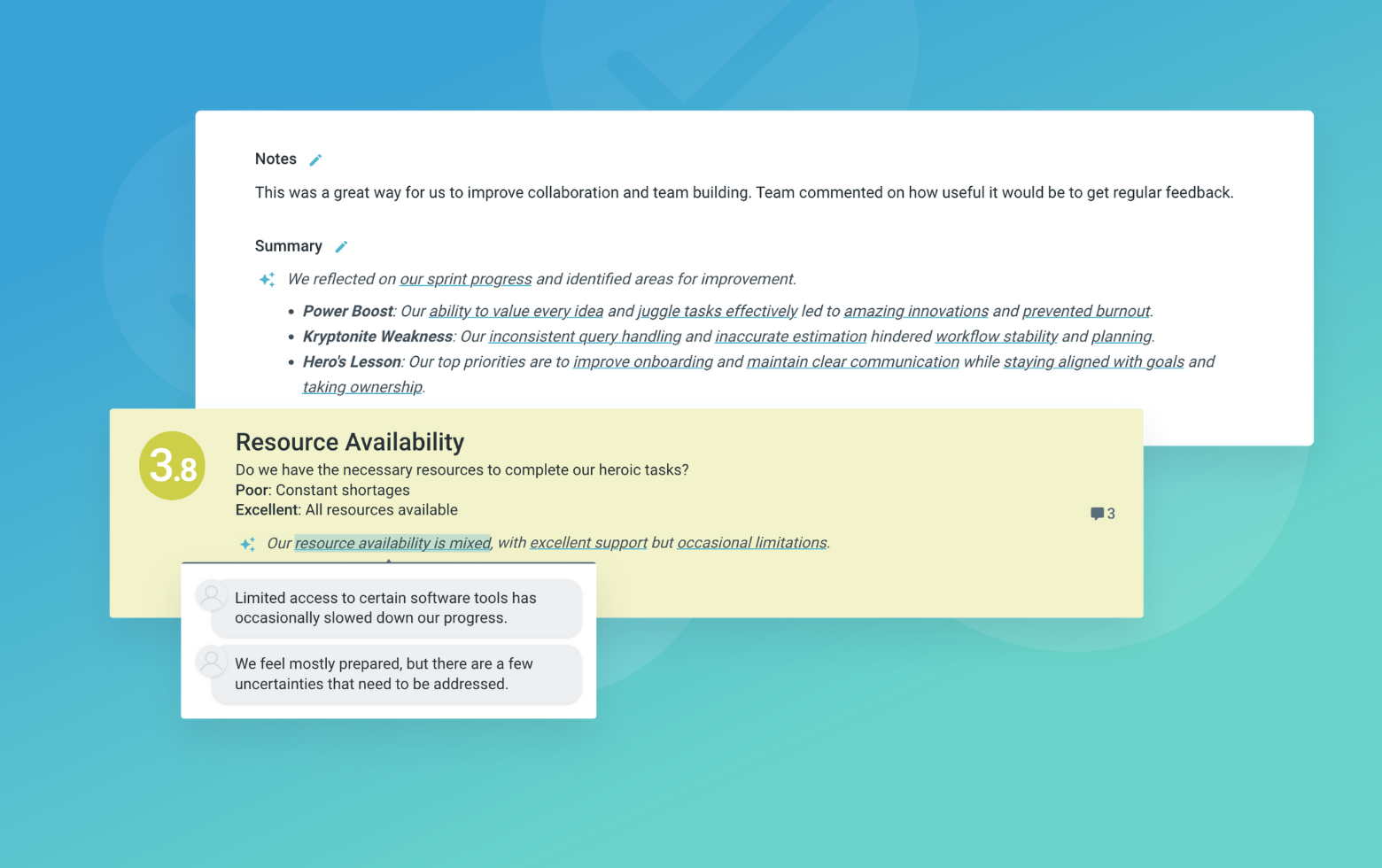
Save, Share, and Stay on Track
Get quick AI-powered summaries, add facilitator notes, and store retrospectives in your library for easy access. Schedule your next session and track published actions to keep your team accountable at the next retro.
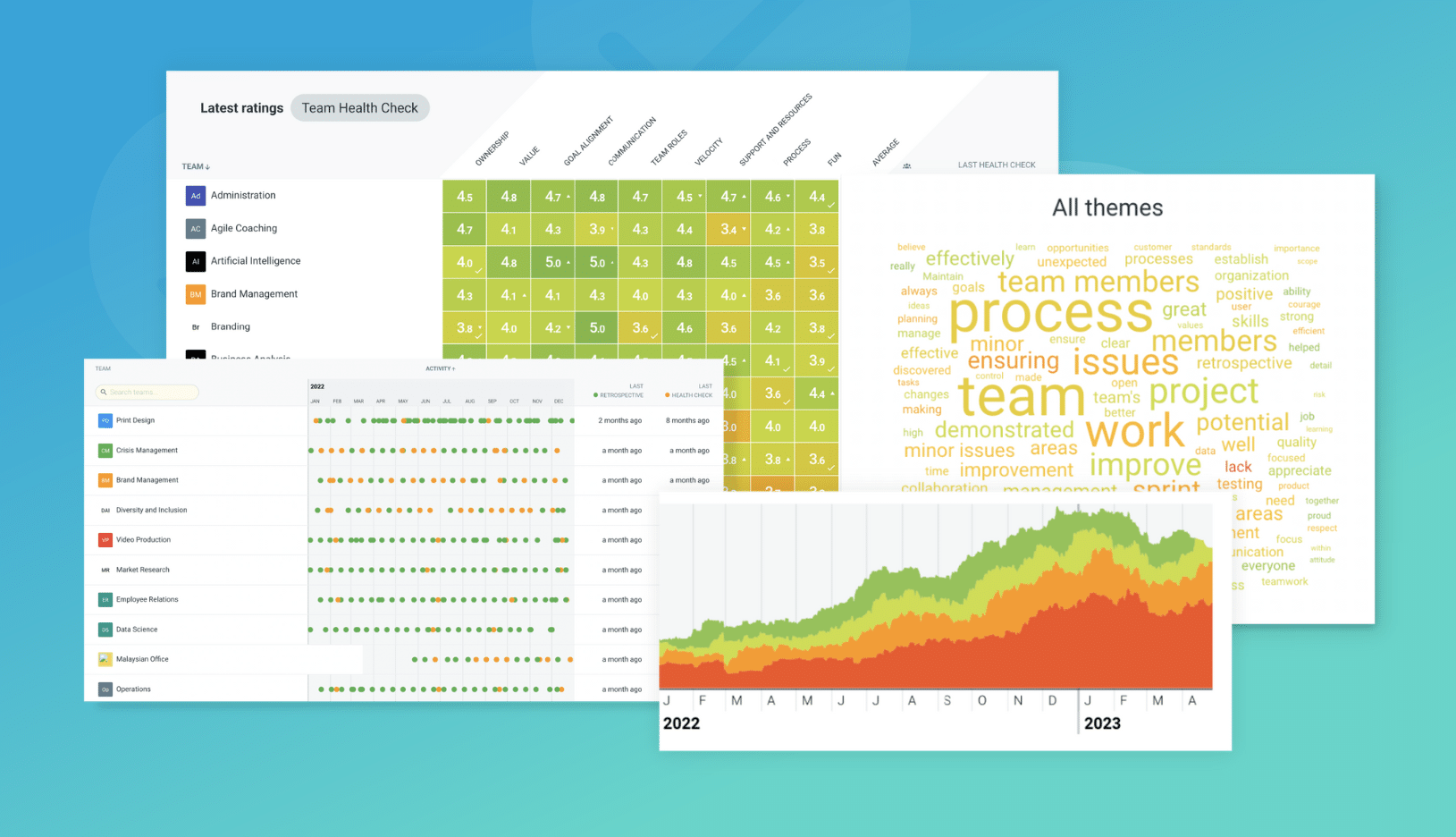
Turn Team Data into Actionable Insights
Uncover trends, common themes, and key engagement metrics at a glance. Track sentiment shifts, analyze conversations, and monitor completed actions to drive continuous improvement.