

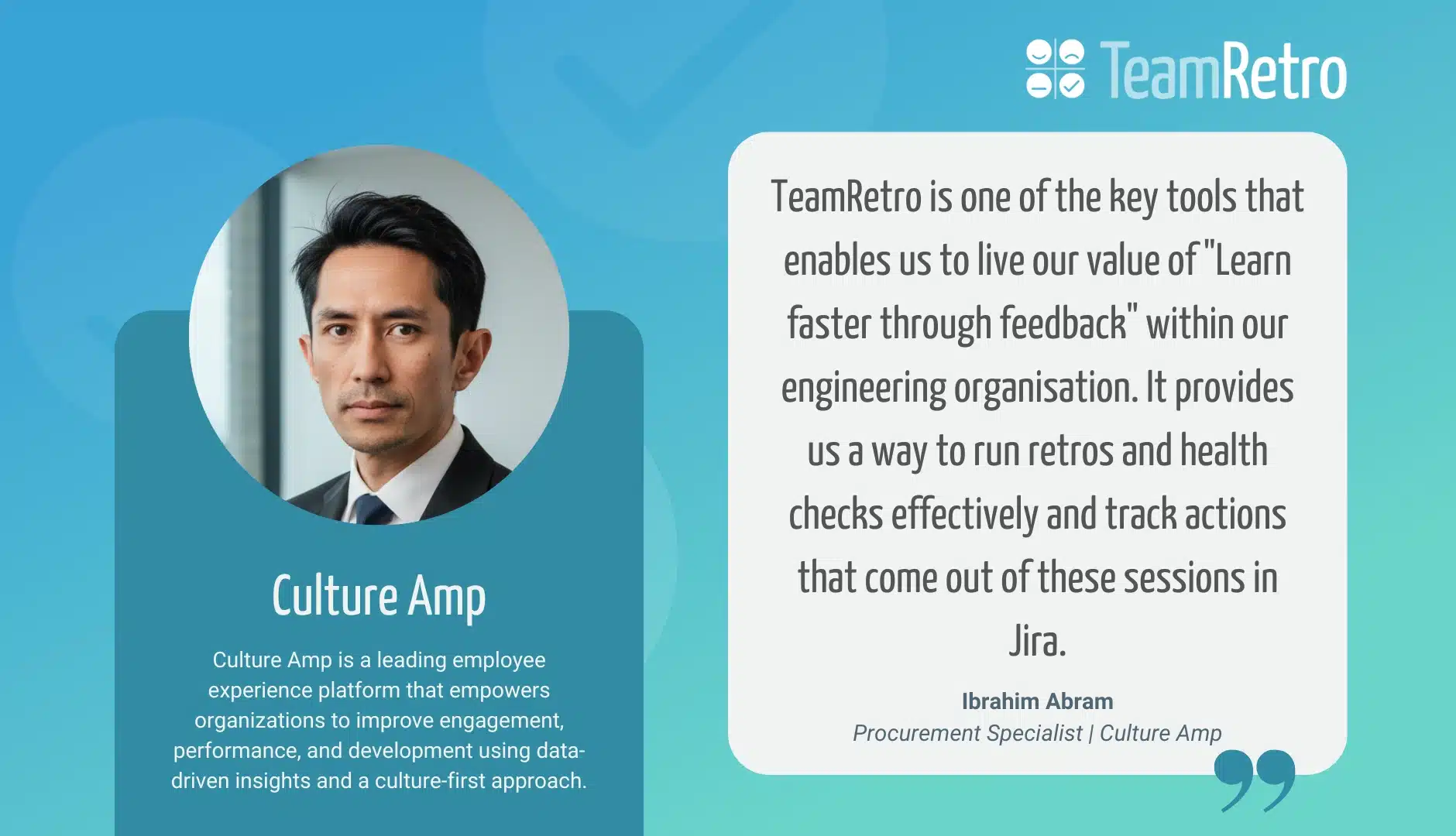
At Culture Amp, building a better world of work starts from within. Culture Amp is a leading employee experience platform that helps companies take action to improve employee engagement, performance, and development. With a strong focus on creating a culture-first company, their mission centers on helping organizations use data to drive performance while fostering care and connection. With teams building products to support employees and managers alike, agile feedback is at the heart of how they work.
This case study was contributed by Ibrahim Abram, Procurement Specialist at Culture Amp. He shared how TeamRetro has helped him as a Team Lead to ensure that teams are “high performing, but happy at the same time.”, by giving him insights as to where to focus as a team improves and stays happy and productive.
The challenge: Disparate retrospectives, limited visibility
With many teams running retrospectives using different tools, there was no unified way to gain insight across departments. Culture Amp needed a solution that could offer a centralized, consistent view of retrospective outcomes and team health.
“There was no way of going into one place to see how things are going in different teams across specific areas of the company. TeamRetro made this possible for us.”
Using built in features like team tagging within TeamRetro, Culture Amp unlocked high-level visibility.
“We started using tags (for departments, teams etc) which could give us an overarching view of retros and health checks. This is a very helpful tool for directors as they can view their team’s health and actions”.
Choosing TeamRetro to simplify and scale agile feedback
Drawn to TeamRetro’s intuitive design and insightful features, the team began by running Spotify-style squad health checks. The positive response led to wider adoption by teams which then expanded into running team retrospectives as well.
“I love the simplicity of the interface to run retrospectives and health checks. Particularly for health checks, I love the graph that shows the trends.” says Ibrahim.
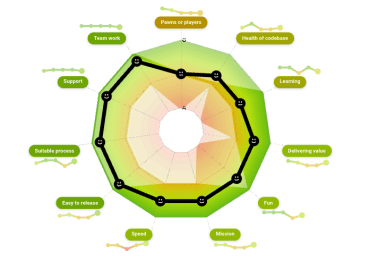
Image provided by Culture Amp
Supporting agile feedback through health checks, values, and Jira
Culture Amp runs fortnightly retrospectives and health checks that vary from fortnightly to quarterly depending on team needs. With TeamRetro, they can conduct these sessions seamlessly while tracking follow-up actions over time.
A core Culture Amp value is to “Learn faster through feedback”. As Ibrahim shares, “TeamRetro is one of the key tools that enables us to live this value within our engineering organisation. It provides us a way to run these effectively and track actions that come out of these sessions.”
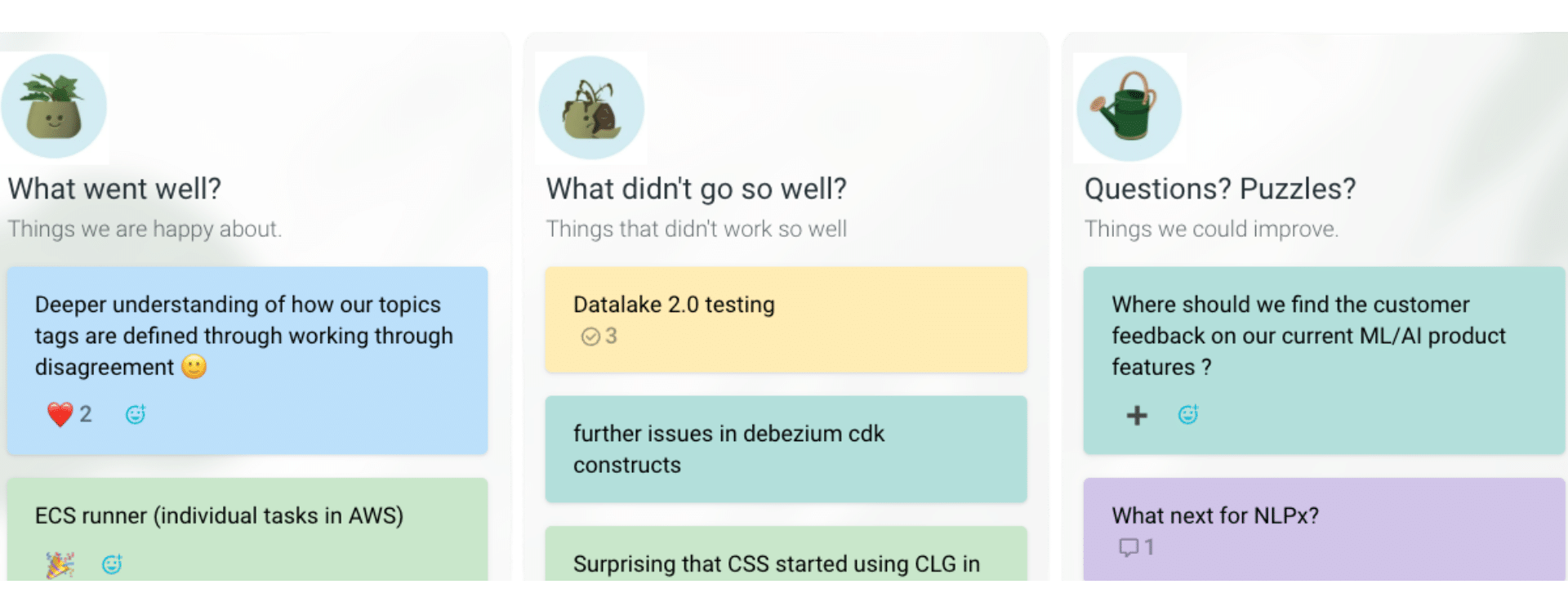
Image provided by Culture Amp
One of the standout features for the Culture Amp team is TeamRetro’s integration with Jira helping to make sure actions from retrospectives are captured and remain accountable.
“TeamRetro’s integration with Jira for action items has been invaluable for driving follow-through. By tracking retro actions in the same place as our project work, they stay visible and prioritized.”
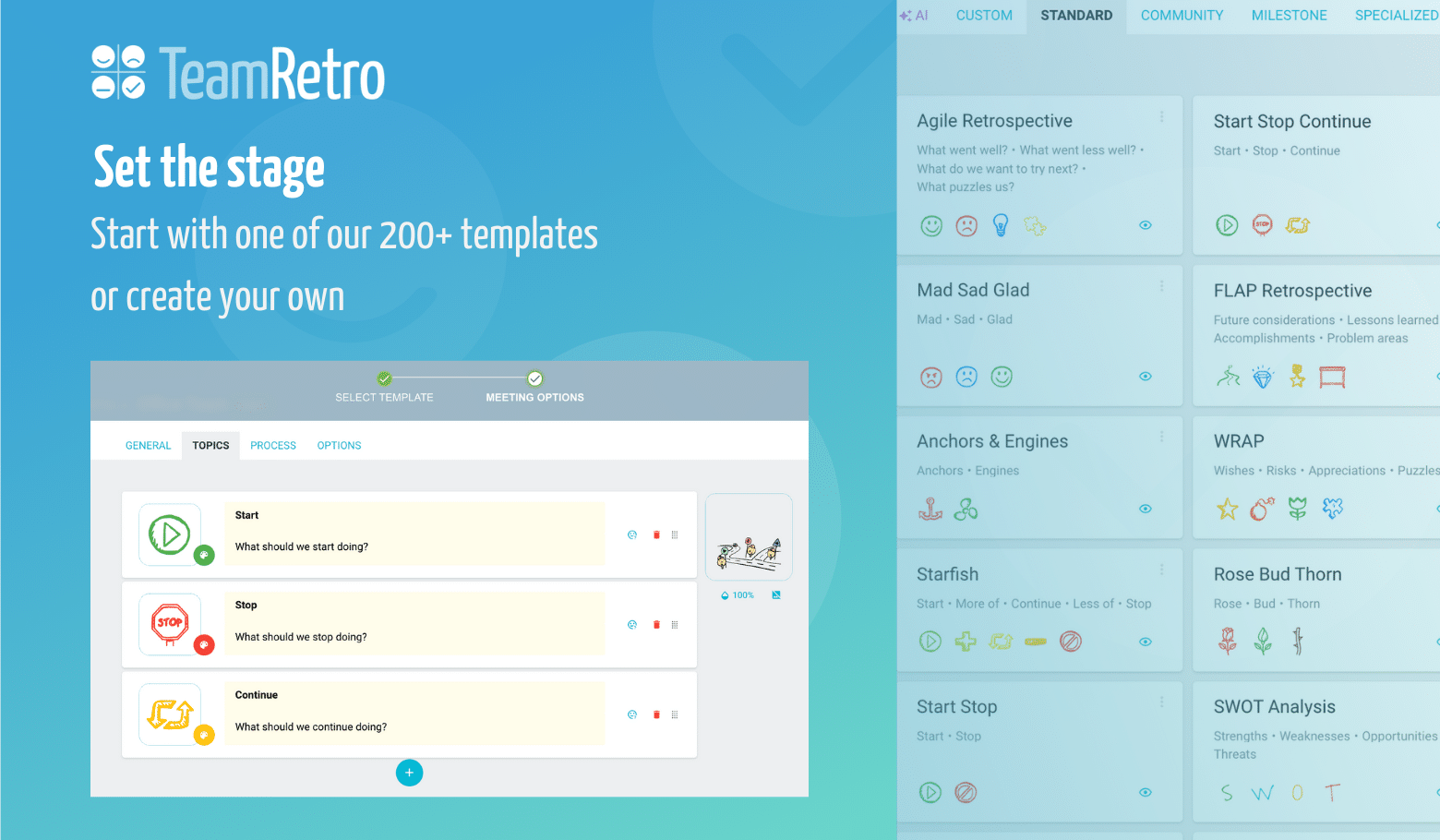
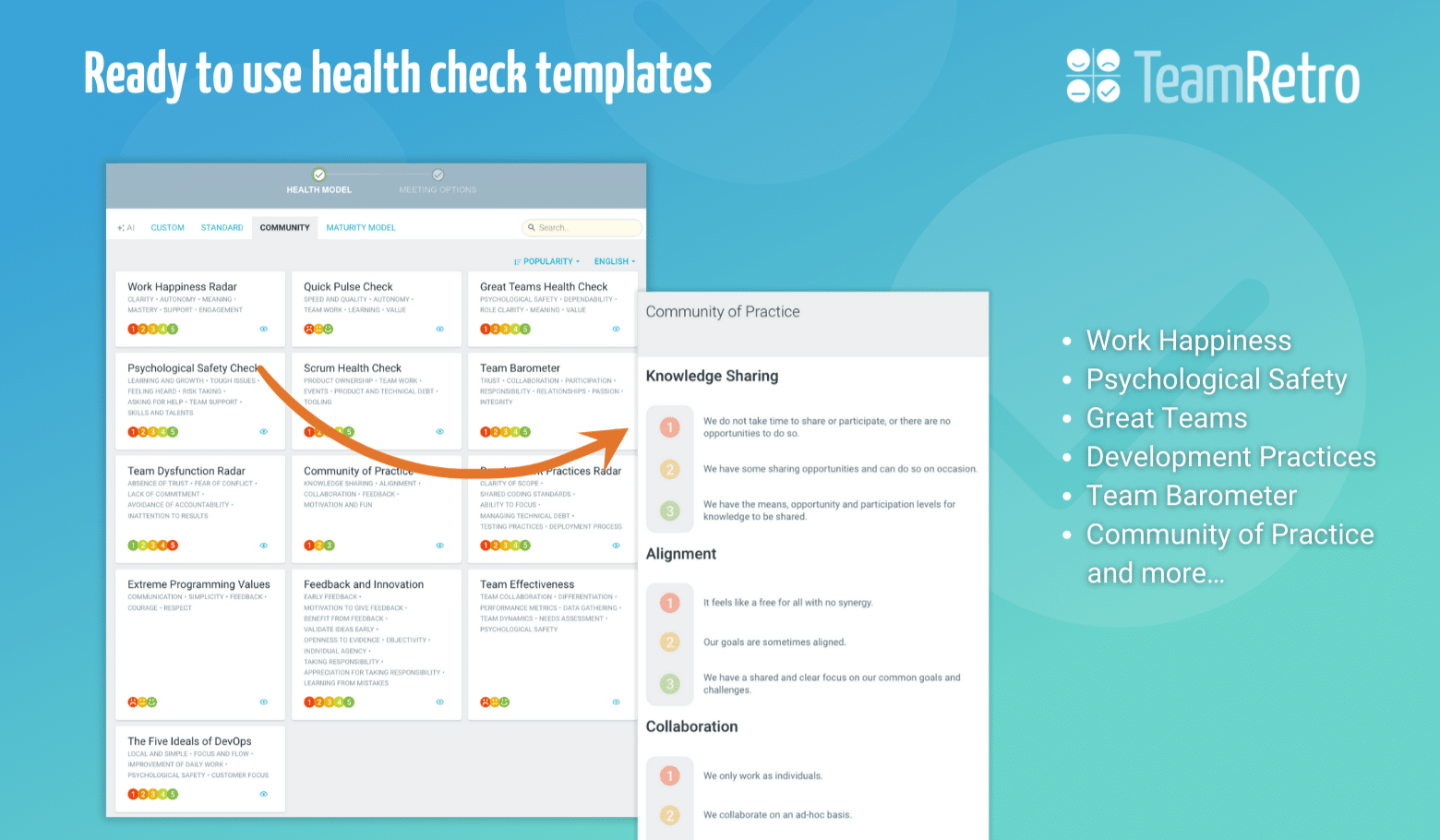
Another aspect that has created more engagement, novelty and incited new ideas is the range of retrospective templates and health check styles.
As Ibrahim explains, “Out of the box templates to run retros and health checks allowed teams to use different formats that helped them think about their teams from different perspectives.”
Benefits for teams and leaders: Visibility, voice, and well-being
TeamRetro has helped foster a stronger sense of engagement and ownership among Culture Amp’s teams. Regular retrospectives ensure that everyone’s voice is heard, and the visible follow-through on feedback has reinforced a culture of responsiveness and trust.
“The most significant impact is a clear sense of being heard, with visible follow-through on feedback. TeamRetro provides me and the team insights that help us understand where we should focus as a team to improve and be more happy.”
Advice for Scrum Masters using TeamRetro
Culture Amp’s tip for turning retrospectives into results?
“Make sure your teams focus on actions explicitly and hold each other accountable if they are not taken in time. Running these sessions is just the first step. But the real improvement is achieved from taking the actions that come out of these sessions.”
Ready to reflect and improve? Run your own TeamRetro session with this tip in mind now.