


What is a futurespective?
A futurespective is a process agile teams can undertake at the start of a project. They help teams to shape a high-level strategy that supports the smooth delivery of their goal.
During a futurespective a team will consider the project within the context of things such as –
- the skills, expertise and experience of the team members
- the resources they can access
- the risks and obstacles they may encounter, and
- the parameters within which they must work
in order to produce
- a shared understanding of the project trajectory, and
- confirm the first steps the team needs to take to get started.
While futurespectives and retrospectives follow pretty similar processes, they differ in a couple of important ways –
- a retrospective looks back over a short period of time to review what happened. This is done so as to inform the team’s next steps.
- a futurespective considers the whole project in order to anticipate what may happen. This is done to shape a project strategy and the first few steps needed to start the project.
Why run a futurespective?
Il existe deux raisons principales pour lesquelles un Scrum Master peut organiser une futurespective. The first is to kick start a new project, and the second is to restart an existing one.
A futurespective gives a team a chance to create and grow the connections that are important for team health. They are an opportunity to team build: the perfect time to explore your team’s motivations and fears, and share how members have worked well in the past. Cela présente un Scrum Master avec –
- valuable insight into how they can best support their team, and
- the chance to start important conversations such as dealing with unpredictability.
Additionally, they help the team build a vision and purpose. It’s no surprise then that futurespectives are a wonderful way to align newly formed teams or check the calibration of established ones.
When it comes to the project, a futurespective is a brilliant planning mechanism. They can be used to identify things such as –
- areas of concern or perceived risks
- resources and tools needed
- gaps in the team.
This means shaping solutions to address such hurdles can start sooner than later.
A futurespective can also be used to set the tone for a project. C’est pourquoi les Scrum Masters peuvent également utiliser la futurespective pour –
- include a warm up or icebreaker
- draw upon Larson’s Circles and Soup
- set SMART goals, and
- add to team agreements
Importantly, futurespectives ensure that at the start of the project, all team members are on the same page.
Futurespectives are also a great way to restart a stalled or stuck project. They can help reenergize an unmotivated team, shake up the repetition of retrospectives, and help a team revisit their goals.
Futurespective Prime Directive
A prime directive is popularly understood to be a guiding principle. Although it’s possible to find a number of Futurespective Prime Directives, Caroli and Caetano’s version is the one most widely cited.
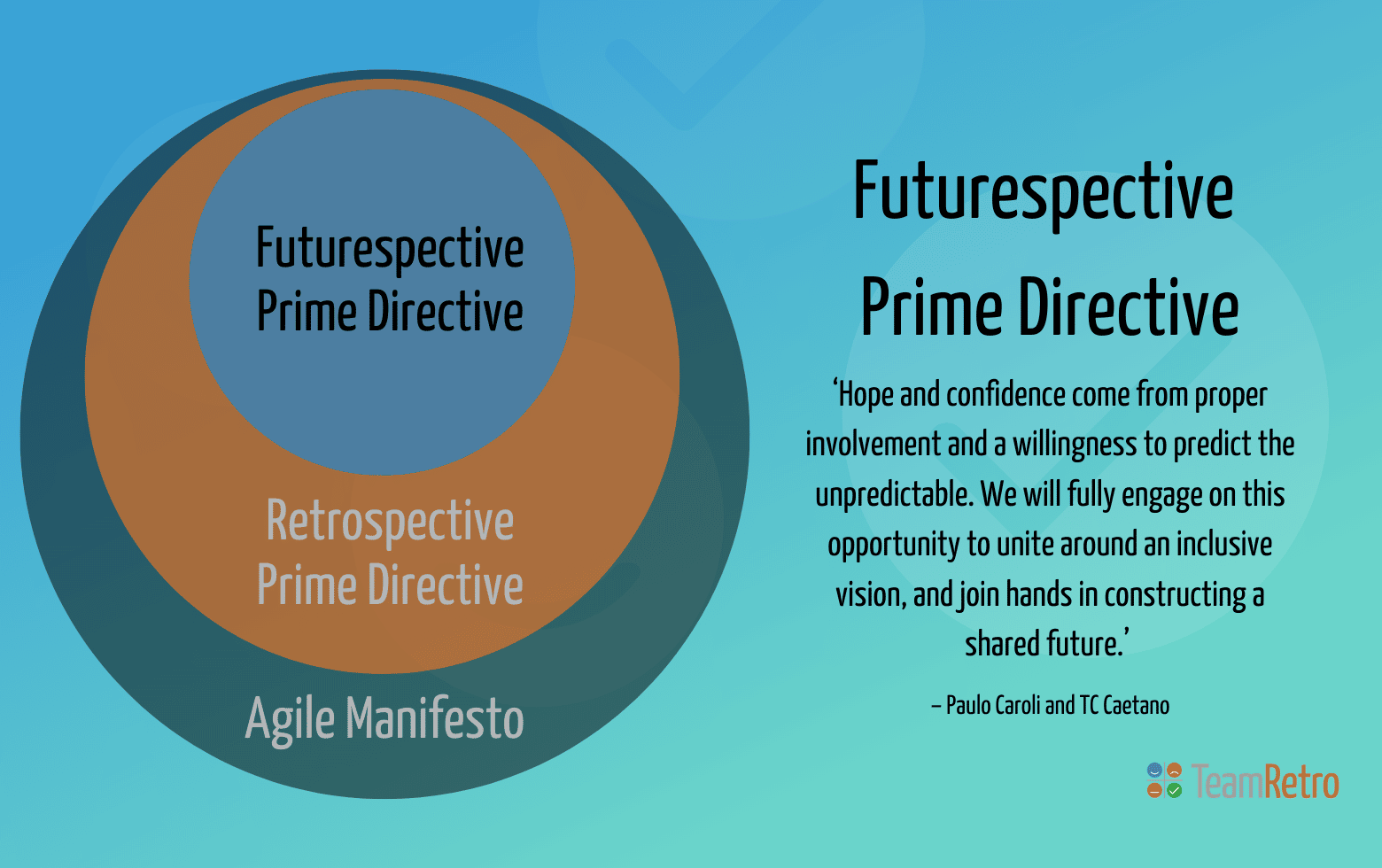
Soutenue par le Manifeste Agile, et comme la Directive Première de la Rétrospective qu’elle complète, la Directive Première de la Futurespective de Caroli et Caetano est un état d’esprit. It aims to foster a positive, collaborative context within which a team can deliver the best possible outcomes.
The Directive sets an optimistic tone. It reinforces the importance of the involvement of the whole team and the shared ownership of the team’s vision of the future. For it to be most effective, the team must feel psychologically safe. After all, trying to predict the future is a big ask! The safer the team feels, the more ideas they will be comfortable to offer.
Comment organiser une futurespective ?
There are currently two main approaches as to how to run a futurespective.
- Consider the project as if it has been delivered
- View the project as if it is to be delivered
The first approach has participants imagining they are their future selves looking back at the project that has been successfully finished. This approach has participants imagining they are thinking back on all of the goals they have delivered and how they did so. They (creatively) reminisce about the things that went well, the hurdles they encountered, and how they overcame them. They are effectively doing a retrospective in the future (so, a futurespective).
It’s possible for the team to have a great deal of fun with this approach. An end of project lunch could be held during the futurespective. A warm up can include reference to what their future selves did in the past year of which they are most proud, or the latest (future) trend or (future) film can be discussed.
The second approach is a little more straightforward. Participants are invited to look ahead and offer their perspective of what the future has in store (so again, a futurespective). This approach is possibly better suited to a team who are new to agile, or simply less comfortable with the other.
Regardless of which vantage point your team prefers to adopt for their futurespective, the purpose and the process remain the same.
The five steps of a retrospective can be applied to a futurespective. The important thing to keep in view is the different mindset that is to be adopted.
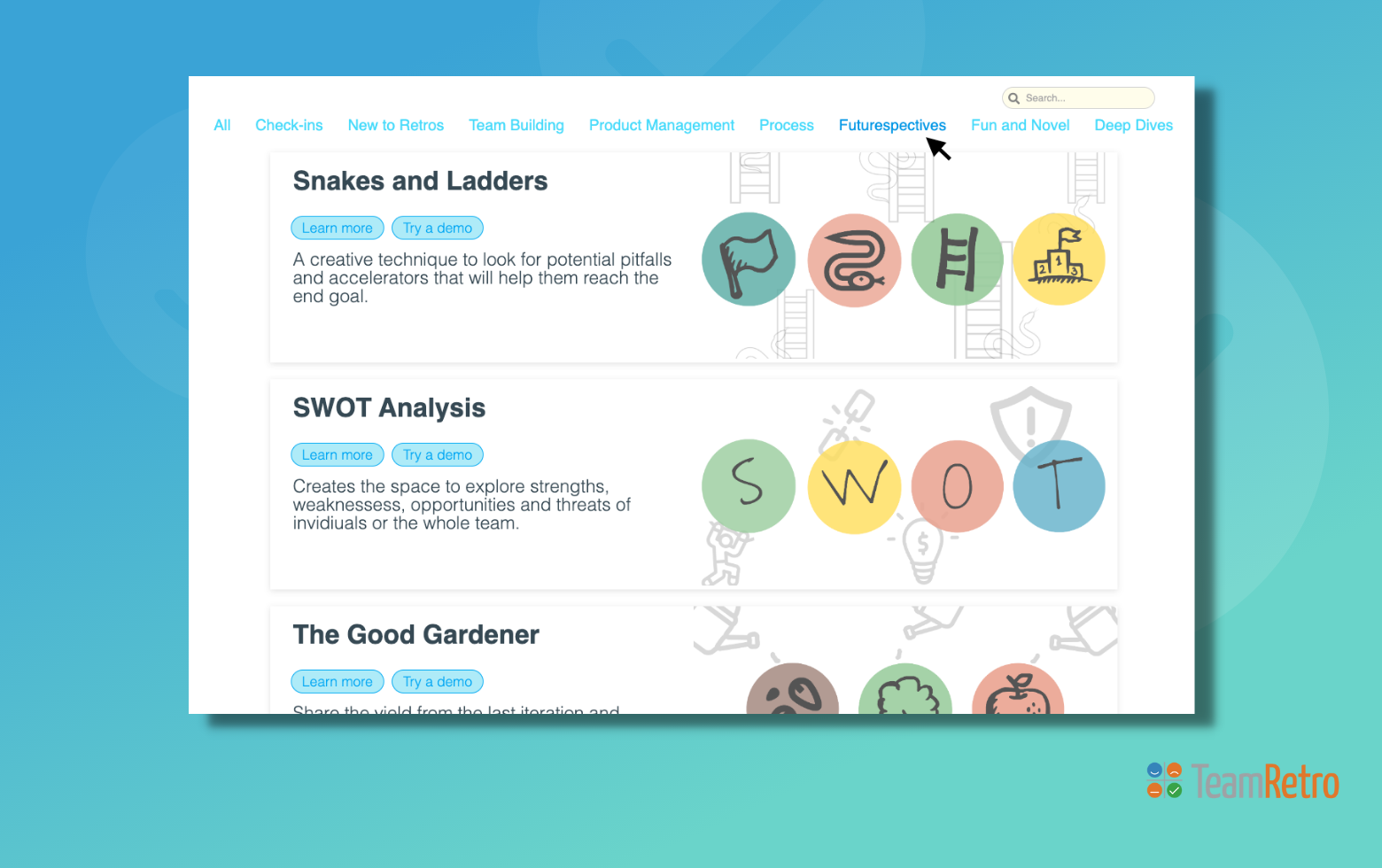
Once you’ve embraced the Futurespective Prime Directive mindset and picked a point of view from which to examine the project, it’s time to choose a template.
Online futurespective templates offer all sorts of benefits. They are an ideal tool when it comes to remote team engagement. They can also support the delivery of asynchronous futurespectives. An online template captures all input as you go so there’s no time wasted at the end of your futurespective rewriting ideas, input and action items. Best of all, they can integrate with your existing workflow to save you even more time.
The best template to choose is one that will help your team produce their high-level project strategy, the way they want. Avec autant de modèles incroyables disponibles, nous avons créé un sélecteur de modèles de futurespectives en ligne pour vous aider à choisir celui qui convient le mieux à votre équipe. As far as our team goes, we share our favorite futurespectives below.
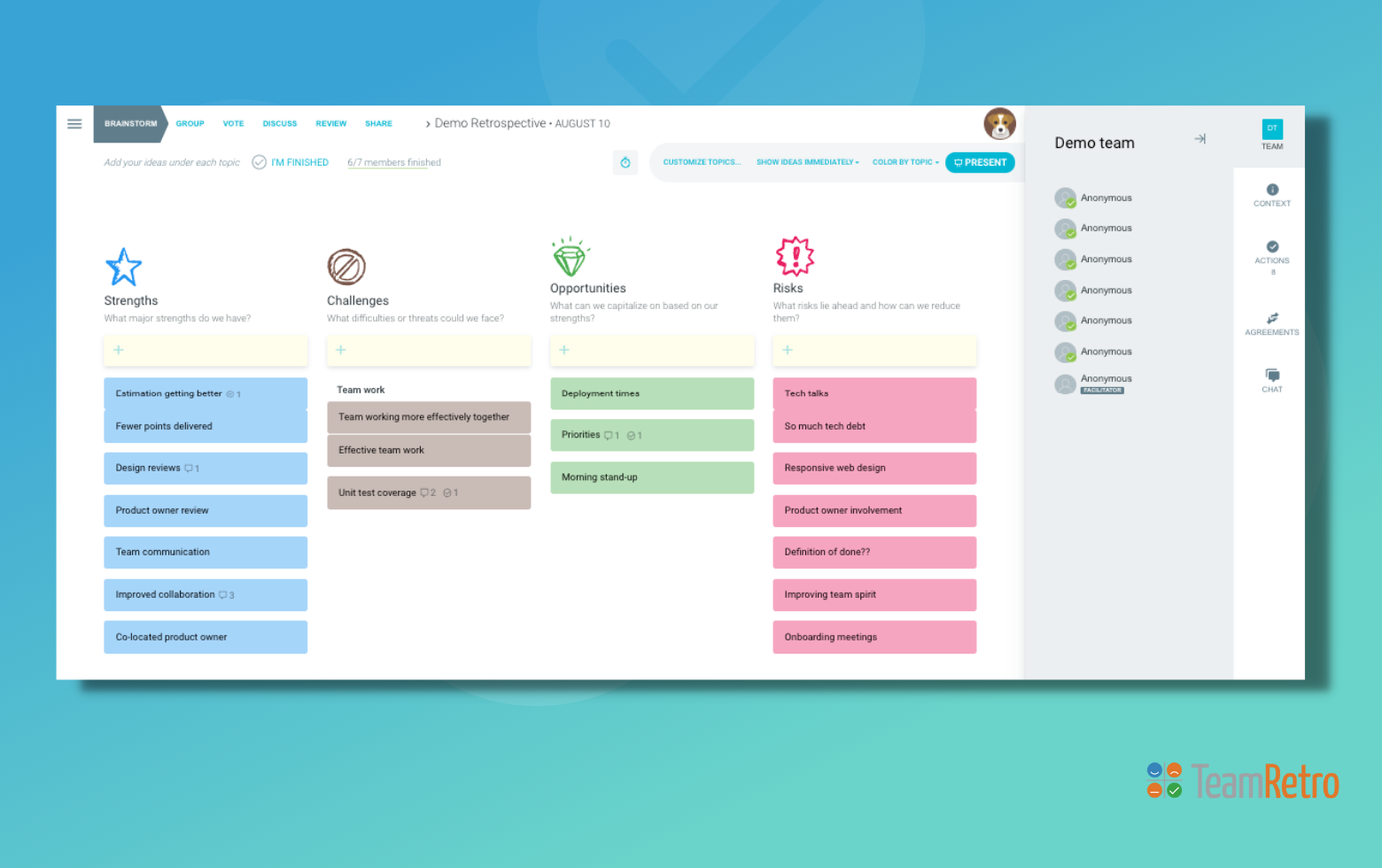
Using the template as a guide, participants are invited to offer their input. Allowing time for quiet, individual brainstorming where team members can contribute their ideas anonymously will help overcome such barriers as groupthink.
Le Scrum Master doit encourager les participants à s’appuyer sur leur expérience et leurs connaissances passées pour remplir le modèle. Everyone is to be reminded to offer their best (informed) guess. It’s important to acknowledge that any predictions they make that don’t come true, won’t be held against them.
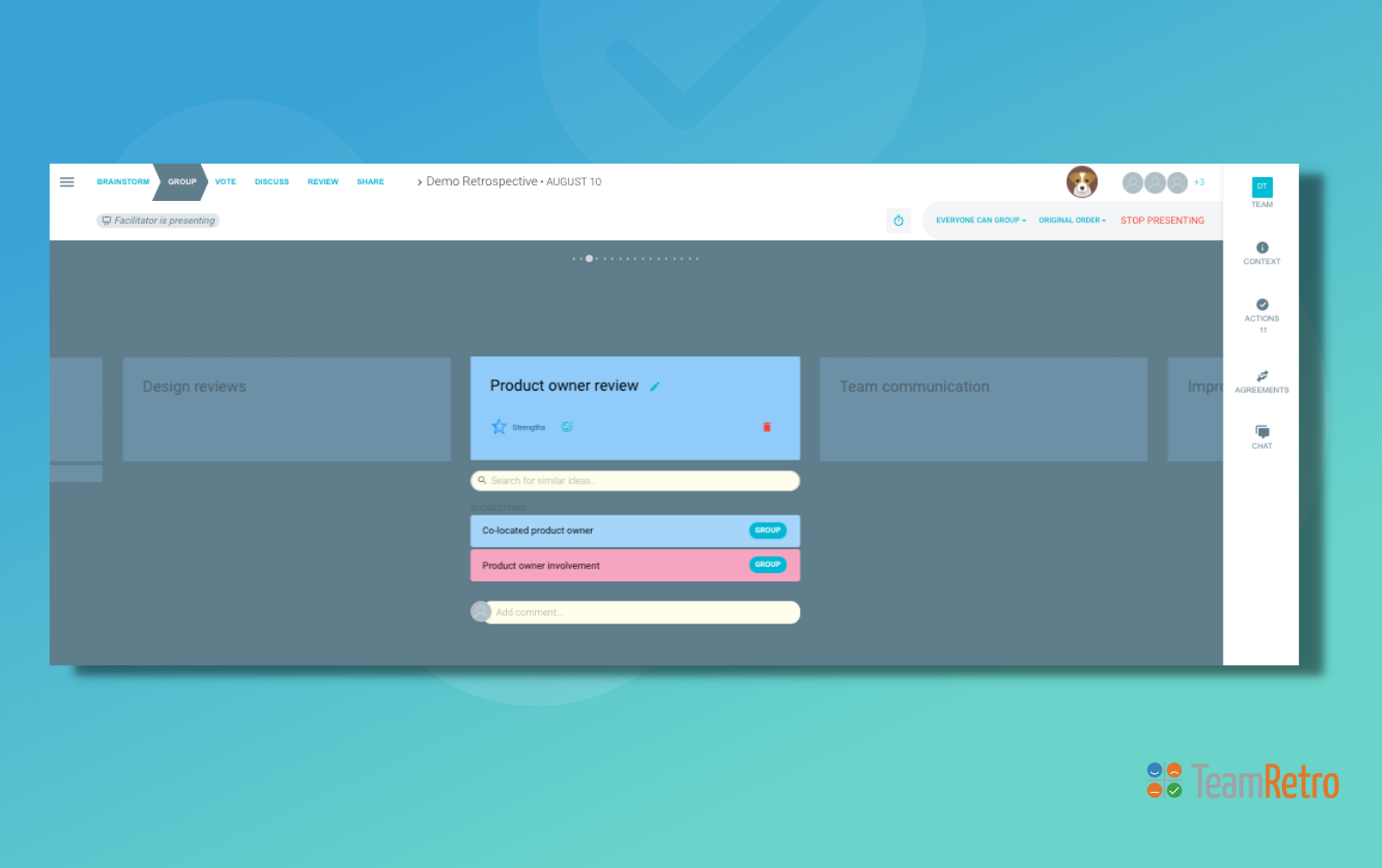
It’s at this stage of the futurespective that the team’s shared understanding of their project strategy will start to germinate. So it’s vital to make sure all ideas are understood and if not, clarity is sought.
Again, reference to previous projects plays an important role here. It’s an opportunity for the team to learn about what they each bring to the table and how it can be used to support the project and team.
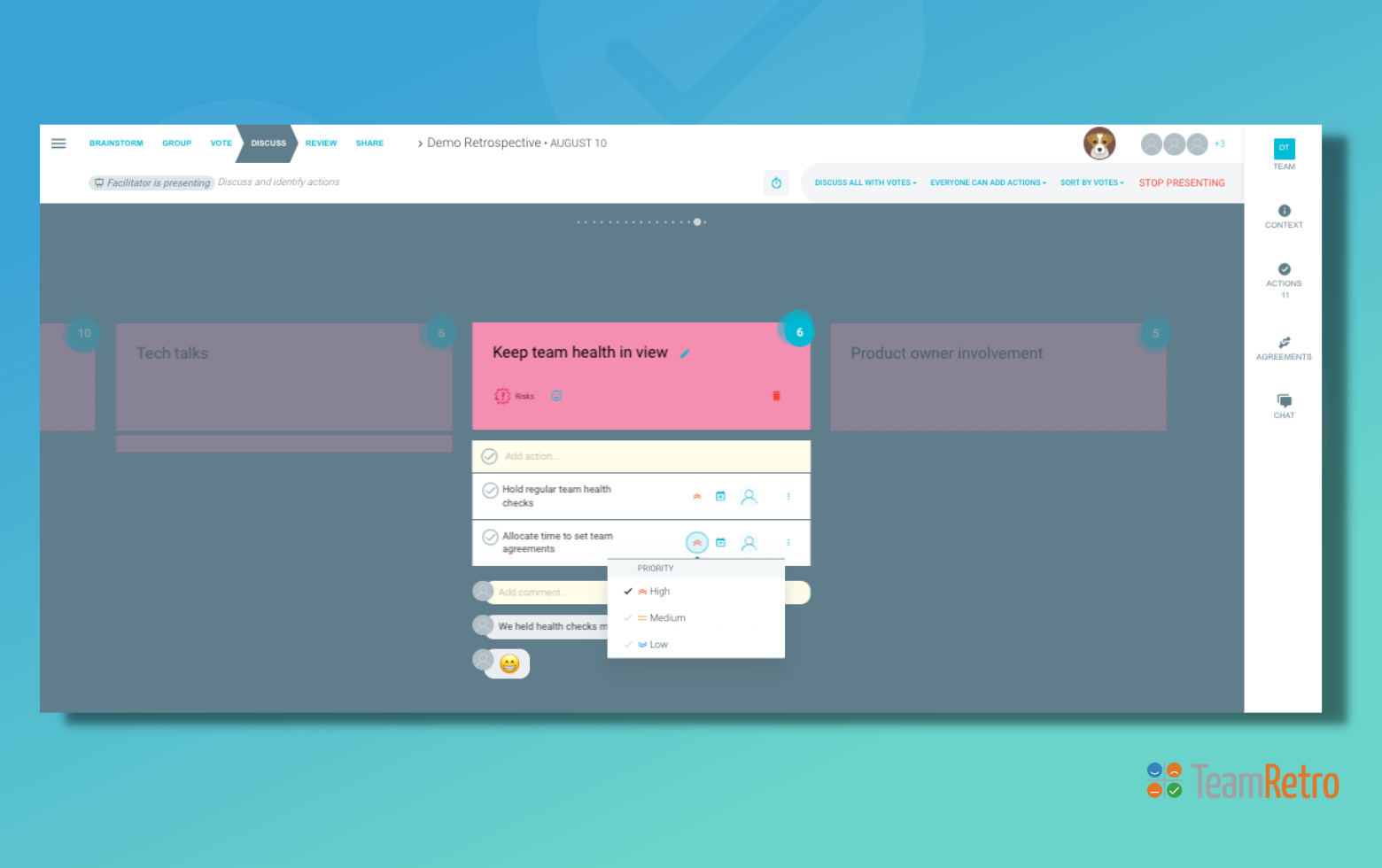
It’s very easy to get swept up with team building and delivering high-level vision, but it’s important to make sure your futurespective produces what’s needed to get the project started. Shaping action items is the way to do this. Make sure you limit the number of actions to the number you need to get things started, and keep them SMART.
Some actions may apply to the team more so than the project. Actions that support the team’s ability to work together can be included as a team agreement.
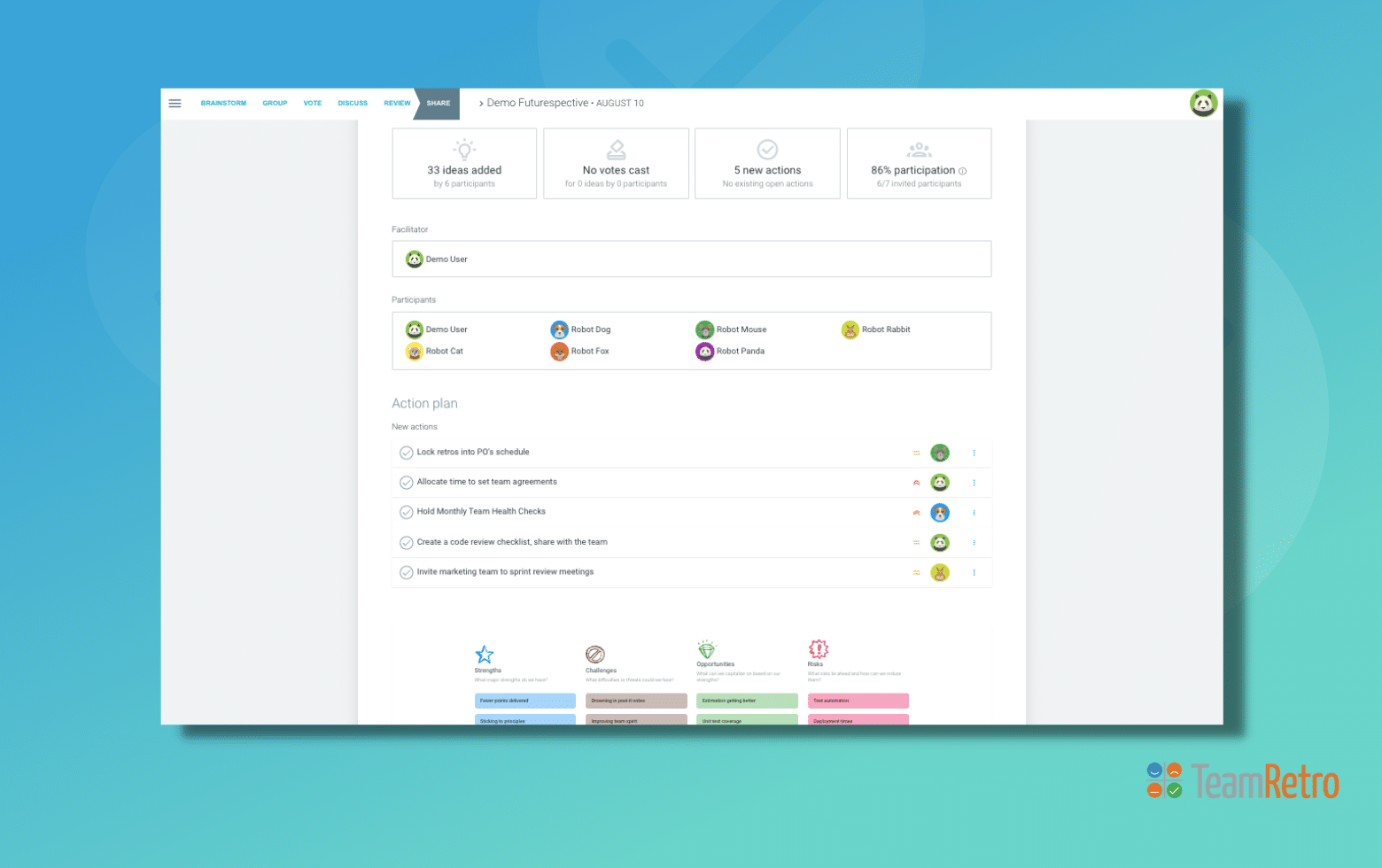
The last step is to summarize the futurespective. This ensures that all team members understand the action items before the meeting is closed.
Terminer la réunion par un Retour sur le Temps Investi (ROTI) est instructif et une habitude saine à soutenir. Cela aide le Scrum Master à évaluer l’efficacité des réunions et à apporter des ajustements si nécessaire.
Enfin, le Scrum Master partagera les résultats de la futurespective et assurera le suivi des actions.
Exemples de futurespectives
Here are our top three futurespectives to help get you started.
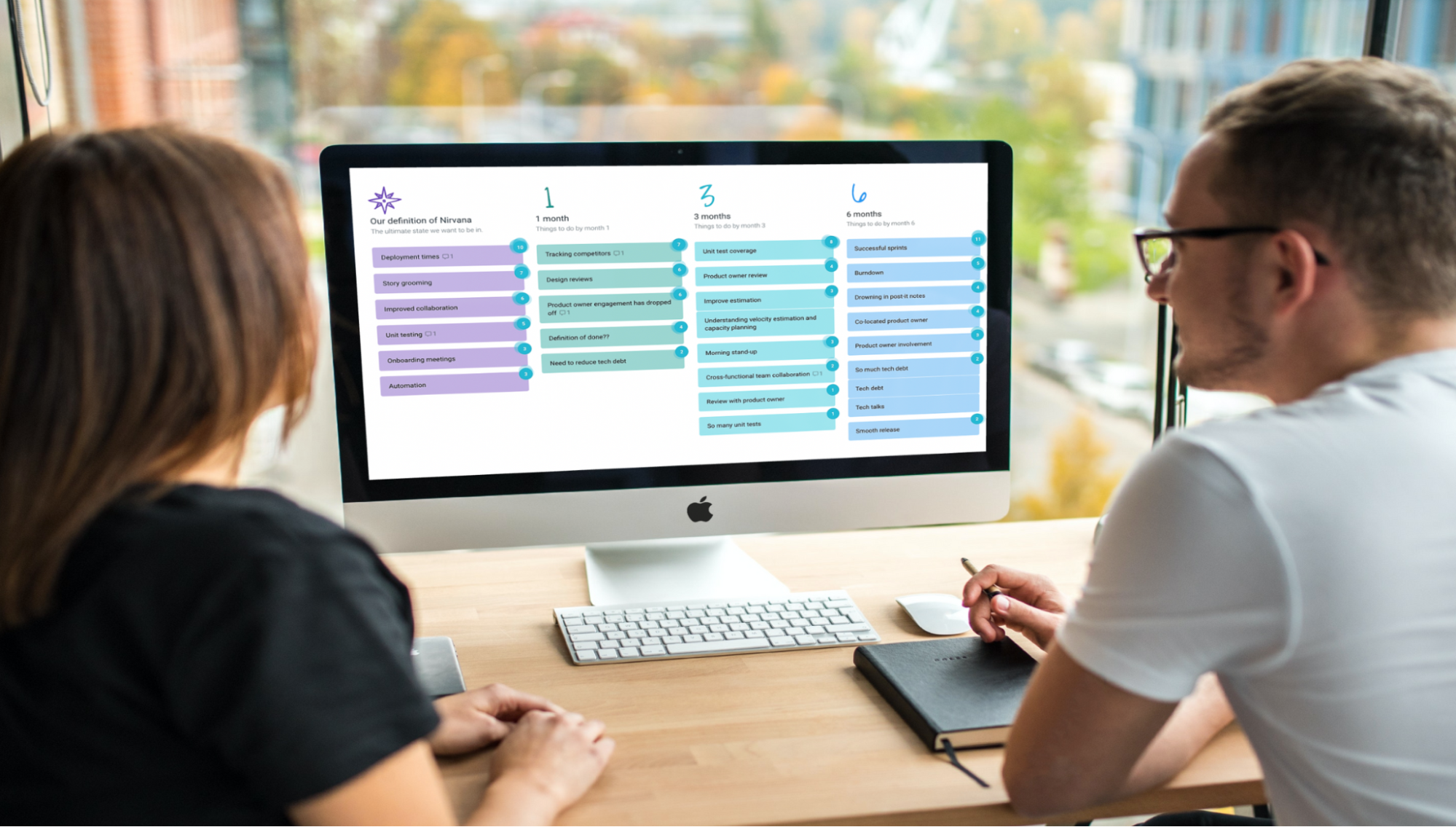
Futurespective État de Nirvana
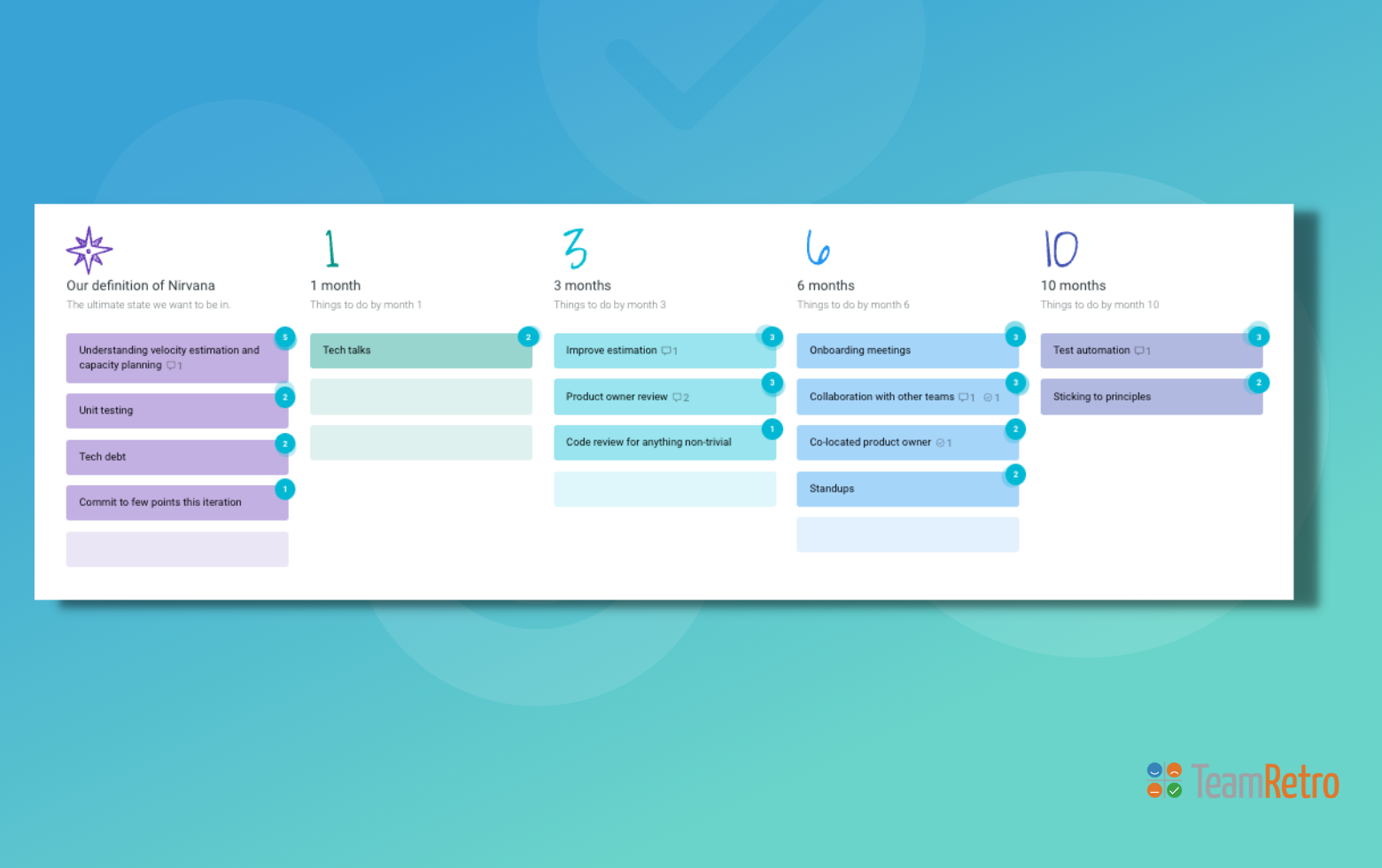
The State of Nirvana futurespective sees team members define their version of nirvana. Ils définissent ce qu’ils s’attendent à avoir réalisé d’ici le premier, troisième, sixième et dixième mois, avec les idées qu’ils partagent, construisant un aperçu de leur voie à suivre. En savoir plus sur la futurespective État de Nirvana.
Plus, Minus, Interesting (PMI)
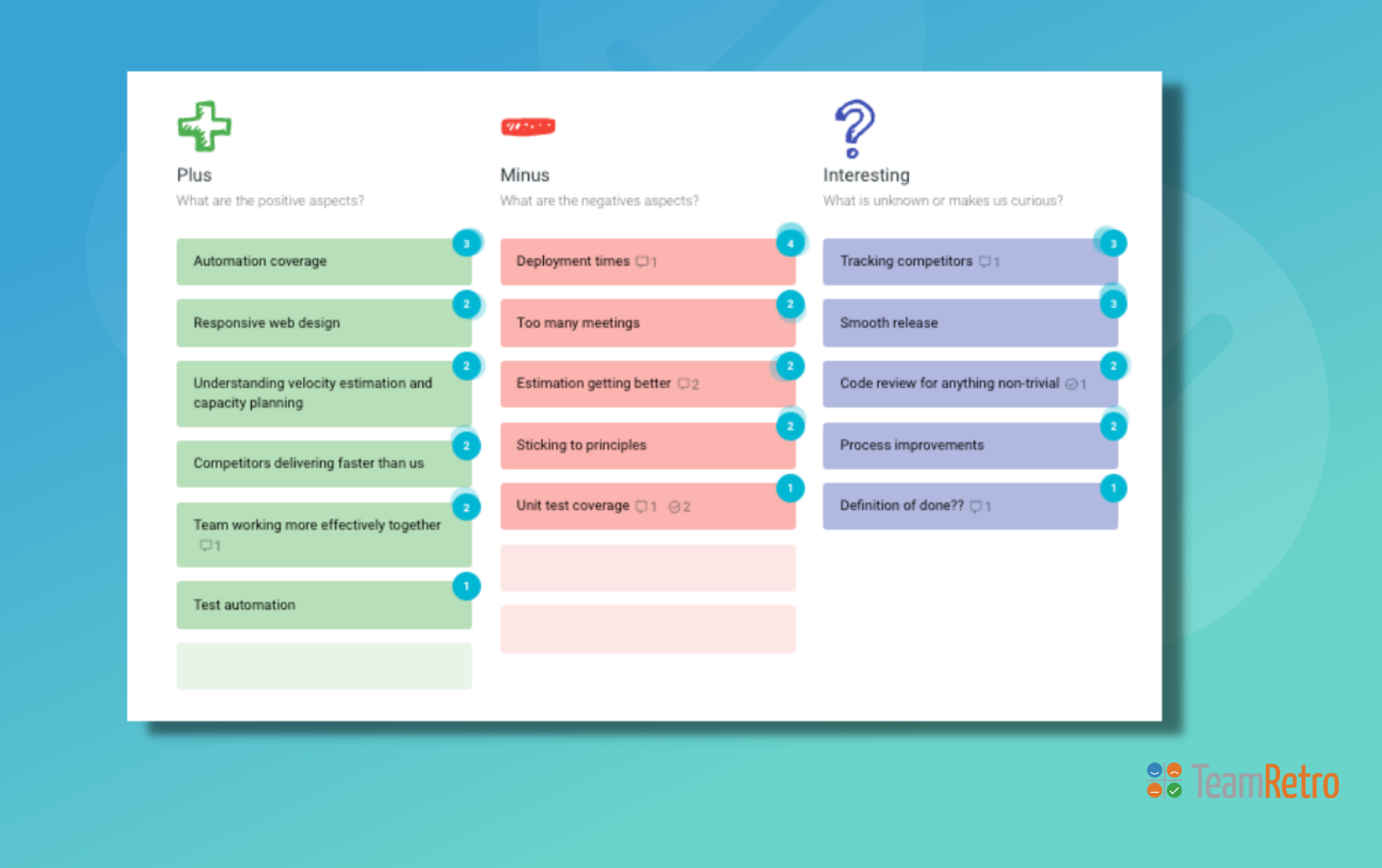
The PMI Futurespective helps a team view a topic from multiple perspectives. Cela garantit qu’une vue d’ensemble du projet est prise en compte, car les membres de l’équipe ne peuvent pas rejeter la variété des contributions qu’ils ont eux-mêmes rassemblées. En savoir plus sur Plus, Moins, Intéressant (PMI).
Futurespective SCOR
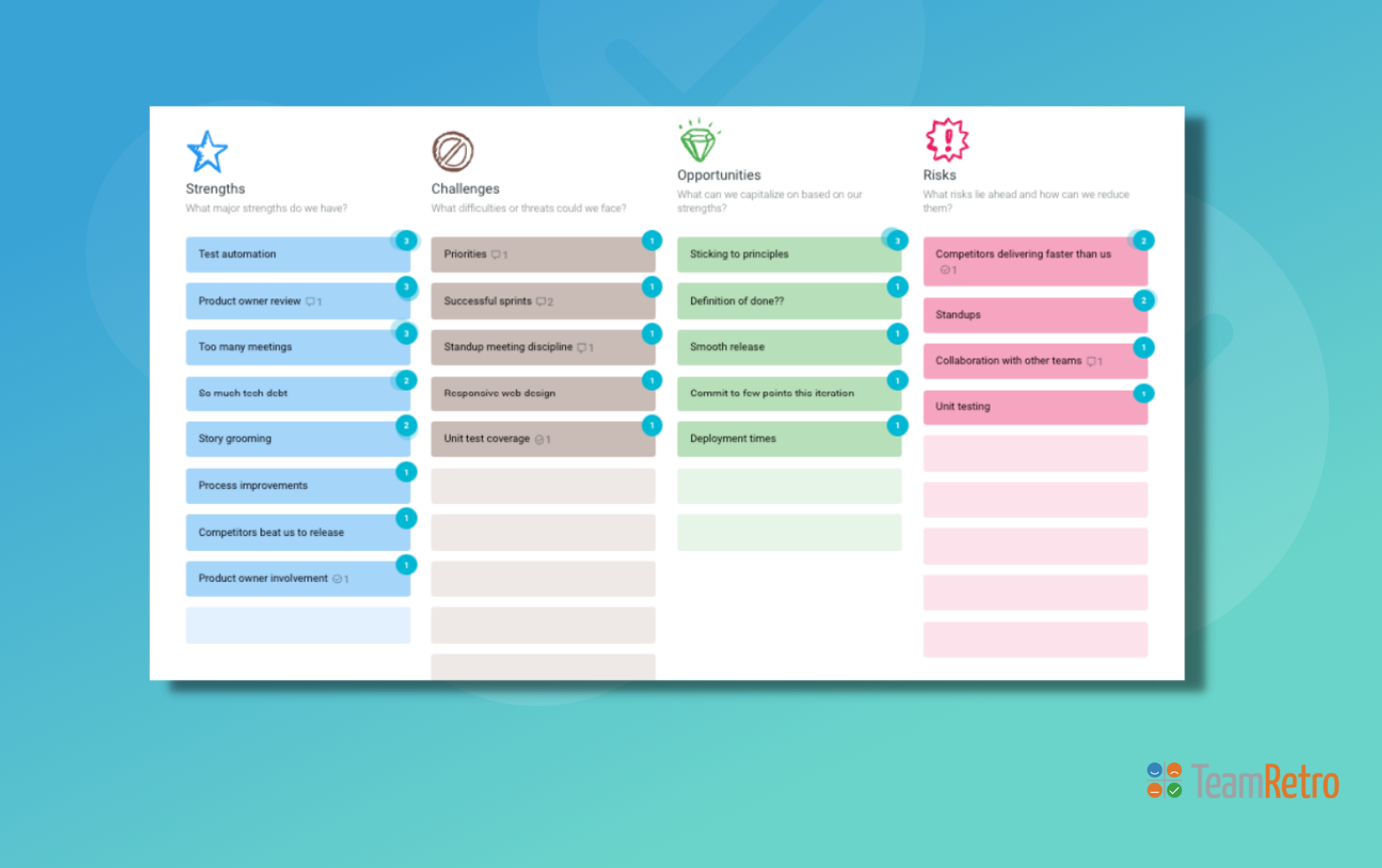
The SCOR Futurespective is a reimagining of the SWOT Analysis to include team empowerment. Weaknesses reframed as challenges and participants identify risks rather than threats. De cette façon, les participants les considèrent comme moins inquiétantes et donc plus gérables. En savoir plus sur la futurespective SCOR.
Si ce n’est pas tout à fait ce que vous recherchez, n’oubliez pas que TeamRetro vous permet de personnaliser votre futurespective ou de créer la vôtre.
Nous espérons que cette présentation de ce qu’est une futurespective vous a donné un autre outil dans votre kit et que vous avez ce dont vous avez besoin pour aider votre équipe à réussir.
À vous et à l’avenir de votre équipe !